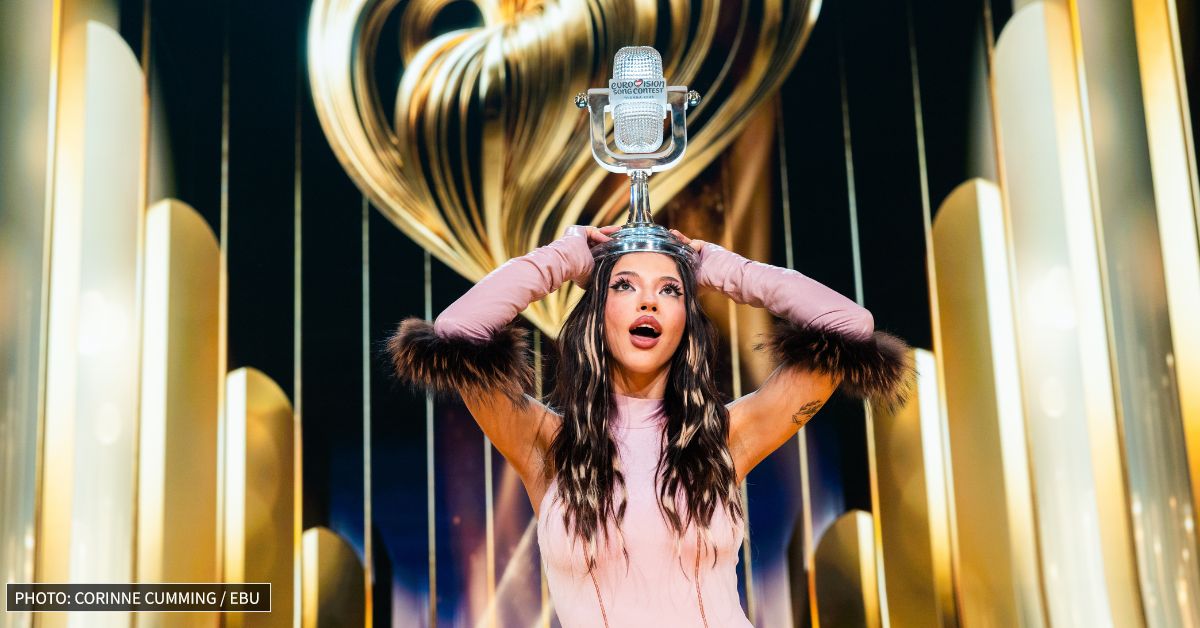
In an era where countries invest millions of euros in massive productions and pyrotechnics, Bulgaria proved in Vienna that a smart strategy and authenticity are worth more than any inflated budget. Is the victory of Dara the beginning of a new era in the Eurovision Song Contest?
Bulgaria’s victory at Eurovision 2026 in Vienna is not just a story about an excellent song or a captivating performance. It is a story about the triumph of spirit over the pocketbook. While wealthy European powers pour vast sums into complex LED screens and exaggerated sets, the Bulgarian delegation arrived in Vienna with a meager budget by contest standards and left with the glass trophy.
The total cost of the Bulgarian performance at Eurovision this year stood at approximately €200,000. To put this in perspective, this is significantly lower than the production budgets of countries like Spain, Italy, or the United Kingdom, and even lower than the budget of more modest delegations like Portugal, whose 2025 budget reportedly stood at around €244,000.
The Perfect Comeback: Small Budget, Maximum Impact
Bulgaria returned to the competition this year after a long three-year absence caused by financial difficulties at the Bulgarian national broadcaster BNT. This return was not just an attempt to participate, but a tight work plan managed by the experienced project manager Elias Kokotos.
The budget, which was mostly financed by private sponsorships rather than public funds, was surgically divided into three elements:
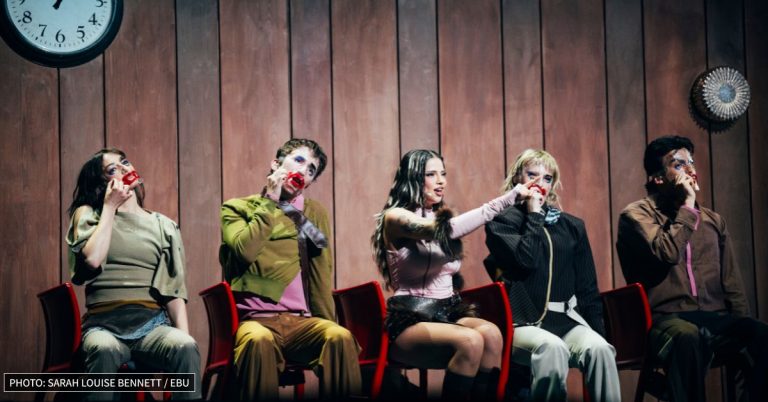
- Smart Production: Instead of expensive gimmicks, the delegation invested in artistic identity. The song “Bangaranga” combined modern dance with Bulgarian folklore and traditional “Kukeri” rituals, creating a clear identity for the entry and differentiation from other competitors. Experienced songwriter Dimitris Kontopoulos, who has 14 Eurovision hits to his name created for various countries, translated the original idea of Dara into a catchy hit that left no one indifferent.
- Televisual Staging: Instead of pyrotechnics, the delegation hired the services of Fredrik Rydman, also known as Benke, marking his third victory as a director in the last decade. The result was a cinematic, clean, and memorable performance that invested in camera angles and lighting instead of giant structures. Many Eurovision fans noted that the final stage performance was much more polished than the version presented in the local national final. This proves that the delegation invested its resources wisely, focusing on the television result—the most important aspect of Eurovision.
- Organic Virality: Instead of million-euro sponsored campaigns, Dara conquered social media. The word “Bangaranga” became a global meme during Eurovision week, leading to high recognition of the song among the audience at home. Every video uploaded by the singer to social media garnered millions of views, and while bookmakers initially underestimated the entry, they realized what was coming only at the very last moment.
Where Did the €200,000 Budget Go?
What makes Bulgaria’s victory even more impressive is that the €200,000 budget included almost everything:
-
Stage production costs.
-
Staff salaries and fees.
-
Hotels and flight tickets (approximately €50,000).
-
Construction of the main stage prop (approximately €15,000).
-
Production of the official music video.
-
Dara’s promotional tour before the contest.
The most amazing part is that the majority of these expenses were not covered by the Bulgarian national broadcaster. According to information from the delegation, the project was primarily financed by private sponsorships. BNT reportedly covered only the participation fee for the contest. As a result, Bulgaria operated with one of the smallest and most limited delegations in this year’s competition.
A Lesson for the Rest of Europe
Bulgaria’s victory, alongside impressive results from countries like Romania and Moldova which also operated with limited budgets, sends a clear message to all delegations in Europe: money does not buy victory.
While certain countries failed this year despite massive investments, Bulgaria proved that the audience in 2026 is looking for personality and authenticity. Dara’s win proves that there is hope even for small nations or those facing economic difficulties, as long as they have the right artistic vision.
Eurovision is, first and foremost, a television competition. Ultimately, what is etched into the memory of the viewers during the three minutes of performance is the emotion and the connection to the song, not the cost of the performance or the delegation’s flights to Vienna. Bulgaria made history with €200,000 and set a new standard of efficiency and creativity that all of Europe will have to study ahead of next year.