Over 1,000 international artists signed a letter opposing calls to exclude Israel from Eurovision, amid withdrawals and growing political pressure surrounding participation in the contest.
Against the backdrop of increasing calls to remove Israel from Eurovision 2026, set to take place in less than a month in Vienna, an unusual counter-response has emerged: more than 1,000 artists, creators, and entertainment industry figures have signed an open letter supporting the country’s continued participation in the contest. The letter, initiated by the organization “Creative Community For Peace”, includes a long list of leading names from Hollywood and the global music industry. Among the signatories are Amy Schumer, Mila Kunis, and San Marino’s Eurovision 2026 representative Boy George.





Global Voices Speak Out: “A Song Contest Should Unite”
The letter states: “A song contest is meant to bridge cultural divides and unite people from different backgrounds. We are shocked and disappointed by calls to exclude Israel simply because of its response to recent events”. The signatories further emphasized that calls for exclusion undermine the core values of the competition and risk turning Eurovision from a celebration of unity into a political instrument.
Several signatories also shared personal statements. Gene Simmons, lead singer of KISS, said: “Those who support excluding an Israeli singer from Eurovision are not promoting peace, but only deepening divisions”. Music executive Scooter Braun added: “Music is a place for unity, not division”. He stressed that it should never discriminate against artists based on their identity or origin. Actress Mayim Bialik described calls to exclude Israeli artists as “reprehensible and shameful”, adding that “targeting musicians in this way stains the unifying spirit of Eurovision”. Sharon Osbourne noted that attempts to exclude artists from the international stage “distort art into a tool of division and erode the shared humanity that the arts are meant to preserve”.
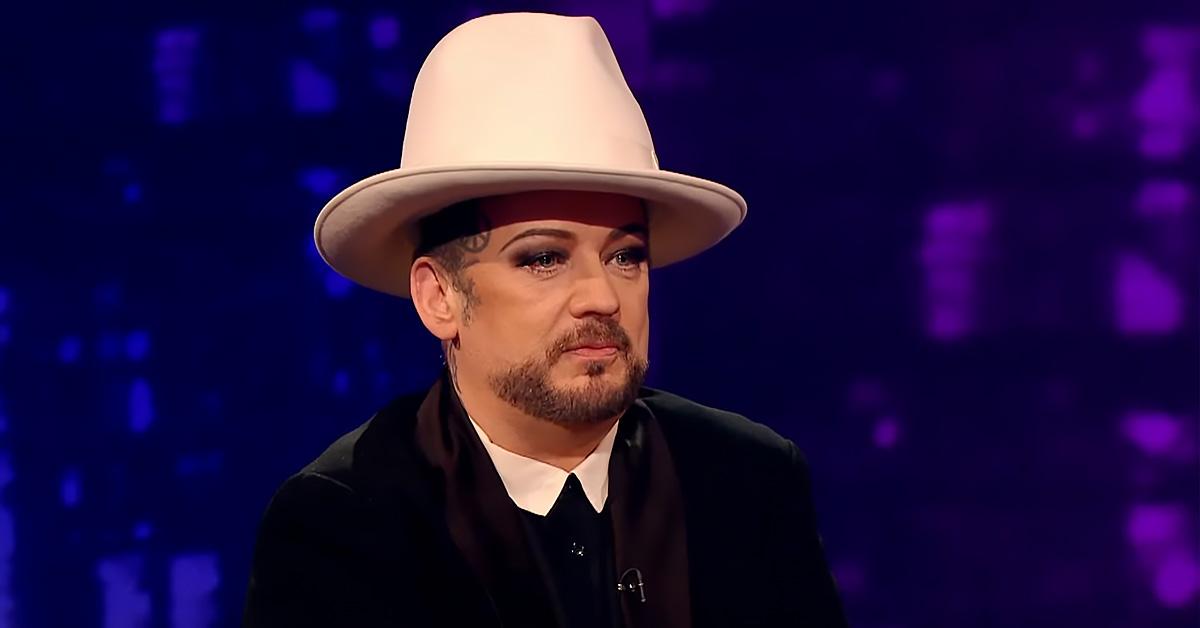
Boy George, who is set to represent San Marino at Eurovision 2026, has also voiced support for keeping the contest free from political boycotts. The British singer recently expressed his position publicly, stating: “It’s very trendy to hate Israel but I have always said ‘fashion is for the fragile, style is for the brave’”. The fact that a competing artist has taken a clear stance highlights how the debate has extended beyond public discourse into the lineup of participants themselves.
Wider Context: Withdrawals and Growing Pressure
The letter comes amid increasing pressure on the EBU regarding Israel’s participation in the contest. Several countries, including Spain, The Netherlands, Ireland, Slovenia, and Iceland, have announced withdrawals linked to the ongoing controversy. Spain has also stated it will not broadcast the upcoming contest in Vienna. Despite this, the EBU has clarified that the majority of its members do not support excluding Israel, and the competition is expected to proceed as planned.
From an international perspective, the letter reflects a broader development in the conversation. Alongside calls for exclusion, there is also growing global support emphasizing Eurovision’s original purpose: fostering unity between nations and cultures through music. As the contest approaches in May, it is clear that the debate will remain one of the central issues surrounding Eurovision 2026.
Eurovision has long ceased to be just about music. It is a mirror – of public opinion, social media dynamics, public pressure, and a world in which artists cannot – or perhaps do not want to – remain neutral. Some act of genuine moral conviction. Others are swept along by prevailing trends. And some, undeniably, understand very well how to generate headlines just before stepping onto Europe’s biggest stage.
Amid all this noise, one simple fact remains: Eurovision will take place. The songs will be performed, the points will be awarded, and millions of viewers will tune in – some for the music, some for the drama, and most likely for both.
Israel, like other countries before it, finds itself at the center of a political storm spilling onto a stage meant to be apolitical. The question is not why artists criticize Israel – but why participants can no longer separate art from reality. And perhaps that is the real point: regardless of who is right, who is hypocritical, or who is riding a wave – Eurovision 2026 will no longer be just a song contest. It will be another chapter in a much larger story.
Israel at Eurovision 2026
“Michelle” is the title of the song to be performed by singer Noam Bettan, who will represent Israel as song number 10 in the first semifinal of Eurovision 2026, to be held on May 12th in Vienna, Austria. The song was written by the singer Yuval Raphael, Tslil Klifi, and Nadav Aharoni – three prominent figures in the Israeli music scene, with Yuval Raphael, who represented Israel in the previous Eurovision as a singer. The song “Michelle” is about choosing to break free from a toxic emotional cycle. It’s a story of growth and emotional maturity — a moment when the protagonist realizes they must let go and choose their new path on their own.
Currently, Israel is ranked 6th in the betting tables ahead of Eurovision 2026.
Eurovision 2026: This will be Israel’s 48th participation in Eurovision. Israel joined the contest in 1973 and has won four times. Its most recent victory was at Eurovision 2018 with the song “Toy”, performed by singer Netta Barzilai.

Email: [email protected]
Phone: +972-50-9441919
Neta Geffen is a respected journalist at Euromix, Israel’s leading news site for Eurovision coverage. Since 2010, Neta has been closely following the Eurovision Song Contest, bringing with him extensive experience, profound knowledge, and a broad understanding of the history, politics, and cultural influences that shape the event every year.
Neta publishes articles, analyses, and up-to-date reviews on all Eurovision developments, including musical trends, format changes, political influences, and audience reactions across Europe and Israel. Thanks to a deep connection to the contest’s history, Neta provides readers with wide-ranging context—from the impact of political events on results, to in-depth analyses of songs and languages within the competition. Neta specializes particularly in the Eurovision rock genre, Balkan ballads, and native language entries, with a special focus on Italian and Greek songs.