1. Austria 2022: LUM!X ft. Pia Maria – “Halo”
In the studio: A pulsating, addictive dance-pop track that became one of the most played entries during the national selection season, gathering millions of streams on Spotify long before rehearsals in Turin even began.
On the live stage: This marked one of the most talked-about vocal drops in recent years. From the very first rehearsals, Pia Maria visibly struggled with the track’s higher register. During the live semi-final broadcast, the performance suffered from severe off-pitch singing, slipping out of key, and a visible lack of breath control throughout the entire three minutes. The entry, once considered a safe qualifier, completely collapsed and failed to reach the Grand Final.
2. Cyprus 2022: Andromache – “Ela”
In the studio: Cyprus selected Greek-German singer Andromache with “Ela” – a summery, radio-friendly ethno-pop track blending Balkan and Middle Eastern rhythms with slick, layered modern production. It rapidly became a fan favorite during the pre-party season, broadly tipped to qualify with ease and contend for a top-10 spot.
On the live stage: While the visual setup featured an ambitious giant seashell prop, the live vocal delivery in the semi-final proved to be a heavy disappointment. The artist struggled to hold the key, sounding shaky throughout, while the intricate vocal harmonies that carried the studio release completely vanished live. This sharp contrast between studio polish and uncertain execution led to a painful result: Cyprus finished 12th in its semi-final, missing the Grand Final for the first time since 2014.
3. Israel 2017: Imri Ziv – “I Feel Alive”
In the studio: Imri Ziv traveled to Kyiv in 2017 after backing previous entries on the Eurovision stage for two consecutive years. After winning the national selection, he was assigned “I Feel Alive,” a modern, uptempo party-pop track designed to maintain the country’s qualification streak.
On the live stage: Selected to open the Grand Final, the live vocal delivery was hindered by pitch instability, notable strain on high notes across the verses and chorus, and heavy breathing throughout the routine. High pressure and intensive choreography impacted vocal precision, meaning the studio track’s driving energy failed to translate to the arena stage. The entry ultimately finished in 23rd place.
4. Iceland 2016: Greta Salóme – “Hear Them Coming”
In the studio: Greta Salóme returned to the Icelandic national selection in 2016 with a dramatic, dark ethno-pop piece featuring cinematic strings and rich production. The studio cut was widely praised, positioning Iceland comfortably high in fan polls and betting odds.
On the live stage: The staging in Stockholm relied heavily on complex screen projections interacting with the performer in real-time. The operational pressure and strict timing took a toll on the live vocal power, leaving the performance sounding restricted compared to the studio recording. The presentation felt flat on screen, and the semi-final non-qualification left international fans stunned.
5. Israel 2014: Mei Finegold – “Same Heart”
In the studio: The national broadcaster selected rock vocalist Mei Finegold, opting for “Same Heart” through a multi-song national final. The driving rock-pop anthem featured aggressive production and high energy. It quickly surged into fan-favorite status across Europe, ranking near the top of community polls as a strong contender.
On the live stage: The stark contrast between expectation and reality hit hard in Copenhagen. The camera work and lighting appeared dark and disjointed, the staging felt cluttered, and the live venue sound mix sounded thin. The song’s vocal complexity combined with constant movement led to an exhausted, imprecise delivery. Finishing 14th in the semi-final, the nation missed out on the Grand Final entirely.
6. Spain 2003: Beth – “Dime”
In the studio: Beth was handed “Dime” – a fast-paced, highly infectious Latin-pop track. The studio production was crisp and stylish, topping airplay charts in Spain and across Europe well before contest week. Spain led several fan polls as a top contender for victory.
On the live stage: The live performance in Riga proved vocal and visual trouble. The singer appeared uncomfortable on stage, running out of breath due to demanding staging, while key vocal lines in the verses and chorus fell off-key. While the raw energy and catchy composition carried the entry to an 8th-place finish, it remains one of RTVE’s most notable missed vocal opportunities.
7. United Kingdom 2003: Jemini – “Cry Baby”
In the studio: The United Kingdom dispatched the pop duo Jemini to Riga with “Cry Baby” – an uptempo pop track featuring tight harmonies and a driving beat that appeared tailored to secure a solid left-hand-side result.
On the live stage: What unfolded on live television became one of the most famous technical and vocal mishaps in contest history. Unable to hear their backing tracks correctly, both singers fell completely off-pitch from the opening bar, remaining out of key for the entire three minutes. The result was immediate: the UK received its historic first nul points (0 points), finishing dead last.
8. Spain 2002: Rosa – “Europe’s Living a Celebration”
In the studio: Rosa López, fresh off winning the inaugural season of Operación Triunfo, was selected with “Europe’s Living a Celebration” – a festive Latin-pop anthem. The polished studio track boasted rich backing vocals and massive production value, making Spain a clear favorite in Tallinn.
On the live stage: On the night, the sheer magnitude of the stage overwhelmed the young artist and her backing vocalists. Visibly nervous, she struggled with high-note stability, while the backing harmonies during the chorus became cluttered and unblended. Spain ultimately settled for 7th place.
9. Finland 1998: Edea – “Aava”
In the studio: Finland opted for the folk-ethnic ensemble Edea with “Aava”—an atmospheric, Finnish-language new-age piece. In the studio, the track sounded cinematic, rich with layered strings and ethereal vocal arrangements.
On the live stage: Performing with the live orchestra in Birmingham exposed a wide gap between studio processing and live execution. Lacking the dense studio mix, the live orchestration felt sparse. Lead vocalist Marika Krook struggled to maintain the delicate melody, her vocals getting lost in the dynamic orchestral arrangement. Finland ended the night in 15th place.
10. Netherlands 1982: Bill van Dijk – “Jij en ik”
In the studio: An uptempo synth-pop track that was remarkably modern for its era, driven by strong electronic drums, contemporary synthesizers, and an accessible hook. The recording promised a strong result for the Dutch entry.
On the live stage: The mandatory transition to a full live orchestra stripped the song of its contemporary feel. Synthetic elements were replaced by heavy, ill-fitting brass and string arrangements, while singer Bill van Dijk suffered severe vocal fatigue, breathlessness, and pitch strain on the chorus high notes. The Netherlands collapsed to 16th place out of 18 participants.
Which entry on this list was the biggest disappointment for you? Is there another studio favorite that belonged in this top 10? Let us know in the comments below!
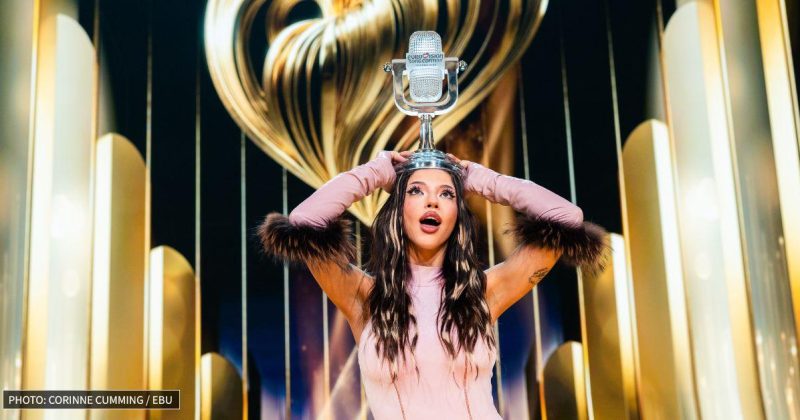
Eurovision 2027: The 71st Eurovision Song Contest will take place in Bulgaria, following the country’s victory with the song “Bangaranga” performed by the singer DARA. This will be the first time the contest is hosted in Bulgaria.