
The EBU confirms jury voting will return for the Eurovision 2027 semi-finals in Burgas, maintaining a mixed system alongside the public vote.
Today (Tuesday), the European Broadcasting Union (EBU) confirmed in an official update to the Eurovision rules that the jury will also take part in the semi-finals of the upcoming contest to be held in May 2027 in Burgas. They will continue to constitute a significant part of the results there, the main purpose of which is naturally to select the 10 qualifiers for the Grand Final from each semi-final. This step completely contradicts the rulebook published by the EBU last week, following their statement there that the semi-final results would be determined exclusively based on the public vote.








The updated rulebook clarifies that professional juries will continue to play a role in determining the semi-final results and in deciding which countries will advance to the Eurovision Grand Final. According to the system, the semi-final results will be based on a combination of the public vote from participating countries, the “Rest of the World” vote (a weighted vote from non-participating countries, counted as only one additional country), and the points awarded by professional juries, with each country’s jury consisting of about seven people.
After the Hiatus: The Game-Changing System is Here to Stay
As mentioned, the system of weighting public votes with jury votes was already used in Eurovision 2026, after returning to the spotlight following a three-year period (2023-2025) where the semi-final results were determined solely based on the public vote. The update made today in the regulations confirms that jury votes will continue to be counted in the semi-finals alongside the public vote.
This step is designed to spice things up and give equal room to both the ballads favored by the juries and the pop or novelty songs more loved by the audience. Furthermore, it is very possible that the EBU is choosing to continue with this system so there will be no cases where “less serious” entries unjustifiably advance to the final over “high-quality entries,” a phenomenon seen at Eurovision 2025 in Basel.
Turnarounds and Failures: The Impact of Jury Voting
Moreover, the jury vote indeed constitutes a very substantial shift in the final results of the semi-finals, and a situation could occur where a country that mathematically averages a top-ten spot in both jury and public votes, supposedly qualifying for the final, will fail to advance due to a total score that places it at the bottom. For example, Veronica Fusaro, 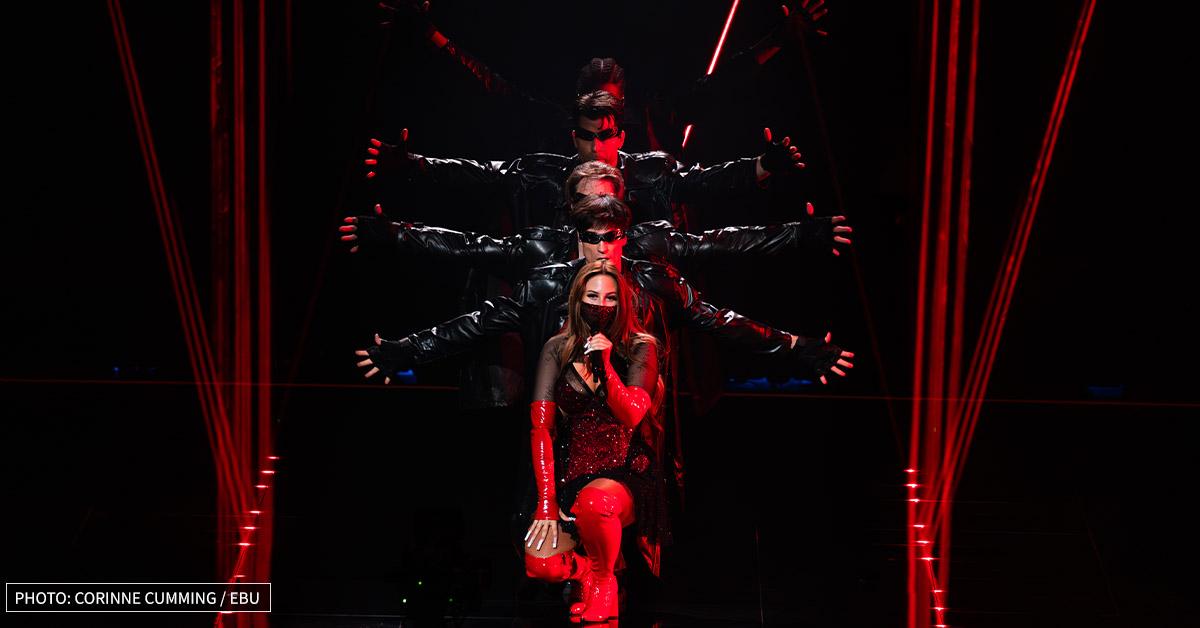 who represented Switzerland at Eurovision 2026, was ranked ninth in the public vote with 60 points in the second semi-final, and ninth in the jury vote with 48 points as well, but ultimately the combined total plummeted her to 11th place, leaving the singer unfortunately out of the Grand Final.
On the other hand, the return of jury voting can also work in favor of some contestants. Take for example the Swedish entry in the last contest, Felicia, who in the first semi-final ranked a dismal 13th out of 15 participants according to the public, which on paper should have left her far away from the final. However, the judges chose to place Felicia in seventh place, which bumped her up in the overall total to ninth place and granted her a ticket to the final just by the skin of her teeth.
New Details Ahead of Eurovision 2027
While the EBU chooses to keep the familiar voting system for Eurovision 2027, there are a few changes ahead of the contest in Burgas. The first rule is changing the minimum age for Eurovision participation from 16 to 18. Additionally, according to reports, starting next year there will be a drastic change in the voting, as the EBU approved a comprehensive package of reforms to the public voting system, aiming to reduce phenomena of “political voting” – a definition that in recent years has repeatedly been linked to votes for the Israeli entry.
More details are expected to be published in the coming months, so stay updated with Euromix, where every single detail will be updated.
Eurovision 2027 Dates:
-
Semi-Final 1: May 11th, Tuesday
-
Semi-Final 2: May 13th, Thursday
-
Grand Final: May 15th, Saturday
Eurovision 2027: The 71st Eurovision Song Contest will be held in Burgas, Bulgaria, following the country’s first historic win with the song “Bangaranga” performed by DARA. This will be the first time the contest is hosted in Bulgaria.

Email: [email protected]
Phone: +972 50-944-1919
A leading journalist and content creator in the Eurovision field.