Germany surprises with first Eurovision 2028 plans, exploring an expanded national selection with public and private broadcasters.
The selection process to choose the German representative for Eurovision 2027 in Burgas, Bulgaria is still underway, but the public broadcasting consortium ARD — under which the German national broadcaster SWR operates to select the country’s entry — has already revealed its vision for Eurovision 2028.





During a media summit held in Munich, ARD Program Director Christine Strobl disclosed plans for a broad collaboration with other broadcasters in 2028 to host an expanded national selection. According to Strobl, launching a joint venture between public and commercial broadcasters in Germany to select the nation’s Eurovision 2028 representative represents one of her biggest goals.
Responding to Strobl’s statement, Inga Leschek, Chief Content Officer at RTL — the broadcaster responsible for selecting Luxembourg’s Eurovision entries and which previously collaborated with ARD in 2025 for the German selection won by Abor & Tynna with the hit song “Baller”— voiced support for the concept. Leschek referenced their successful 2025 partnership and highlighted the potential for future cooperation.
While the German national broadcaster appears to hold ambitious plans to expand interest across the domestic music industry, no concrete operational details for 2028 or official confirmations of Eurovision participation have been finalized.
Germany Sets Its Sights on a Better Result in 2027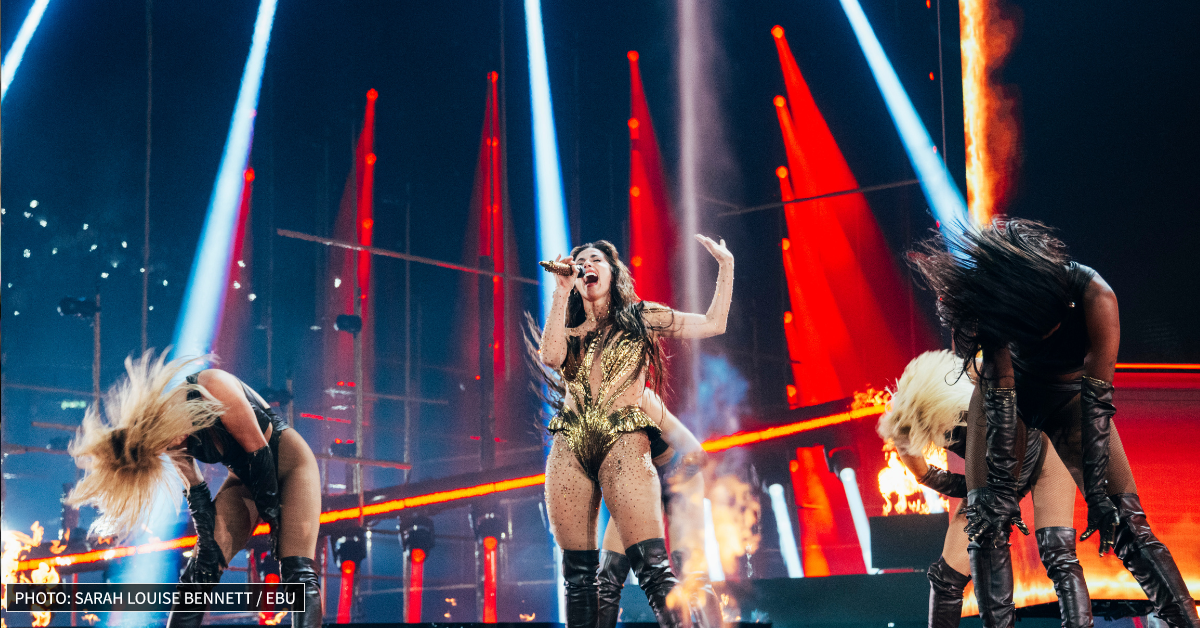
Despite Germany’s recent results, the broadcaster is already looking ahead and hoping that 2027 will bring a better outcome. Sikorski reflected on Eurovision 2026 and thanked the German delegation for its efforts.
“What a journey Eurovision 2026 was! Thank you, Sarah, for the fantastic performance and your tireless efforts on stage and behind the scenes. And thank you to the SWR team for the many hours of work,” she wrote.
She also acknowledged that the final result had not met expectations, while highlighting the consistency of the performances and the positive response from the German audience.
Nevertheless, the broadcaster is determined to improve Germany’s position in the competition. Looking ahead to 2027, Sikorski explained that the team intends to improve its processes, reach a wider audience and attract stronger candidates to the national selection.
The aim is to work closely with the music industry and provide artists with a reliable platform on which to develop their Eurovision entries. The team also hopes to encourage greater musical diversity, moving beyond conventional mainstream pop and giving more distinctive songs an opportunity to stand out on the Eurovision stage.
For Germany, the challenge is not simply to participate, but to find an entry capable of making a lasting impression on both the jury and the public.
Who Is Behind Germany’s Eurovision Selection?
The team overseeing the selection includes German head of delegation Tina Sikorski, songwriter and music producer Jules Kalmbacher, and producer Pele Loriano.
Loriano is particularly notable for his work as a producer, songwriter and Eurovision strategist. Sikorski has praised his experience in developing musical strategies for Eurovision, including his work with Switzerland in recent years.
The wider team also includes artistic director Florian Müller, artist manager Celina Spanier, and Lilly Behling, who works in the music and record industry and is associated with JJ, the winner of Eurovision 2025.
Together, the team will help identify the artists and songs that could give Germany a stronger result at Eurovision 2027.
Could Dschinghis Khan Return to Eurovision in 2027?
One of the most intriguing developments surrounding Germany’s selection is the possibility of a Eurovision comeback connected to Dschinghis Khan, one of the most recognizable acts in the contest’s history.
Legendary German music producer Ralph Siegel, who recently celebrated his 80th birthday, has revealed in an interview with German music programme Schlagerpuls that he has submitted a new song for the German national selection. The song is intended for a new generation of the group, Dschinghis Khan.
The original group became internationally associated with Eurovision after representing Germany in 1979 with the energetic song “Dschinghis Khan”. Their distinctive performance and memorable staging helped establish the act as one of the contest’s most enduring names.
Now, Siegel hopes to bring that legacy back to the Eurovision stage.
“We have just finished it, and we are very excited. I simply want to compete in the national selection. I have submitted something really great,” he said in the interview.
Siegel also emphasized that the submission had been carefully developed. He described the song as relatively modern while expressing confidence that it would remain true to the group’s distinctive identity. He hopes the jury will recognize the potential of the entry and view it as he does.
A successful return would offer a fascinating combination of Eurovision nostalgia and a new musical direction. However, it remains unclear whether the submission will make it through the selection process.
Germany at Eurovision 2026
“Fire” was the song performed by singer Sarah Engels, who represented Germany in the Grand Final of Eurovision 2026 on May 16th in Vienna, Austria. It finished in 23rd place with 12 points and was co-written by Engels together with Dario Schürmann, Luisa Heinemann, Raphael Lott, and Valentin Boes. The song was performed entirely in English.
Eurovision 2027: This will be Germany’s 70th participation in Eurovision. Germany joined the competition in 1956, was one of the seven founding countries, and has won twice over the years. Germany’s last victory was in Eurovision 2010 with the song “Satellite” performed by singer Lena Meyer-Landrut.