The EBU is expected to decide today (Thursday) on Israel’s participation in Eurovision 2026, while Spain is preparing one last proposal. Will this move succeed in expelling Israel from the contest?
Spain is considered one of the strongest opponents of Israel on the Eurovision stage and has repeatedly conditioned its own participation on Israel’s expulsion from the contest. Today (Thursday), the annual convention of the EBU is taking place, where the member broadcasters will, among other issues, discuss whether to allow Israel to participate in Eurovision 2026 in light of the security events of the past two years. Spain, which has publicly spoken out many times in an attempt to push for Israel’s removal, is now trying to advance yet another bid, in the hope that it will finally lead to Israel’s expulsion from the competition.





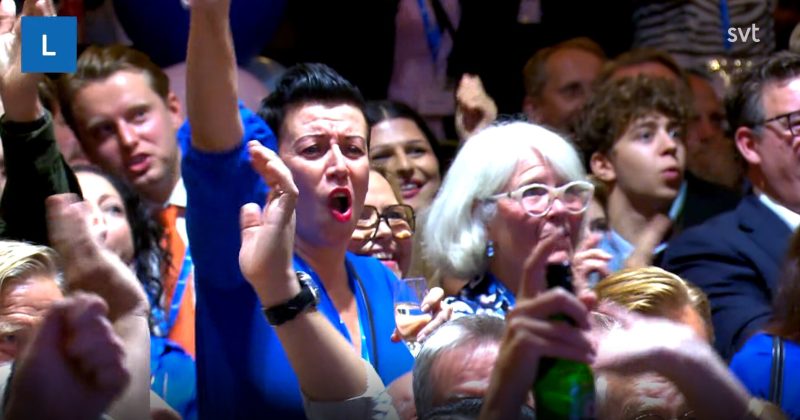


According to the bid, any country involved in an armed conflict (war) would not be allowed to participate in the Eurovision Song Contest, or at the very least would not be able to compete under its national flag. This proposal does not only target Israel, but would also include Ukraine, which has been engaged in ongoing fighting with Russia since February 2022. This idea already surfaced back in September, when, according to reports, the EBU suggested that Israel could take part in Eurovision under a neutral flag – a suggestion that the Israeli public broadcaster firmly rejected.
At the time of writing, it is not yet clear whether an actual vote will be held on the matter today, or whether there will only be a debate that will allow countries to present their positions. It appears that the EBU is doing everything possible to avoid a vote or any scenario that would create a precedent forcing formal decision‑making without a clear, established procedure. If a vote does take place, it will be the first time such a move occurs, there is no orderly protocol for this, and in practice no one really knows how to proceed in such a case. Will the vote be anonymous? Will the results have to be published immediately and implemented as they are? A heavy cloud of unanswered questions hovers over the event, and the broadcasting union seems to be struggling to make decisions and provide clear answers.
What is the general assembly of the EBU?
The EBU’s General Assembly is an annual meeting at which all member broadcasting corporations come together to make key decisions on policy, regulations, membership, budgets and other sensitive matters, including questions related to Eurovision. The assembly convenes regularly once a year, but in urgent cases special meetings can be called to address issues that cannot wait until the next regular session.
The October 7th war has generated intense criticism of the State of Israel. This criticism has not remained confined to the political arena and has spilled over, with considerable force, into the Eurovision Song Contest. For two consecutive years (2024 and 2025), the Israeli entry sent to the competition has become a charged political issue, beginning with calls from various countries to withdraw from the contest (which they often later retract), continuing with artist boycotts across Europe, and culminating in vocal demands to expel Israel from the competition.
EBU’s stance and the upcoming debate
So far, the EBU has managed to fend off these demands and calls, repeatedly stating that Eurovision is a competition between national broadcasting corporations rather than between the states themselves, and that the Israeli national broadcaster KAN meets all the rules and conditions required for participation.
These statements have not calmed the situation, and Israel has faced an unprecedented artistic boycott on the Eurovision stage. This has included boos directed at Israeli representatives, harassment of the Israeli delegation, refusal to cooperate, reluctance by certain artists to grant interviews to the Israeli media, and, in some cases, ignoring the Israeli voting audience.
Mounting pressure to expel Israel
 This year, ahead of the contest scheduled to take place in May 2026 in Vienna, Austria, several television networks from participating countries (including Slovenia, Spain, Iceland, Ireland, the Netherlands and Belgium) have contacted the EBU and demanded a discussion on Israel’s participation. Some of them have even considered withdrawing from the competition altogether if Israel takes part, and one of the broadcasters has gone so far as to declare that it will not participate alongside Israel even in the event of a complete ceasefire in Gaza. The demand for expulsion is based on “the actions of the Government of Israel and the ongoing conflict in Gaza”, alongside accusations that the EBU is allowing Israel to “cover military actions with art” (“Artwashing”). In addition, certain parties have raised allegations of alleged interference by the Israeli government in recent editions of the contest.
In a letter signed by EBU President Delphine Ernotte‑Cunci and sent to member organizations, it was noted that during the management board meeting – which was also attended by former vice‑president Petr Dvořák – the leadership presented an overview of the positions of member states regarding the participation of the Israeli broadcaster KAN. The EBU emphasized that there is an “unprecedented range of opinions” on the issue, which has made it impossible to reach a consensus. The letter also stated that the union is committed to freedom of expression and open cultural dialogue, and therefore it was decided to convene a special online General Assembly of member broadcasters in early November, where all members will be asked to vote on whether to allow Israel to participate in Eurovision 2026, which will be held in Vienna, Austria.
Despite the Boycotts – Many Countries Stand With Israel
 Despite the boycotts and public pressure, Israel is not completely isolated in this battle. Public broadcasters from countries such as Switzerland, Germany and Austria (which is hosting the contest) have expressed support for maintaining the competition’s neutral character and for Israel’s continued participation. Switzerland has even announced that it will vote in favor of Israel’s participation if a formal vote is held on the matter. Yesterday, the Reuters news agency reported that if the upcoming discussion leads to a vote that would result in Israel’s expulsion, Germany is prepared to boycott the Eurovision Song Contest – and may even refuse to broadcast it at all.
In parallel with the pressure from several countries to remove Israel, and alongside threats of withdrawal from the contest, the EBU has announced the return of three countries to Eurovision in 2026: Bulgaria, Romania and Moldova. The union has also confirmed that talks are underway regarding the possible participation of Canada in the contest. At the same time, a series of changes have been introduced to the voting rules – including the return of juries in the semi‑finals, a cap on the number of votes allowed, and new restrictions on organized voting campaigns – changes that were clearly influenced by Israel’s success at Eurovision over the past two years.
The future of Israel’s participation in Eurovision 2026 is now in the hands of the members of the EBU General Assembly. The upcoming debate, set to take place tomorrow, marks a pivotal moment that will determine not only Israel’s status in the contest, but also the delicate balance between politics and culture in the Eurovision Song Contest. As tensions rise and all eyes turn to Vienna, the decisions made in the coming days may shape the future history of Eurovision, Israel’s place within it, and the relations among participating countries in the years ahead.
Which countries are expected to withdraw if Israel participates?
Four countries have threatened to withdraw if Israel takes part in Eurovision 2026: Ireland, Spain, Slovenia and The Netherlands, with the Dutch broadcaster AVROTROS even stating that it would refuse to participate alongside Israel, including in the event of a complete ceasefire in Gaza. Alongside them stand Iceland, which has only threatened to withdraw if Israel participates but has not officially announced such a step, and Belgium, which has decided to wait for a final decision on Israel’s participation before confirming its own.
Slovenia and Spain are already taking concrete steps toward withdrawing from Eurovision 2026 if Israel is part of the line‑up, while the other countries have yet to translate their rhetoric into practical measures. Iceland, for its part, has slightly softened its tone, and it now appears likely that it will continue to participate in Eurovision 2026 even if Israel remains in the competition.
The final decision on Israel’s participation may still shift, depending on developments on the political and security fronts. Although diplomatic pressure on Israel has eased somewhat following a temporary ceasefire, any renewed escalation of the war in Gaza could quickly lead to the opposite outcome. In the meantime, the struggle over Israel’s place in the contest continues to dominate the European cultural arena, placing Eurovision 2026 before one of the most significant tests in its history: will the contest manage to preserve its officially non‑political character and cultural values, or will it yield to growing external pressure?
Spain in Eurovision 2025
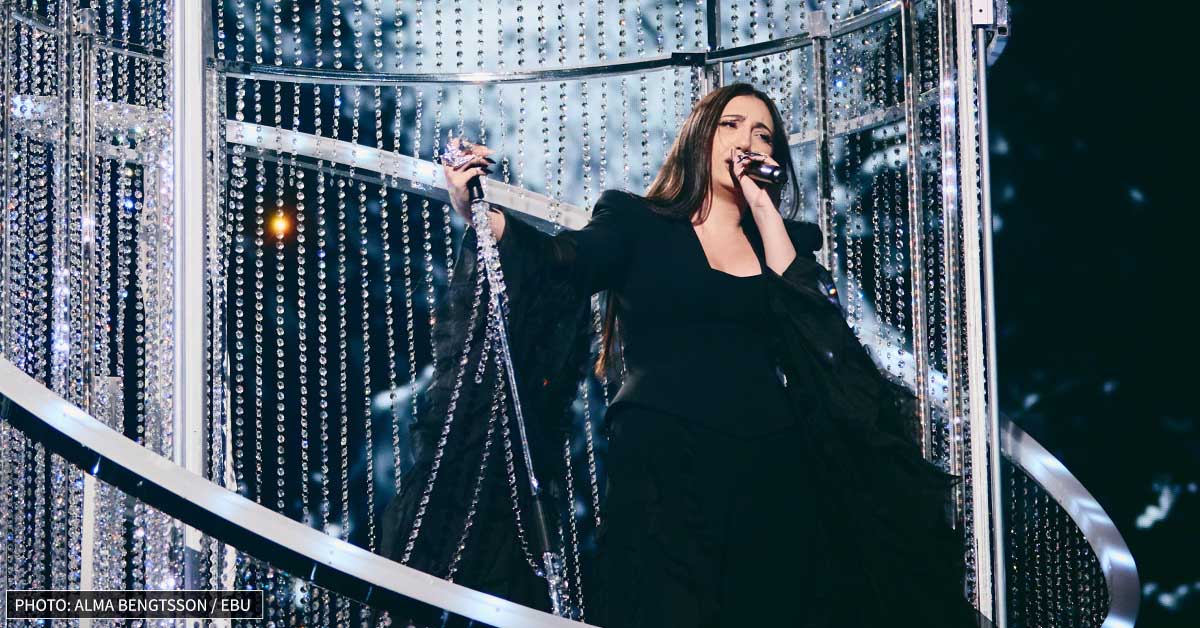
“Esa Diva” (in English: “That Diva”) is the title of the song performed by singer Melody, who represented Spain at Eurovision 2025 in Basel, Switzerland.
Spain finished 24th with 37 points – 27 points from the juries, placing 21st, and only 10 points from the televotes, placing 22nd. In the last 20 years, Spain managed to finish only 3 times in the top 10.
Eurovision 2025: This was Spain’s 65th participation in Eurovision. Spain joined the competition in 1961 and won it twice consecutively in 1968 and 1969. Spain has hosted the contest on its territory only once in 1969 and since then holds the longest waiting time since its last victory – 56 years.

Email: [email protected]
Phone: +972-50-9441919
Ilay Gaist is a leading Israeli content creator and writer specializing in the Eurovision Song Contest. He is a well-known commentator with extensive expertise in the contest’s history, rules, and dynamics. His passion for Eurovision drives him to deliver rich, professional, and innovative content to his audience.
Ilay holds a bachelor’s degree in Arabic and has a multilingual background. He also engages in cultural research, with a particular focus on global culinary traditions and the evolution of local cuisines around the world.