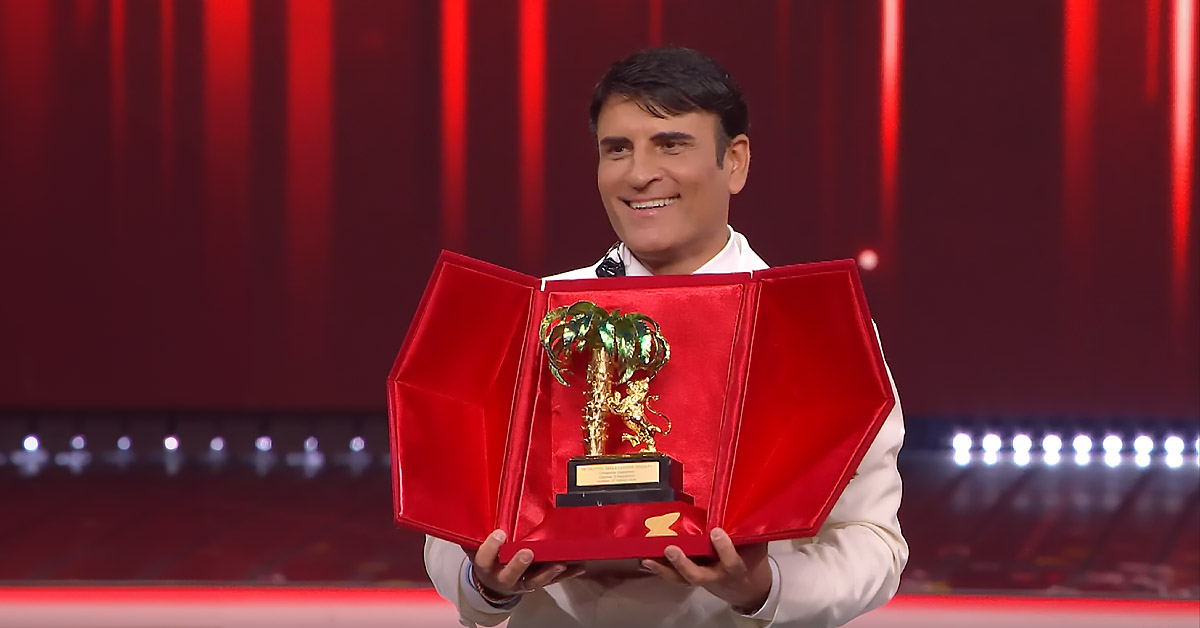
Last Saturday, Sal Da Vinci won Italy’s “Festival Di Sanremo” and earned the honor of representing Italy at Eurovision 2026 in Vienna. Now, he shares his emotional story.
The Italian “Festival di Sanremo 2026” took place last Saturday, culminating in the first-place win of Sal Da Vinci with his song “Per sempre sì“. About a day after the victory, Da Vinci announced at a celebratory press conference that he would be honored to represent Italy at Eurovision 2026, set to be held in Vienna, Austria. His statement confirmed his participation in May’s competition, where he will perform the same song that won “Festival di Sanremo”.
Now, following the win, the real drama begins around the singer, who is giving numerous interviews to Italian media outlets. One such interview – granted to “il Giornale” – shed light on his early years, his long career, and the moments that led to his Sanremo triumph, while delivering a heartfelt message he hopes everyone will hear.







Early Life
Sal Da Vinci, born as Salvatore Michael Sorrentino in 1969 in New York, entered the world while his father, singer Mario Da Vinci, was on tour with Italian vocal legends Luciano Tajoli and Claudio Villa. From a very young age, Da Vinci displayed remarkable musical talent – at seven, he recorded his first song, “Miracolo ‘e Natale”, becoming a child star in Naples. Despite early success, he carried the image of a “scugnizzo” – a true street kid connected to ordinary people and Neapolitan tradition – keeping his career modest in scale until much later.
A Challenging Career Path
Da Vinci never received easy breaks from the industry. He first competed at Sanremo in 2009 with “Non riesco a farti innamorare“, which earned him third place, but he soon faded from the spotlight. According to him, the disappearance followed a lack of support and even hostility from record companies in Italy who chose not to promote him.
Only in 2024 did Da Vinci regain major success with the hit song “Rossetto e caffè” (in English: “Lipstick and Coffee”), one of the most streamed Neapolitan tracks of the decade, viewed hundreds of millions of times online. This song symbolized resilience and a renewed bond with younger generations.
“Festival Di Sanremo 2026”: A Victory of Perseverance and Truth
This year, Da Vinci returned to Italy’s most prestigious stage and finally won first place, admitting:
“Not everyone likes me […] but at least I’ve always remained true and authentic – I stayed loyal to myself from the very beginning”.
Describing the moment after his win, he shared:
“I looked into my wife’s eyes, and she said ‘Thank you’. Thank you for not giving up, for going all the way”.
The singer expressed deep excitement about representing Italy in the upcoming Eurovision contest: “
When I think about representing Italy at Eurovision – it’s even more beautiful than I ever dreamed”.
He added that he will not alter his song before the competition:
“‘Per sempre sì’ will stay exactly as it is – simple, genuine, and full of love”.
A Symbol of Determination and Fulfilled Dreams
Da Vinci sees himself as a voice for everyone who fights their way up from the bottom. “I dedicate first place to all the ‘Sals’ out there”, he said, quoting Italian artist Pino Daniele:
“Neapolitans are a people who walk beneath the wall, and I walked that way for a long time too”.
He also compared himself to the legendary Italian footballer Salvatore Schillaci, who stunned the nation during the 1990 World Cup:
“When Schillaci joined the national team, everyone asked what he was doing there – and then he won their hearts. I’m not Schillaci, not Maradona. I’m Sal – and I’ll always be Sal”.
Sal Da Vinci – Who Are You?
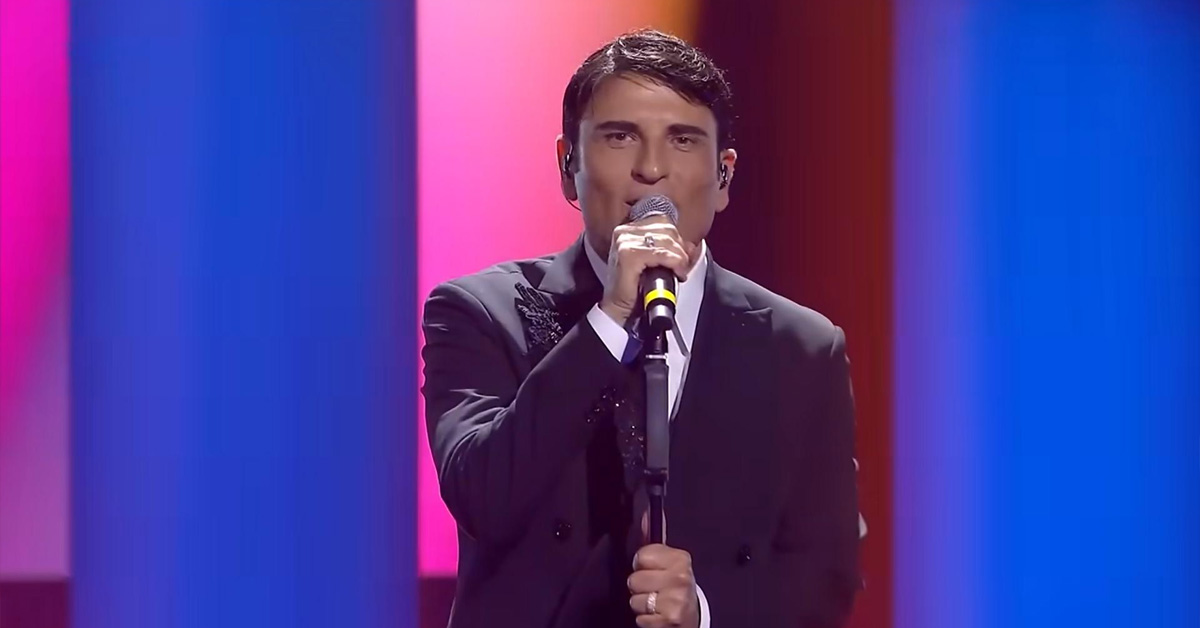
Sal Da Vinci is a veteran Italian singer, songwriter, and actor, known as one of the most beloved voices in the Italian pop scene, with a strong connection to Neapolitan music. His real name is Salvatore Michael Sorrentino, and he was born in 1969 in New York, while his parents, both performers, were there for a series of shows. He grew up and built his career mainly in Naples, a city that deeply influenced his musical style and artistic identity.
He began performing on stage as a child and, over the years, established a career spanning more than four decades. Blending modern Italian pop with traditional Neapolitan roots, he became a familiar figure not only in music but also in theatre and television in Italy. His participation in the “Festival di Sanremo 2009” strengthened his national recognition, and throughout the years, he has continued to release successful hits.
In recent years, he has enjoyed a renewed wave of popularity, attracting a younger audience who rediscovered him through social media and streaming platforms. His return to “Festival di Sanremo 2026” with the song “Per sempre sì” showcases him as a mature and moving artist, bringing to the stage a romantic ballad about love, commitment, and the promise of a shared life.
Italy at Eurovision 2026
“Per sempre sì” (in English: “Forever Yes”) is the song to be performed by Sal Da Vinci, whose real name is Salvatore Michael Sorrentino, representing Italy at Eurovision 2026 in Vienna, Austria. The song, which won “Festival Di Sanremo 2026”, was written and composed by Sal Da Vinci together with Alessandro La Cava, Eugenio Maimone, Federica Abbate, Federico Mercuri, Francesco Sorrentino, and Giordano Cremona. It is performed in Italian.
As Italy is part of the “Big 5,” Da Vinci automatically qualifies for the Grand Final on May 16th, but he will also perform his song during the first semi-final on May 12th.
Eurovision 2026: This will be Italy’s 51st participation in Eurovision. Italy joined the contest in 1956, was one of the seven founding countries, and has won three times over the years. Italy’s most recent victory was at Eurovision 2021 with the song “Zitti e buoni” performed by the band Måneskin.

Email: [email protected]
Phone: +972 50-9441919
Ido Na’aman is a journalist, content creator, and commentator specializing in the Eurovision Song Contest. His extensive knowledge and in-depth familiarity with the Eurovision world are reflected in every article, ensuring reliable, professional, and up-to-date content.