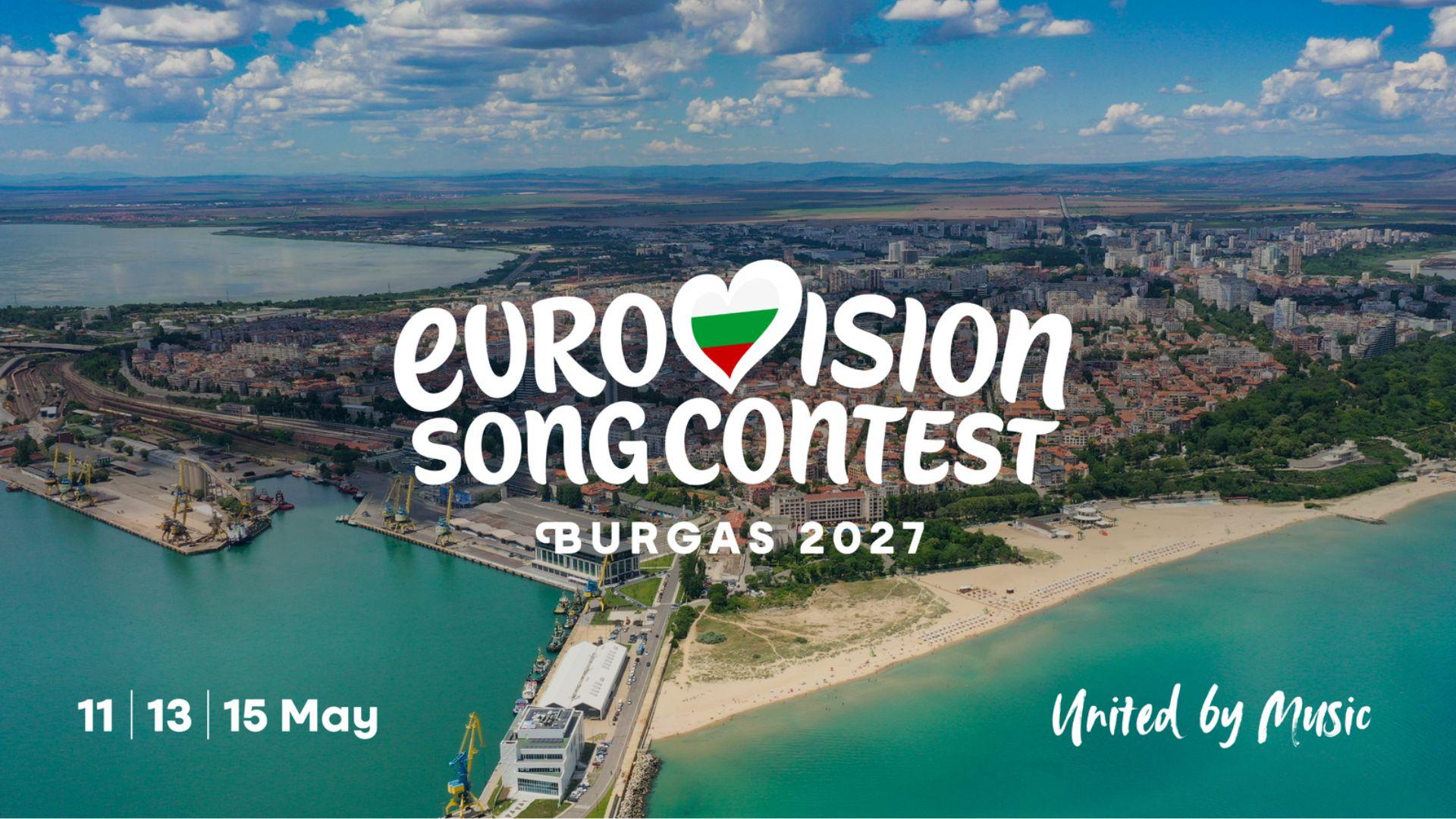
Burgas is set to introduce Euro-Seagull as the official Eurovision 2027 mascot, originating from the local Burgas Puppet Theatre.
The Eurovision Song Contest, which will be held in the Bulgarian coastal city of Burgas, is expected to feature “Euro-Seagull” as its mascot, as reported by the Greek Eurovision site Eurovisionfun. The mascot, born out of the local puppet theatre, is expected to bring a lot of color, freedom, and artistic spirit to Europe’s biggest stage. What is the role of mascots in the contest, how has the tradition strengthened in recent years, and what does the seagull of Burgas symbolize?







From the Puppet Theatre Stage to the Eurovision Stage
The expected choice of “Euro-Seagull” is no coincidence: the colorful character comes directly from the theatre production “Burgaski Glarusi” (in English: “Seagulls of Burgas”), which was staged by the city’s puppet theatre. The local theatre team is the one that will design and bring to life the official mascot that will accompany all event activities in 2027.
הצגת פוסט זה באינסטגרם
Why a Seagull?
The choice of the seagull connects directly to the host city of Burgas. It is an integral part of daily life, landscape, and atmosphere of the coastal city. Its unique voice is considered one of the most recognizable sounds in the city’s alleyways and along its beachfront, and it embodies values of freedom, color, and creative spirit – the exact same values that the Eurovision Song Contest brings with it every year.
Past Mascots and Their Role in Eurovision
Mascots in the Eurovision Song Contest are not just cute visual elements. Their primary role is to give a unique local character to that year’s contest edition, attract viewers of all ages (especially children and families), and actively participate in events related to the show – ranging from the running order draws to performances, promotional materials, merchandise, and fan meetups across the host city during Eurovision week.
In recent years, we have seen a return of characters and mascots in the contest’s visual identity. At Eurovision 2025 in Basel, Switzerland, the tradition returned with the reveal of Lumo, the mascot who brought plenty of light and connection to the audience on the streets of Basel. At Eurovision 2026 in Vienna, Austria, the Austrian national broadcaster presented Auri – a colorful, furry, “full-body” mascot that starred in the draws, shows, and promotional materials. Now, “Euro-Seagull” is expected to continue this renewed tradition, bringing the scent of the sea and the summer vibes of Burgas to all of Europe.
What do you think of the mascot? Do you feel connected to the “Euro-Seagull” of Burgas, or did you prefer Lumo and Auri from previous years? Share your thoughts in the comments below!
On Wednesday, it was revealed that Burgas won the bid to host the upcoming Eurovision Song Contest, overtaking Sofia’s proposal. This will mark the first time Bulgaria hosts Eurovision, following the historic victory of DARA at Eurovision 2026, which took place in Vienna, Austria, last May.
Alongside the announcement of the host city, the dates for the contest were also revealed:
-
First Semi-Final: May 11th (Tuesday)
-
Second Semi-Final: May 13th (Thursday)
-
Grand Final: May 15th (Saturday)
For Burgas, this will be the first time hosting a Eurovision event, whereas Sofia previously hosted Junior Eurovision in 2015. The designated venue, “Arena Burgas”, can accommodate around 15,000 spectators during music shows. Unlike last year, the host city is not the capital of the winning country – a trend seen in contests between 2019 and 2025.
Burgas is the fourth-largest city in the country, with a population of approximately 189,086 as of December 2025.
According to a poll conducted on the EuroMix website, 67.62% of respondents selected Sofia as the most suitable city to host the competition. However, it appears that the European Broadcasting Union and BNT did not agree with the EuroMix audience’s choice, believing instead that Burgas possesses the appropriate infrastructure to host the contest.
Eurovision 2027: The 71st Eurovision Song Contest will be held in Burgas, Bulgaria, following the country’s first historic win with the song “Bangaranga” performed by DARA. This will be the first time the contest is hosted in Bulgaria.

Email: [email protected]
Phone: +972-50-9441919
Tal Dahan – Journalist, radio broadcaster, and Eurovision content creator.
Tal Dahan is an Israeli journalist and editor specializing in the Eurovision Song Contest, working with the EuroMix editorial team for four years. Since 2022, she has provided regular on-site coverage of Eurovision from the host city, and from 2023 has also reported directly from the press room—offering the Israeli audience live updates, exclusive interviews, and in-depth commentary.
Tal is a member of the Eurovision tribute and parody band “EuroFalsh,” a radio broadcaster, and a student of political science and communications.
She is considered one of Israel’s leading young Eurovision experts. In addition to covering the main contest, Tal has reported from Eurovision pre-parties and national selection events across Europe (in Thessaloniki, Stockholm, Madrid, and more), been interviewed by major media outlets in Israel and internationally, and presented Eurovision-themed podcasts and radio shows.