An innocent video upload to the official Eurovision YouTube channel unravels a fascinating story from Copenhagen in 1964. And how did the unexpected closure come precisely from the devoted Eurovision fans?
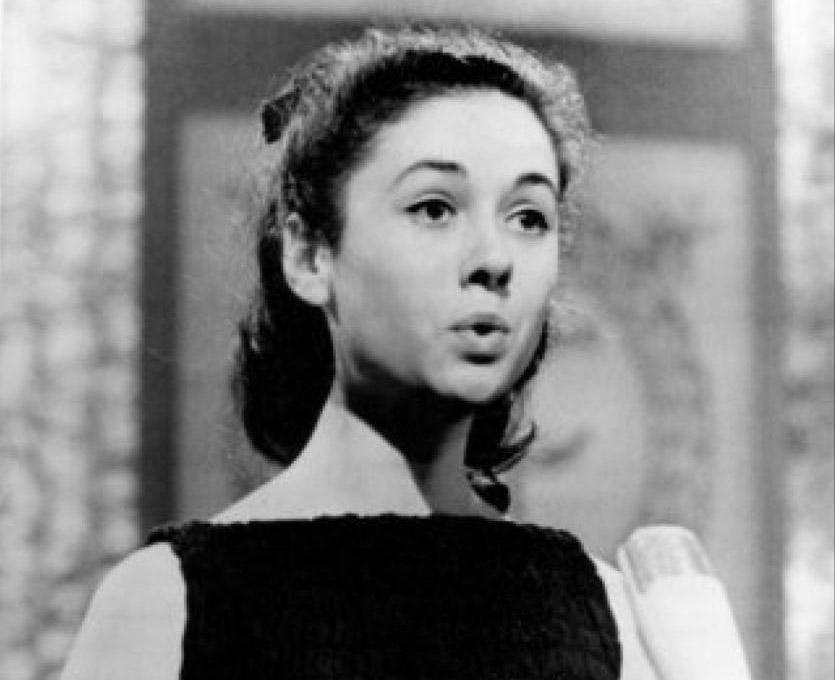
Subscribers to the official Eurovision YouTube channel won’t be surprised to discover that the channel is currently uploading numerous performances by past winners from previous years, mainly as a branding act and preservation of the classic Eurovision performances. However, this week, on Monday, a new video on the channel flew under the radar of many fans, yet it constitutes no less than groundbreaking news: the full performance by the young Italian winner, Gigliola Cinquetti, who won Eurovision 1964 held in Copenhagen, Denmark, with her song “Non Ho L’Età” (in English: “I’m Not Old Enough”). This marks the first time since the live broadcast of that Eurovision that we can view footage of the official broadcast, which was considered “lost” in the media world until very recently. The fascinating story continues here.


Eurovision 1964: The Lost Contest
The story begins back in 1964, at the Tivolis Koncertsal hall in Copenhagen, Denmark. The Eurovision Song Contest was only in its ninth year of existence, with just 16 countries participating in the competition. The rights to host the contest were awarded to the Danish national broadcaster DR, following the victory of the duo Grethe & Jørgen Ingmann with the song “Dansevise” the previous year. Although the contest was still in its infancy, Eurovision was already a household name across Europe, watched by between 100–150 million viewers continent-wide. The victory was claimed by the young singer, just 16 years old, Gigliola Cinquetti, with a crushing win as she garnered 49 points – almost three times the score of the runner-up, the United Kingdom, with 17 points.
Yet the story that sets this Eurovision apart from its predecessors and successors occurred precisely after the contest itself. Until the modern era of the competition, the copyrights to the contest after the original broadcast were held by the host broadcaster, not by the EBU as is the case today. This meant that broadcasting authorities kept physical copies of the show’s film in their archives, which is why we can still watch television broadcasts of Eurovisions from all eras to this day. But in the case of Eurovision 1964, a series of mysterious events led to no remnants of that contest surviving in any archive, and the event was considered “lost” for many years – alongside Eurovision 1956, the very first contest whose broadcast was also lost over time.
Over the years, numerous rumors circulated about the backstory of the lost films from Eurovision 1964. For many years, the prevailing claim was that the recordings were destroyed in a fire at the studios of the Danish national broadcaster DR in 1970, but this story was debunked. In 2019, representatives from DR claimed that the contest was broadcast but never recorded, and no copy was preserved in their archives, likely due to a lack of recording equipment.
Eurovision fans searched for years for a surviving copy in one of the European broadcasting authorities that aired the contest that year. Rumors of copies of the contest in the French, British, and Maltese archives surfaced over the years, but without success in locating them. Fans managed to find numerous still photos of all the performers in the contest, as well as the full audio recording of the show, and succeeded in reconstructing a general picture of the performance – but without any official television broadcast footage at all.
The Discovery and Reconstruction of the Performance
Four years ago, an anonymous user published a post on the Eurovision subreddit claiming that, after extensive searches, he had found a short clip of the official broadcast of the contest. The segment shows the winner ascending the stage, the host presenting her with the victory medal, and part of the winning performance itself. According to the user, he spent several months contacting various broadcasting authorities that aired the contest that year to check if any remnants of it remained in their archives. Most authorities responded negatively, but the Finnish national broadcaster YLE actually found the short segment in question, and the user succeeded in purchasing the clip from YLE and gaining access to it.
Although the video was in his possession, due to the copyrights of the show still held by the Danish national broadcaster DR, he did not receive permission to upload it officially – but in the end, he did publish it through unofficial means four years ago.
The Official Release by the EBU
Behind the scenes, the EBU became aware of this video and sought official channels to upload it and complete access to all the winning performances in Eurovision history. At the EBU’s request, YLE succeeded in rescanning the footage to higher quality, and DR agreed to release the performance on the official Eurovision channels. Using the video produced by the fan and another short clip from an additional angle that exists from the performance, they managed to re-edit and reconstruct the iconic performance for the first time since it aired live 62 years ago.
In the description of the performance uploaded to YouTube this week appears a statement from the EBU:
“Very little footage from Copenhagen 1964 survives to this day. However, we have pieced together this performance of “Non Ho L’Età” from extracts of the show that have been discovered in recent years, including footage of Gigliola Cinquetti’s reprise of the song after winning. The EBU would like to thank YLE for the rescanning, DR for allowing us to share this performance, and the Eurovision fans who helped discover this footage and bring Copenhagen 1964 back to life”.
Italy at Eurovision 2026
“Per sempre sì” (in English: “Forever Yes”) is the song to be performed by Sal Da Vinci, whose real name is Salvatore Michael Sorrentino, representing Italy at Eurovision 2026 in Vienna, Austria. The song, which won “Festival Di Sanremo 2026”, was written and composed by Sal Da Vinci together with Alessandro La Cava, Eugenio Maimone, Federica Abbate, Federico Mercuri, Francesco Sorrentino, and Giordano Cremona. It is performed in Italian.
As Italy is part of the “Big 5,” Da Vinci automatically qualifies for the Grand Final on May 16th, but he will also perform his song during the first semi-final on May 12th.
Eurovision 2026: This will be Italy’s 51st participation in Eurovision. Italy joined the contest in 1956, was one of the seven founding countries, and has won three times over the years. Italy’s most recent victory was at Eurovision 2021 with the song “Zitti e buoni” performed by the band Måneskin.

Email: [email protected]
Phone: +972-50-9441919
Ilay Gaist is a leading Israeli content creator and writer specializing in the Eurovision Song Contest. He is a well-known commentator with extensive expertise in the contest’s history, rules, and dynamics. His passion for Eurovision drives him to deliver rich, professional, and innovative content to his audience.
Ilay holds a bachelor’s degree in Arabic and has a multilingual background. He also engages in cultural research, with a particular focus on global culinary traditions and the evolution of local cuisines around the world.