
VRT confirms special broadcasts titled “Why Israel’s participation caused a division in Europe” following political controversy involving Gwendolyn Rutten and Essyla.
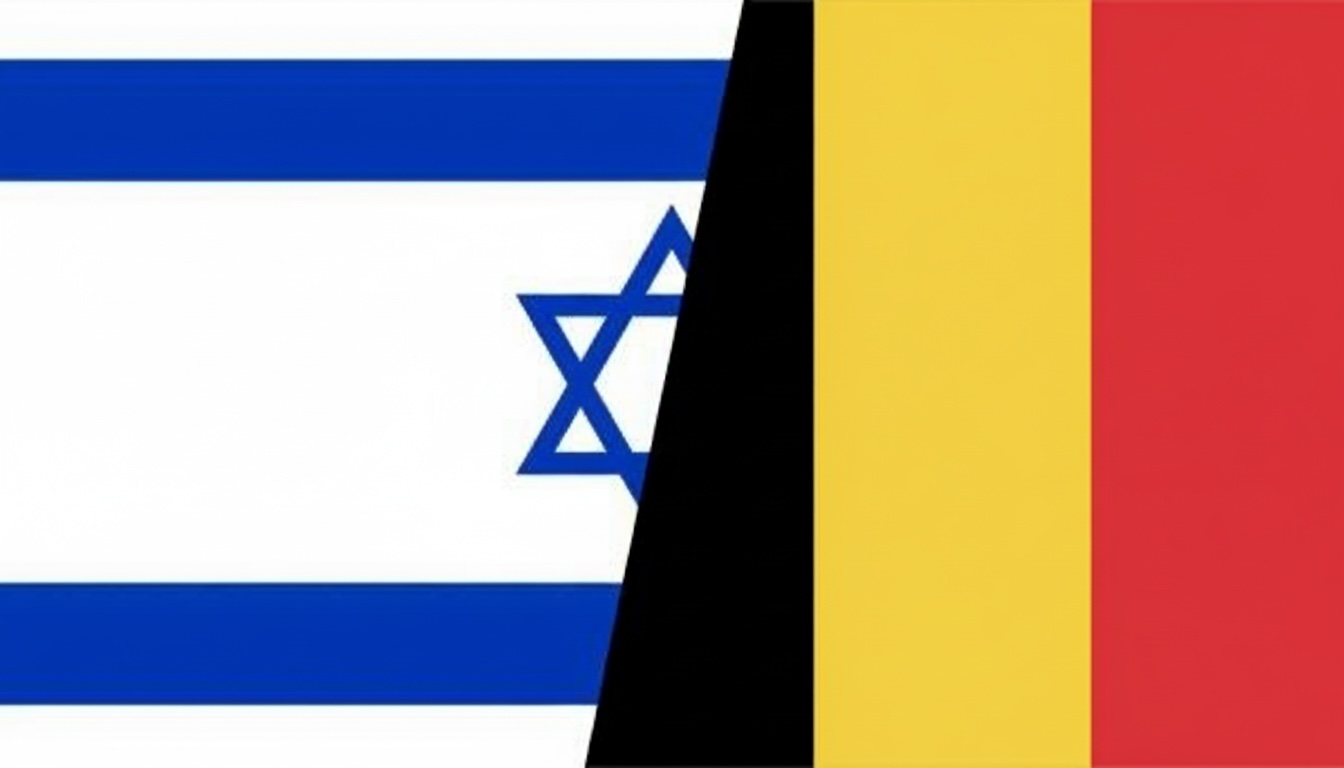
The public broadcasting structure in Belgium, which relies on a fixed annual rotation between the Belgian-Walloon national broadcaster RTBF and the Belgian-Flemish national broadcaster VRT, has generated professional and political controversy surrounding this year’s coverage. This year, the responsibility for selecting the entry fell to RTBF, which selected the singer Essyla to represent the nation in the first semi-final.
In contrast, the Flemish national broadcaster VRT – which is not responsible for the delegation this year but will broadcast the Contest – has chosen an unusually critical editorial line. The network announced that before each broadcast, it will air a special analysis program titled: “Why Israel’s participation caused a division in Europe”.





Broadcast Provocations
When the subject of the Flemish national broadcaster’s coverage first arose this year, they announced that they would not be sending the regular Flemish commentator, Peter Van de Veire, to Vienna. Instead, he will commentate on the competition from the broadcaster’s studios in Brussels.
Over the past week, Flanders has been in turmoil following several statements related to the Israeli entry and the contest. The issue returned to the headlines when an opposition member of the Flemish Parliament, Gwendolyn Rutten, spoke harshly against Israeli policy. During a program on the Flemish national broadcaster where she was a guest, she stated:
“We must hit Israel, which is guilty of genocide, where it hurts the most: the wallet. The fewer viewers there are, the fewer votes there are”.
During her remarks, she also called for a boycott of the main sponsor of Eurovision, Moroccanoil, calling it a “Jewish” company before correcting herself to the word “Israeli”. She further appealed to labor unions and the network’s CEO, Frederik Delaplace, for civil disobedience, stating she would support any wildcat strikes or “pulling the plug” on the Flemish national broadcaster.
Political Tension and Critical Coverage
The following day, the competition was discussed in the Media Committee of the Flemish Parliament, with a proposal to ban the broadcast of the contest on the national broadcaster. The proposal, initiated by a minority party representative, was brought to the parliament by Rutten, who is a member of the committee. After a heated debate, the proposal was rejected, while three opposition parties supported it, it faced opposition from all coalition parties and the radical right-wing opposition party.
Consequently, VRT issued a press release announcing their decision to cover the contest—which features 35 participating nations—but in an even more critical manner. They will create 15-minute programs to be broadcast immediately before the live shows, summarized as “Why Israel’s participation caused an unprecedented division in the European community.” In the statement issued by the national broadcaster, they noted that this is not a regular year and they must analyze these critical issues, citing local cultural protests and boycotts against the Israeli delegation.
Two years ago, the Flemish national broadcaster and local labor unions interrupted the broadcast before the semi-final to display a message on screen:
“This is an industrial action. We condemn the human rights violations of the State of Israel. Furthermore, the State of Israel destroys freedom of the press. This is why we are stopping the broadcast for a moment”.
Last year, they also aired a campaign by Oxfam Belgium against Israeli policy before the first semi-final and selected a singer who had spoken out against Israel for a jury role.
Outcry in Belgium Following Statements
The statements made by Rutten have caused a significant stir in the country. Ralph Pais, Vice Chairman of the Jewish Documentation and Information Center in Belgium, noted that this constitutes classic and dangerous antisemitism, adding that the connection between Jews and money belongs in 1930s Germany, not modern-day Belgium. In an official response, the organization claimed that Rutten crossed a red line and that if she does not apologize, they will consider further action. The organization also criticized the Flemish national broadcaster for factual errors and a lack of counter-arguments during the televised discussion.
Furthermore, Filip Brusselmans, of the Vlaams Belang party, argued that she and her party are attempting to ride the wave of antisemitism present in the country. Additional criticism was directed at the appeal to labor unions, with many responses, including those from Members of Parliament, claiming it was an attempt to push the organizations to act according to the political agenda of opposition parties, while condemning the very suggestion of shutting down public television.
Essyla – Who Are You?

Essyla, born Alice Van Aesbeck and hailing from Bruges, Belgium, is a singer-songwriter who first gained national recognition after reaching the final of the ninth season of “The Voice Belgique” in 2021. From an early age, she formed her first musical ensemble and later continued her formal training at IMEP, a higher academic institution for music comparable to a conservatory. Her musical style draws influence from French chanson while blending pop with elements of jazz, folk, rock, and funk. In her artistic work, she emphasizes themes of empowerment and contemporary issues from a female perspective. Among her notable songs are “Let You Go” and “Not My Kind of Dude“.
Belgium at Eurovision 2026
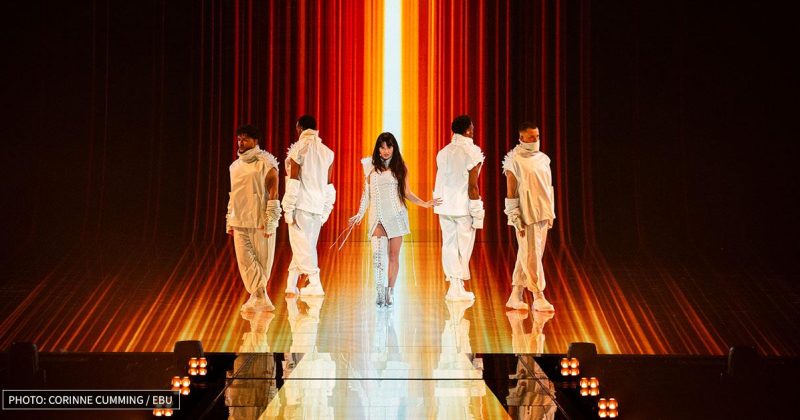
“Dancing on the Ice” is the title of the song to be performed by singer Essyla, who will represent Belgium at Eurovision 2026, set to take place in Vienna, Austria. Belgium will compete as song number 11 in the First Semi-Final on May 12th. The song was written by Essyla herself, alongside songwriter Barbara Petitjean.
Currently, Belgium is ranked 28th in the betting tables ahead of Eurovision 2026.
Eurovision 2026: This will be Belgium’s 67th participation in the contest. Belgium joined Eurovision in 1956 as one of its seven founding nations. The country’s best result came in 1986, when Sandra Kim won first place with “J’aime la vie”.