
Ten countries completed second rehearsals in Vienna. Get the full Eurovision 2026 Day 5 report.
The fifth day of rehearsals for Eurovision 2026 took place today in Vienna, Austria. This marks the conclusion of the second rehearsal round for the first ten countries of the first semi-final. Each delegation was granted 25 critical minutes of intensive work to polish the staging, lighting, and camera angles that will determine their fate in the competition. Among the 35 nations participating this year, the tension is visibly rising as the musical spectacle, which began on Saturday, moves closer to the live shows.


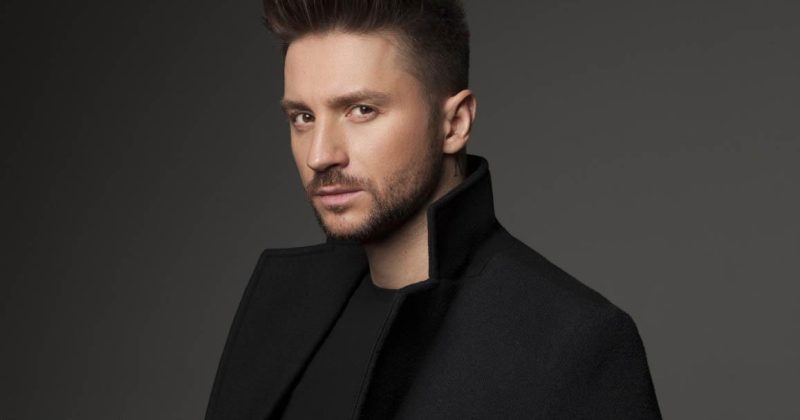
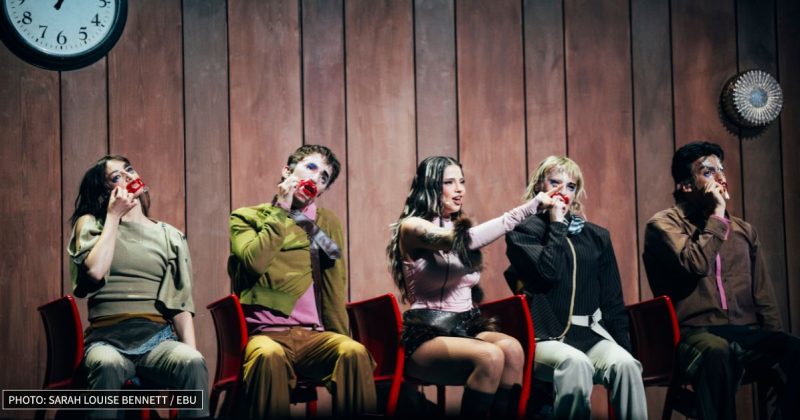



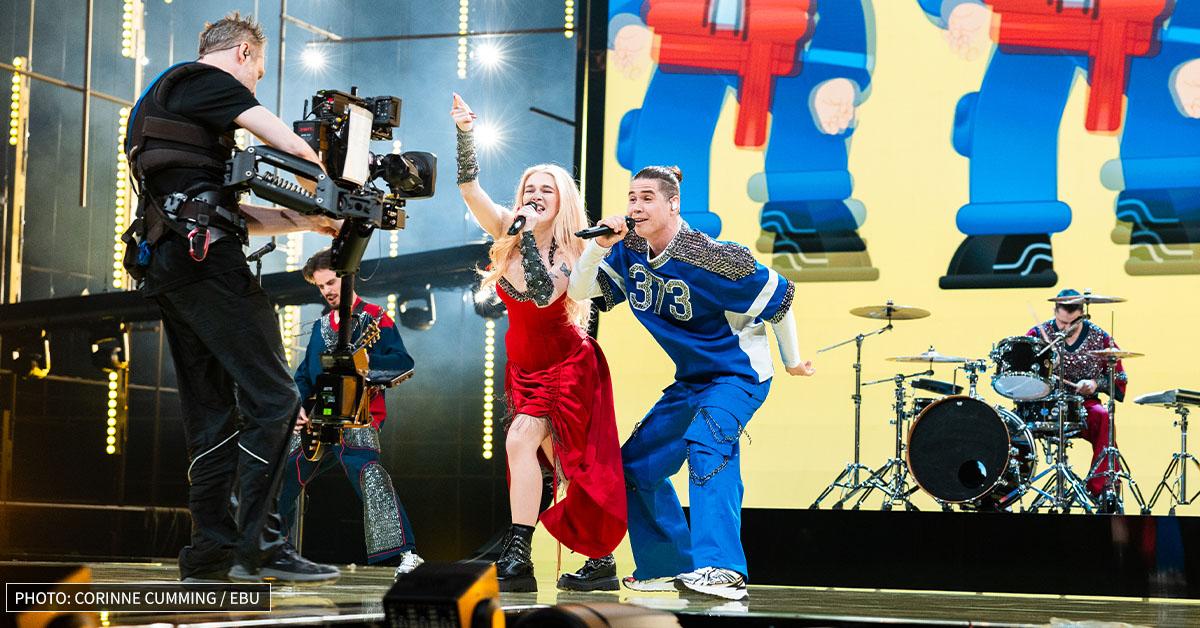
The rehearsal for the Moldovan singer, Satoshi, performing the song “Viva, Moldova!”, revealed a polished and precise show. The performance is bathed in the national colors of blue, yellow, and red. Alongside the heavy energy of guitars and drums, a Japanese-inspired animated character features on the screens, adding a lighthearted layer to the addictive rhythm. The artist demonstrates peak fitness and impressive vocal control despite constant movement, backed by dancers in bright red and dynamic camera angles that emphasize the “organized chaos” on stage.
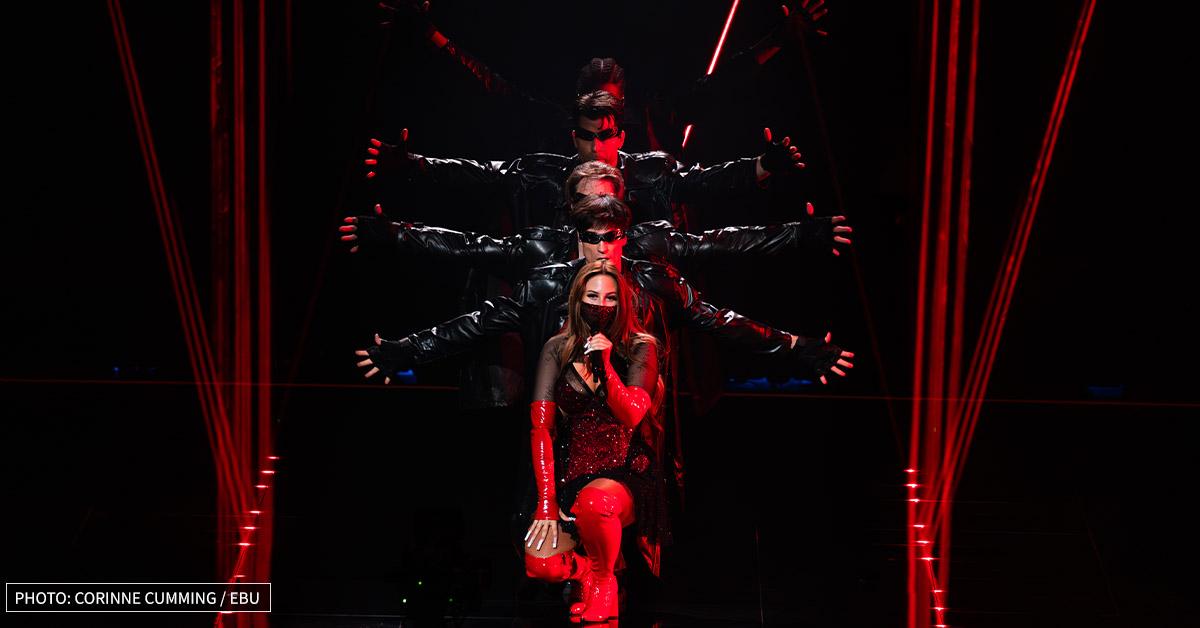
The Swedish performance by Felicia with the song “My System” confirms that Sweden is once again aiming for the top. Appearing in a shimmering “Black Widow” dress of red and black, the singer combines the iconic mask from the Swedish national selection with technological upgrades. These include laser effects she “tames” with her hands and an augmented reality climax where a giant figure of herself appears to climb from the screens into the audience. Her vocal performance sounds exceptionally stable, particularly on the high notes.
Greece at Eurovision 2026: Akylas’s Rehearsal Details Revealed
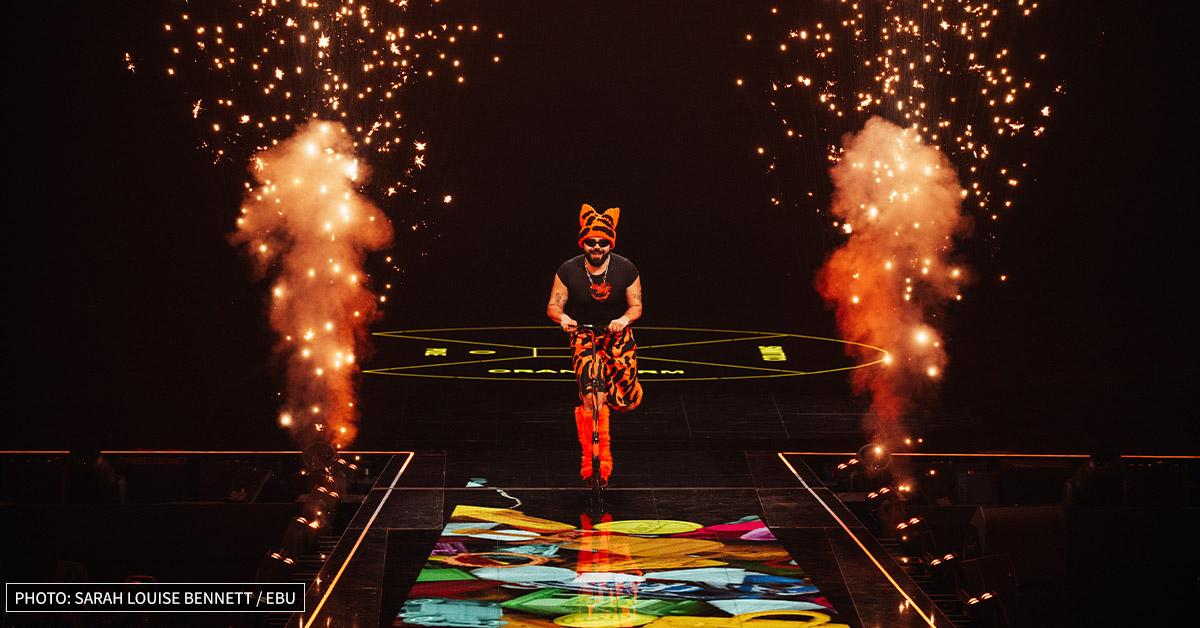
The Greek artist, Akylas, turned the stage into an immersive digital space with the song “Ferto” (in English: “Give It”). Sporting a leopard-print fur look in orange and black, he matches a digital avatar walking through the streets of Greece on the giant LED screens. The performance features a sharp emotional twist: the high energy halts, the flamboyant props are removed, and the singer turns for a personal, exposed moment directed at his mother, creating a deep human connection amidst the wild imaginary world.
Portugal at Eurovision 2026: Bandidos do Cante’s Rehearsal Details Revealed
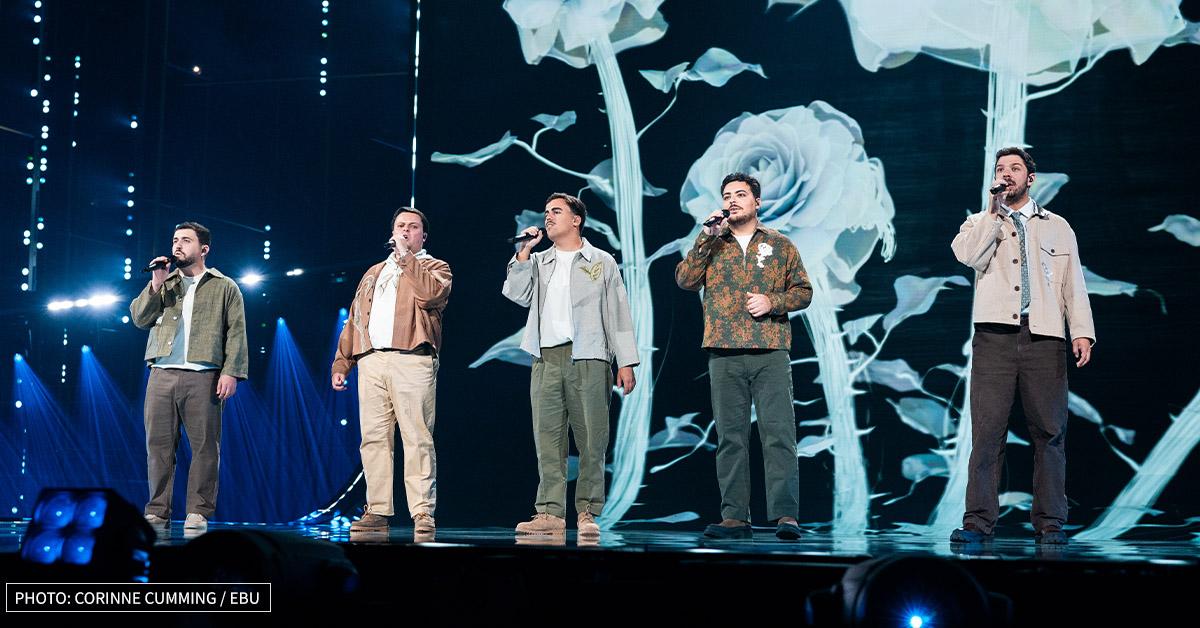
The Portuguese entry, Bandidos do Cante, presented a significant artistic and vocal leap with the song “Rosa” (in English: “Rose”). The show begins with the reveal of a mysterious violinist in a white suit surrounded by a swirl of white roots, while the band members demonstrate rich vocal harmonies in earth-toned outfits. On the LED screens, a white rose tree grows along the catwalk, turning the entry into a polished and sweeping performance that positions Portugal as a strong contender for a spot in the Grand Final.
Georgia at Eurovision 2026: Bzikebi’s Rehearsal Details Revealed
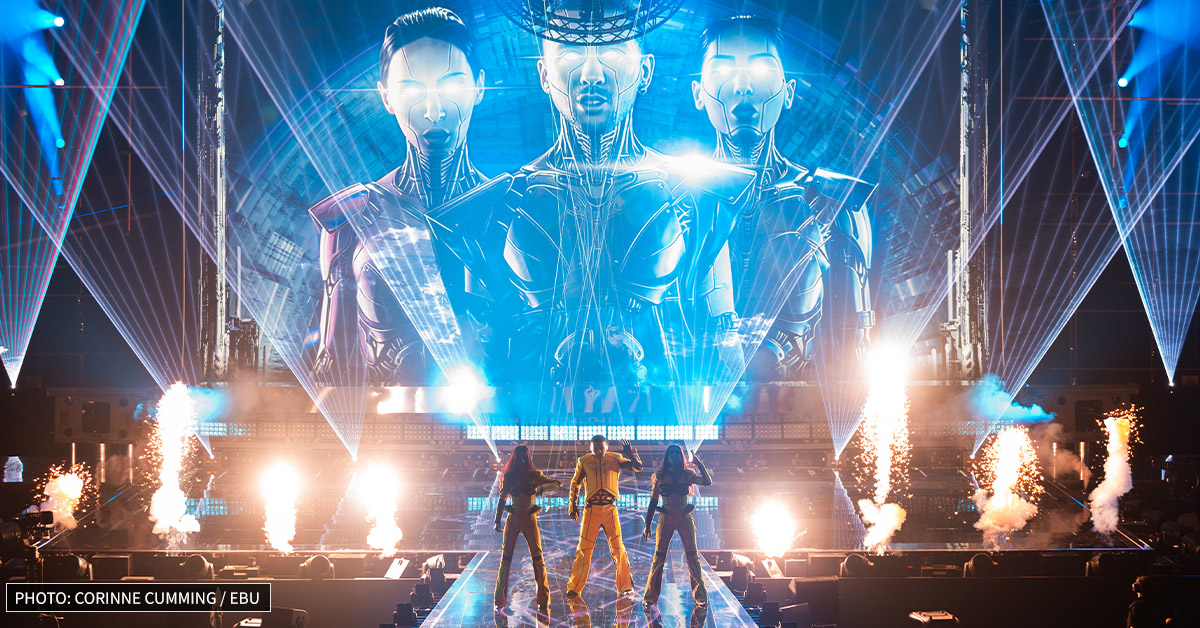
Representing Georgia, Bzikebi returned to the stage with their signature yellow and black combination in a futuristic, mature version for the song “On Replay”. The trio presented a powerful visual show featuring high-tech suits and robotic figures moving behind them. A highlight occurs when the band walks down the catwalk to the sound of traditional Georgian polyphony before an energetic dance break. While the visual language is sharp, some vocal coordination challenges were noted during this session.
Finand at Eurovision 2026: Linda & Pete’s Rehearsal Details Revealed
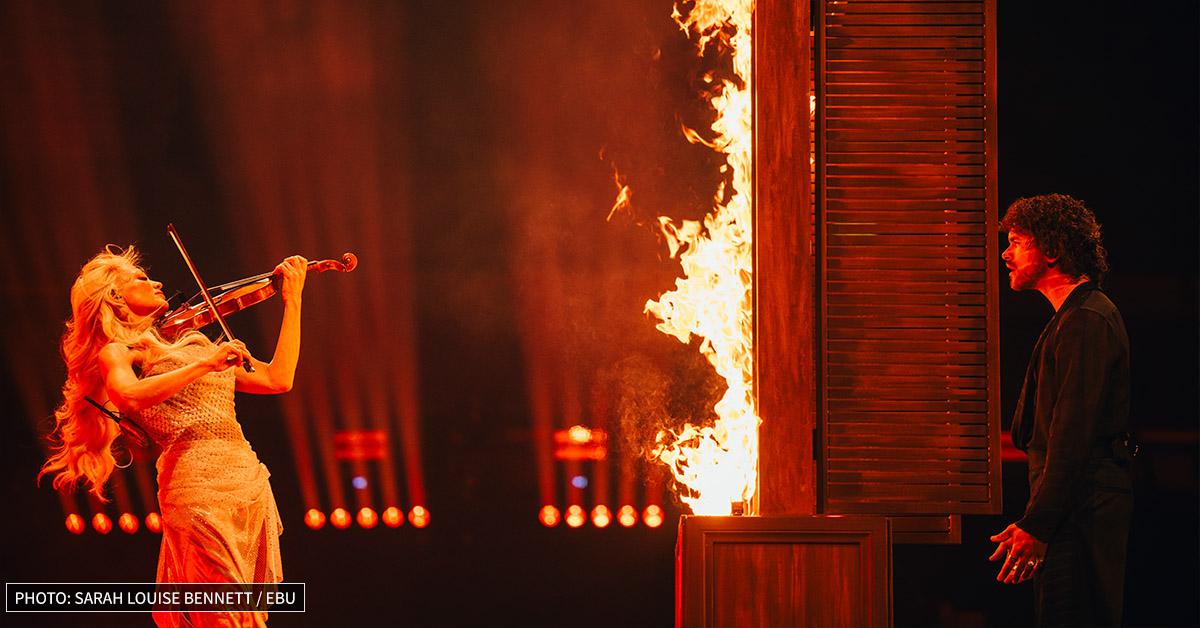
The Finnish rehearsal with Linda Lampenius and Pete Parkkonen set the stage on fire with “Liekinheitin” (in English: “Flamethrower”). The performance begins with the singer emerging from a dark confession booth with raw energy, while the violinist surprises the audience by playing live on stage—a rare and precedent-setting move for the contest. In a silver futuristic look, she moves through igniting fires until an aggressive encounter between the two in the heart of a “ruined” orchestral set. Finland positions itself as one of the most intense productions in the first semi-final.
Montenegro at Eurovision 2026: Tamara Živkovic’s Rehearsal Details Revealed
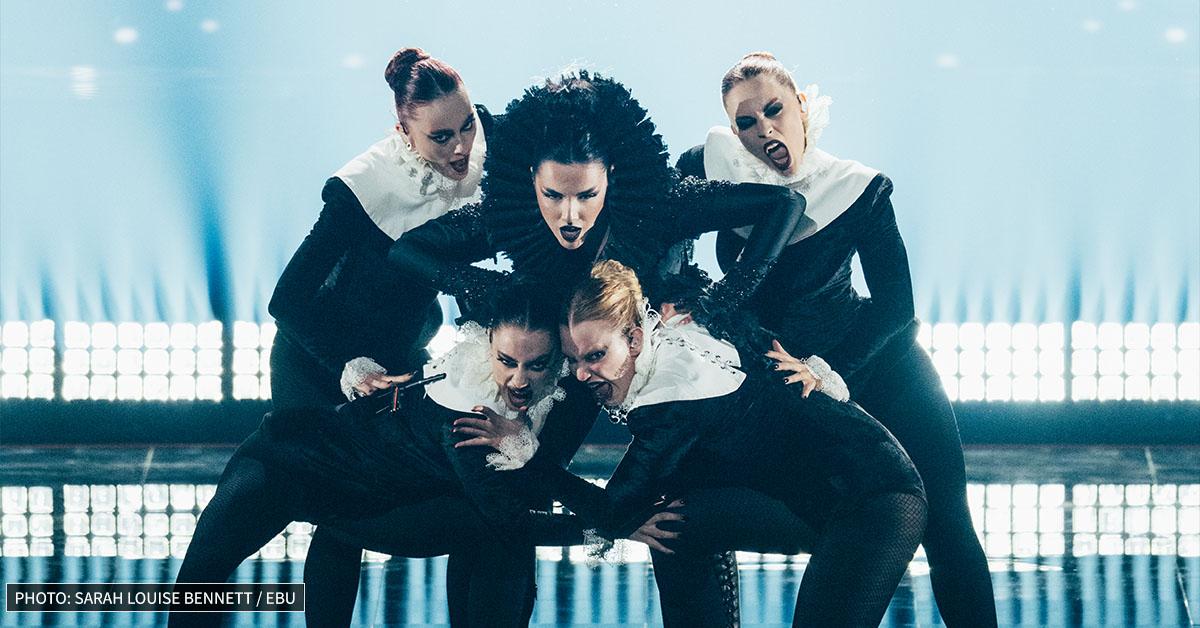
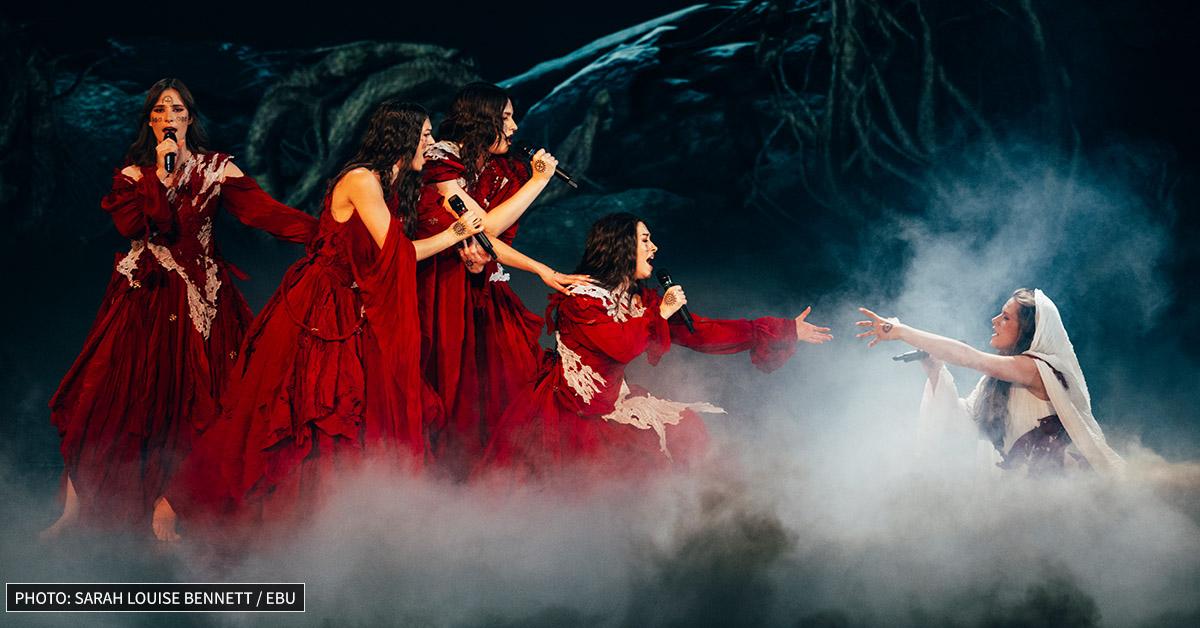
Tamara Živkovic from Montenegro revealed a ritualistic and dark performance for “Nova Zora” (in English: “New Dawn”). Dressed in a black bodysuit with a puffed collar, she is surrounded by four dancers performing circular movements. The show is immersed in intense red lighting and LED screens displaying red lightning. Despite the demanding choreography, the singer maintains impressive vocal stability, marking Montenegro as a bold artistic threat in the first semi-final.
Estonia at Eurovision 2026: Vanila Ninja’s Rehearsal Details Revealed
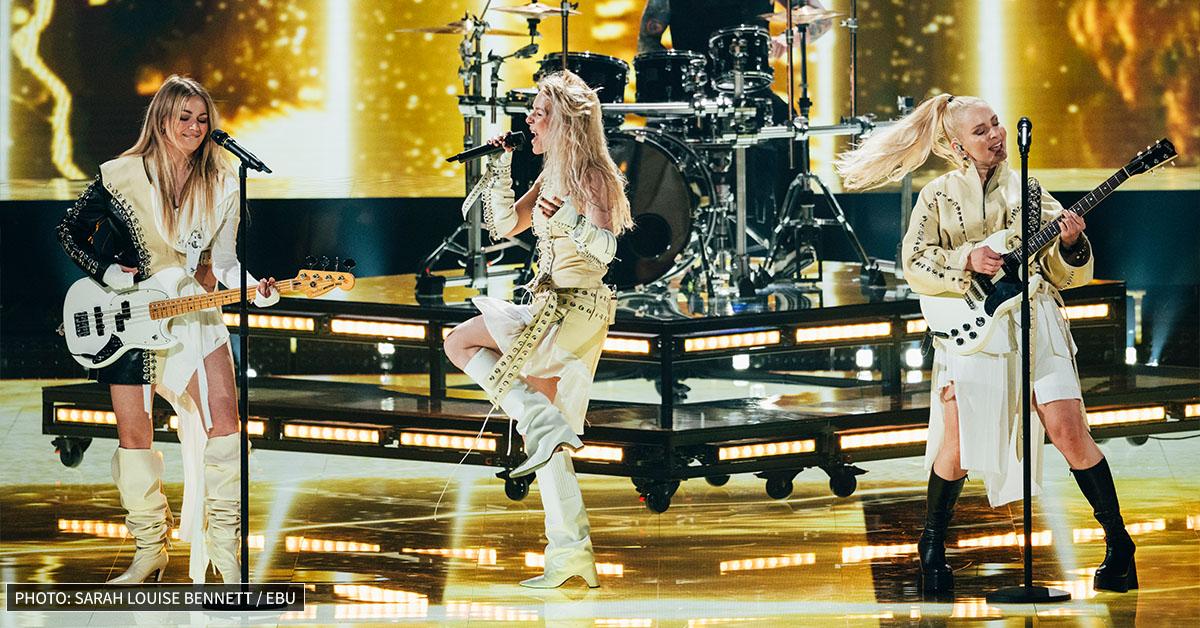
The legendary Estonian group Vanilla Ninja scorched the arena with their female rock performance of “Too Epic to Be True”. The three stand center-stage in white and cream outfits with high boots, accompanied by two musicians and a drummer on a rear platform. The show shifts from warm gold and red tones to a dramatic black-and-white aesthetic with effects of shattered glass during the powerful “Too Epic” chorus. Estonia will perform as song number 9 in the first semi-final.
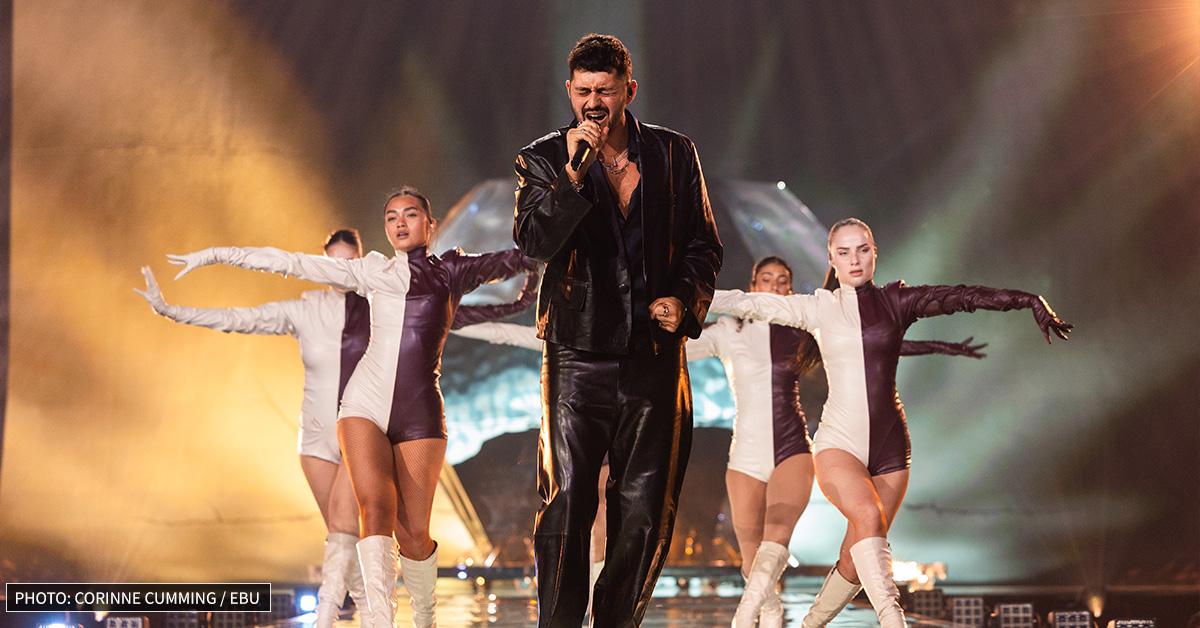
Israel at Eurovision 2026: Noam Bettan’s Rehearsal Details Revealed
Eurovision 2026 – Dates and times
Eurovision 2026 will take place in May, continuing the long‑standing tradition.
Here are the exact dates:
- First semi‑final: Tuesday, May 12th, 2026
- Second semi‑final: Thursday, May 14th, 2026
- Grand final: Saturday, May 16th, 2026
For those asking “What time does Eurovision 2026 start?”, each live show is scheduled to begin at 21:00 CET, making it accessible to viewers right across the continent.
Eurovision 2026: the 70th edition of the contest will take place in Vienna, Austria, on May 12th, 14th, and 16th, 2026. The Wiener Stadthalle arena, which will host the event, is expected to accommodate around 16,000 spectators per show. The contest returns to Austria following the nation’s third historic win with the song “Wasted Love”, performed by JJ. It will be Austria’s third time hosting Eurovision, after previous editions held in the country in 1967 and 2015.

Email: [email protected]
Phone: +972-50-9441919
Neta Geffen is a respected journalist at Euromix, Israel’s leading news site for Eurovision coverage. Since 2010, Neta has been closely following the Eurovision Song Contest, bringing with him extensive experience, profound knowledge, and a broad understanding of the history, politics, and cultural influences that shape the event every year.
Neta publishes articles, analyses, and up-to-date reviews on all Eurovision developments, including musical trends, format changes, political influences, and audience reactions across Europe and Israel. Thanks to a deep connection to the contest’s history, Neta provides readers with wide-ranging context—from the impact of political events on results, to in-depth analyses of songs and languages within the competition. Neta specializes particularly in the Eurovision rock genre, Balkan ballads, and native language entries, with a special focus on Italian and Greek songs.