
Spanish national broadcaster RTVE meets to evaluate Spain’s Eurovision 2027 participation, following mounting public complaints over its boycott against Israel.
This week, the board of directors of the Spanish national broadcaster RTVE will meet to determine if Spain will participate in Eurovision 2027, as reported by the Catalan radio station RAC1. The final participation confirmation deadline is today, though any nation may withdraw up to a month after this date without incurring a financial penalty. The coming days are critical for Spain’s potential return to the contest and for the ongoing boycott against Israel and Eurovision as a whole.






High-Stakes Decision for RTVE
RTVE’s decision regarding participation arrives after the formal submission deadline, which might sound illogical. Although Spain did not participate in Eurovision 2026 due to its decision to boycott the contest over Israel’s confirmed participation, Spain was still included in the Big 5 list in the official rulebook for Eurovision 2027, published by the European Broadcasting Union (EBU) about two months ago.
From this, it can be deduced that the EBU considers Spain an automatic participant, and RTVE now has to make a decision regarding a potential withdrawal, rather than a potential entry.
However, several countries, such as Hungary and the Netherlands, received an extension for their decision regarding Eurovision 2027 participation, meaning the EBU could have also granted RTVE the option to confirm its participation after today.
Despite hopes for Spain’s return, amidst the possible collapse of the boycott against Israel following the potential return of Slovenia and the Netherlands, Spain has not changed its anti-Israel stance. The Spanish government and the Spanish national broadcaster continue their harsh line against Israel, and therefore, Spain’s return to the competition seems like mere hope at this stage.
Public Backlash and Political Inquiries
According to a report by the RTVE Ombudsman, more than 100 public inquiries dealt directly with the Eurovision Song Contest, with the vast majority focusing on the broadcaster’s controversial decision to boycott the event.
Out of the inquiries received, 96 were official complaints heavily criticizing RTVE’s decision not to participate or broadcast the 2026 contest, making Eurovision the largest subject of complaints against the Spanish national broadcaster for the quarter.
The second most prominent issue, with 95 official complaints, was RTVE’s allegedly biased coverage of the “Sumud Flotilla” to the Gaza Strip, led by the daughter of the 2009 Swedish participant, Greta Thunberg.
As a reminder, RTVE announced a complete withdrawal from Eurovision 2026 last December and declared it would not broadcast the competition at all, in protest of the EBU’s refusal to expel Israel. This extreme move is not disconnected from the internal political context: the Spanish government, led by Pedro Sánchez, relies on a coalition with far-left parties and maintains a harsh diplomatic line against Israel.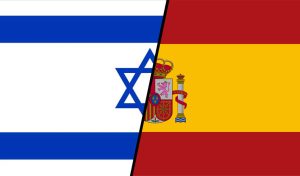
This conduct by the national broadcaster recently led to the establishment of a commission of inquiry in the Spanish Senate, designed to investigate politicization and government involvement in the boycott decision. Surprisingly, while the Senate investigates RTVE’s biases, the EBU chose to back the Spanish broadcaster, expressing “deep concern” over the inquiry, citing a breach of broadcast independence. Currently, it appears that these political struggles and alleged hypocrisies not only hurt the Spanish audience but also directly impact the European production budget and burden the other participating nations.
Spain has not yet decided whether it will participate in 2027 or continue to boycott the contest, but so far, it has not altered its rigid stance, which aligns with the hostility of the Spanish Prime Minister towards Israel.
Spain in Eurovision 2025
“Esa Diva” (in English: “That Diva”) is the title of the song performed by singer Melody, who represented Spain at Eurovision 2025 in Basel, Switzerland.
Spain finished 24th with 37 points – 27 points from the juries, placing 21st, and only 10 points from the televotes, placing 22nd. In the last 20 years, Spain managed to finish only 3 times in the top 10.
Eurovision 2025: This was Spain’s 65th participation in Eurovision. Spain joined the competition in 1961 and won it twice consecutively in 1968 and 1969. Spain has hosted the contest on its territory only once in 1969 and since then holds the longest waiting time since its last victory – 56 years.