
Following its announcement of the artists participating in its local music festival, Albania’s public broadcaster has officially confirmed its participation for Eurovision 2027 in Burgas.
Albanian national broadcaster RTSH has officially confirmed its place in the upcoming edition of the Eurovision Song Contest to be held in Burgas, Bulgaria in May 2027. This affirmation brings the number of countries up to 32, including The Netherlands, Ukraine, Belgium, Israel, and Greece. The official Eurovision website posted that Albania is opening up their Eurovision 2027 season, and it additionally stated that Albania is the first country to announce its selection method for the contest.
RTSH has also released a list of 28 artists that will compete in their 65th annual “Festivali i Këngës”, and will once again bring us their Eurovision representative via the winner of this festival. It will be held on December 17th-19th 2026, with the final broadcast on the 20th at 21:00 CEST, and will serve as the pre-Eurovision selection for Albania.




The Participants
The official list of competitors in this year’s “Festivali i Këngës” includes both artists with musical experience and some just breaking onto the scene:
- Adhurim Demiri
- Alegra Jaho
- Algert Sala
- Ana Bushgjokaj
- Ardit Çuni
- Arsi Bako
- Auron Deva & DJ Sardi
- Chip Deva
- Djemtë e Detit
- Eldis Arrnjeti
- Erinda Agolli
- Gigliola Haveriku
- Gjergj Jorgaqi
- Herva Novaku
- Josif Gjipali & Ardita Meni
- Kejsi Jazxhi
- Kejsi Tola
- Khuba-Shkelzen Rexhaj
- Leandra Godaj
- Martina Serreqi
- Michela Paluca
- Orgesa Zaimi
- Petro Fejza & Antonio Papa
- Rei Bezhani
- Sara Bajraktari
- Sigi Bastri
- Vanesa Sono
- Xhoni Jesku
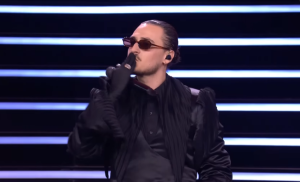
Several names here may sound familiar:
Kejsi Tola – Perhaps the most prominent name on this list. After winning the Albanian Eurovision Song Contest in 2008, the singer represented Albania in the 2009 Eurovision Song Contest with “Carry Me in Your Dreams” held in Moscow, where she qualified for the final and ended up in 17th place. Kejsi Tola has returned to the Albanian Eurovision Song Contest many times, including 2009, 2010 and 2012.
Orgesa Zaimi – Though not the official participating artist, Orgesa went to Eurovision 2009 as a backing singer for Kejsi Tola. She then went on to compete in the Albanian pre-qualifiers in 2015, 2017 and 2024.
Ardit Çuni – This singer-songwriter competed in the Albanian Eurovision 2024 qualifier with “Amane” and eventually finished in 7th place.
Djemtë e Detit – Back in 1999, the veteran rock band participated in the Eurovision qualifier and then returned in 2024 with the song “Larg”, reaching sixth place.
Adhurim Demiri – As a singer, Adhurim took part in local Eurovision selection in 2010, but did not reach the final that year.
Algert Sala – In the recent 2024 Eurovision qualfier, this singer tried his hand with the song “Bosh” and finished in eleventh.
Kejsi Jazxhi – Another “Festivali i Kenges” 2024 participant, Kejsi entered with “Kur bota hesht” and secured 12th place in the final.
Martina Serreqi – Yet again an artist from the 2024 pre-selection. The singer could not qualify for the final that year with “Nëse qaj”.
What to know about “Festivali i Këngës”
“Festivali i Këngës” has not always been Albania’s Eurovision selection method; in fact, the very first edition of the music festival was back 1961. It was only relatively recently at its 43rd edition where it became the Eurovision pre-qualifier for Albania’s debut at Eurovision for the 2024 contest.
Over the years, the format has changed: along with the traditional judges’ selection, an audience vote was added, sparking controversy and discussion of artistic versus popularity decisions. In 2025, the system returned to an evenly split vote between the jury and the public, giving each an equal say for the final choice on their representative.
As is tradition, all contestants must sing in Albanian by the festival, but the winner has the option of singing in a different language at Eurovision. Additionally, contestants must have Albanian citizenship. Albania tends to send unique songs that display its rich culture and give it an ethnic and authentic feel, adding its own flavor to the diverse tapestry of Eurovision.
Albania at Eurovision 2026
Alis performed “Nân” in Vienna, Austria for the Eurovision Song Contest 2026. He reached the final and finished with 145 points, securing 13th place for Albania.
Eurovision 2027: This will be Albania’s 23rd participation in the Eurovision Song Contest since its debut in 2004. The country’s highest placement belongs to Rona Nishliu in 2012 with the song “Suus”.