
Moldova unveils the Eurovision revamp of “Viva, Moldova” by Shatoshi, with the return of Eurovision legend for Vienna 2026.
The new version of Moldova’s Eurovision song, “Viva, Moldova” has been released. The track will be performed by Satoshi, who was selected to represent Moldova in the first half of the first semi-final of Eurovision 2026, scheduled for May 12 in Vienna, Austria. Currently, Moldova is ranked 28th in the betting odds tables.

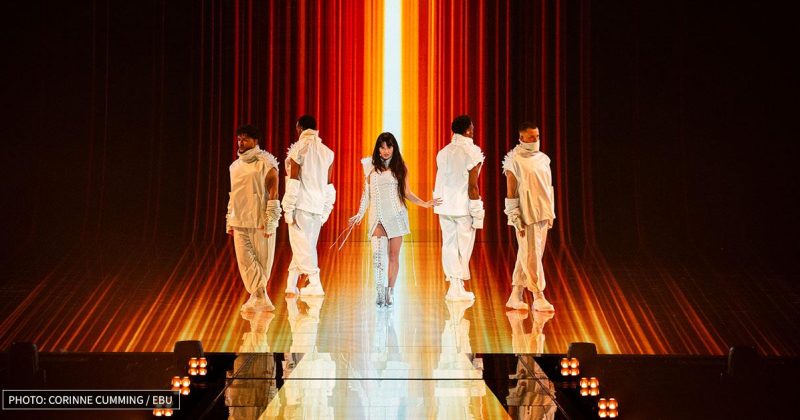




Listen to Moldova’s Eurovision revamp of “Viva Moldova”:
“Moldova = Europe”
Following the release of the music video, Satoshi explained that his goal was not merely to release a song for the competition, but to make a loud and positive statement: “Moldova is Europe.” In the message accompanying the video, he wrote that he hopes to represent his homeland, the Republic of Moldova, on the Vienna stage, believing that its place is at the heart of the European cultural sphere. According to him, through the song and performance he aims to support the Moldovan public’s aspiration for a European path and to promote unity between countries and cultures through music and friendship.
Satoshi explains that he deliberately chose a pan-European language one that audiences across the continent would understand while still preserving local depth and meaning. His intention was to create both a cultural identity map of Moldova and a bold, yet light-hearted, statement about the country’s character. According to him, the so-called “complex of a small country” is actually part of the charm: Moldova may be small in territory, but it is rich in its people.
This idea is also reflected in the song itself. The track blends Romanian with various European greetings and expressions, creating a lively and multilingual portrait of Moldova. Alongside references to places such as Soroca and the word “Europe,” listeners can also hear local symbols such as “Doina,” “Hora,” and imagery of a family table and a typical Moldovan celebration.
As part of this unique concept, he even changed the lyrics in one of the choruses from “Republica Moldova” to “Welcome to Moldova” a seemingly small change that continues the same open and inviting message: Moldova as a small, warm, proud country that is open to the world.
Strong Collaborations on Stage
In Satoshi’s official music video, he is joined by the Moldovan national dance ensemble “Joc” which accompanies him throughout the song and adds authentic folkloric color to the performance. The project will also include singer Aliona Moon, this time officially, as a supporting vocalist. After the third version of the song, in which the track underwent a significant musical rearrangement, Aliona Moon receives a more prominent vocal role and even performs her own musical solo.
This is not Aliona Moon’s first Eurovision appearance she first stepped onto the Eurovision stage in 2012 as a backing vocalist for her colleague Pasha Parfeny with the song “Lăutar” (In English: “Violinist”), and later represented Moldova herself in 2013 with the song “O Mie” (In English: “One Thousand”). Her participation in the project alongside the Joc ensemble creates a connection between generations and styles within the Moldovan pop scene.
It appears that Moldova is aiming higher than ever this year, as Satoshi received a prize of approximately 60,000 USD from the Moldovan national broadcaster TRM. Now, with significant reinforcement from Aliona Moon and the Joc ensemble, the project has become one of the most ambitious musical productions the country has sent in recent years.
Satoshi – Who Are You?
Satoshi (real name: Vlad Sabajuc) is a Moldovan musician and singer-rapper who, in recent years, has established himself both locally and internationally through the release of several successful singles, collaborations with various artists, and music videos that have amassed millions of views across social media and digital platforms.
In 2026, he decided to try his hand at Eurovision for the first time, competing in Moldova’s national selection “Selecția Națională 2026” with the song “Viva, Moldova” a patriotic work combining a message of national unity with aspirations for European integration through music, aiming to represent Moldova at the Eurovision Song Contest in Vienna.
Within the public discourse surrounding the national selection, Satoshi was regarded as one of the standout contenders. He received significant attention not only for the song’s energy and compelling performance, but also due to statements made on social media that sparked discussion about the boundary between political expression and participation in an international music competition.
This marks the first time Satoshi has officially participated in Moldova’s Eurovision national selection, as well as his debut involvement in the Eurovision selection process overall.
Moldova at Eurovision 2026
“Viva Moldova” is the song that will be performed by the singer Satoshi, who will represent Moldova in the first semi-final on May 12th in Vienna, Austria. The song was written by Satoshi himself, marking the first time he has ever competed in a national Eurovision selection.
The track is a patriotic and energetic song that celebrates Moldovan identity, local culture, and the emotional connection to homeland and roots. It combines modern rhythms with musical elements traditionally associated with the region. The song conveys national pride, a sense of unity, and a call for renewal and hope. Its lyrics emphasize resilience in the face of challenges, belief in a better future, and the aspiration to see Moldova as a strong, confident country integrated within the European community. Music serves as a unifying force that transcends political and social boundaries.
Currently, Moldova is ranked 28th on the betting odds ahead of Eurovision 2026.
Email: [email protected]
Phone: +972-53-9514754
A writer and content creator with a strong specialization in the Eurovision scene, particularly across Eastern Europe and post-Soviet countries. His work highlights the artistry, storytelling, and cultural variety that define the contest, offering readers a deeper look into both established performers and emerging voices.
As a skilled translator and polyglot, he brings a unique linguistic and cultural understanding to his analysis and coverage..