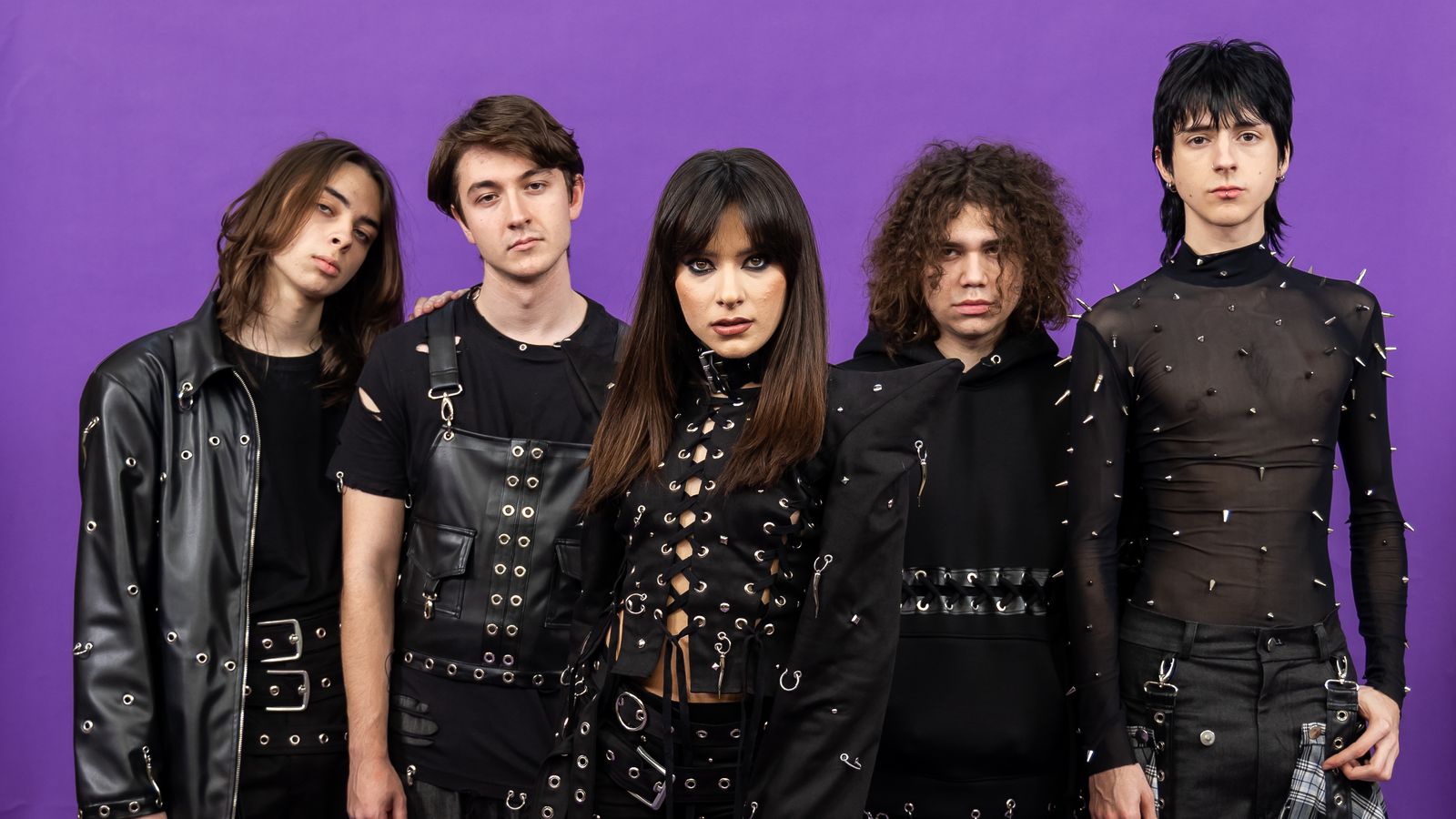
Romanian Eurovision 2026 representative defends her song “Choke Me,” and responds to its disqualification Demands in Romania
The drama surrounding the Romanian entry for Eurovision 2026 in Vienna is intensifying. Following a wave of sharp criticism from social activists and experts calling for the disqualification of the song “Choke Me” – claiming it normalizes dangerous practices – the Romanian representative, Alexandra Căpitănescu, has decided to break her silence and provide a profound explanation for the lyrics that sparked the outcry.
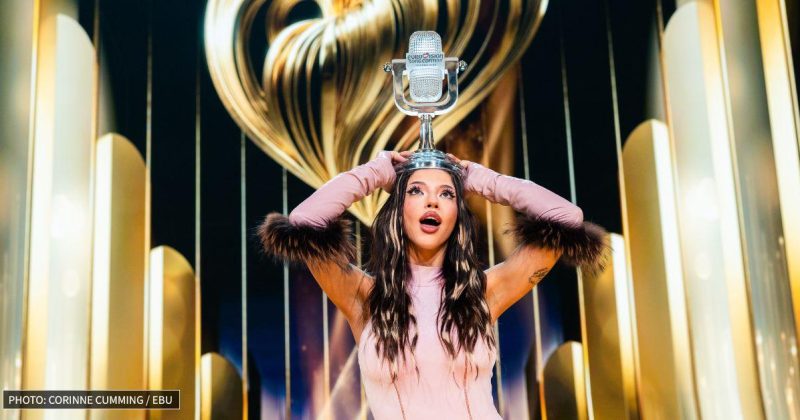



In an official post shared on social media, Căpitănescu addressed her critics directly to clarify her artistic intent. “I’ve read the conversations around ‘Choke Me’ and I want to share with you what this song means to me,” the singer wrote.
“The Song Was Never Intended to Represent Anything Sexual”
Căpitănescu emphasizes that the choice of harsh terminology was not intended to encourage physical or sexual violence, but rather to describe internal psychological distress. ” ‘Choke Me’ is a metaphor for the pressure we sometimes place on ourselves,” she explained. “It speaks about inner fears, self-doubt, and the feeling of being emotionally suffocated by our own expectations. It was never intended to represent anything sexual.”
According to the artist, as a songwriter, she utilizes symbolism to give shape to feelings that are difficult to explain in simple words: “This song reflects the weight of certain emotional struggles and the journey of reclaiming your voice and autonomy. The lyrics are about taking back control over anxiety and emotions that are choking you!”
Artistic Freedom or Crossing a Red Line?
Alexandra’s response comes amid growing pressure on the EBU to examine whether the song violates competition rules prohibiting offensive messaging. While the singer asserts, “I also believe deeply in the freedom to express complex emotions through art,” critics argue that even if the intent is metaphorical, the final result and the frequent repetition of the term “choke” could be interpreted dangerously by a younger audience.
Căpitănescu concluded her statement on a conciliatory note: “I’m grateful to everyone who listens and engages with my music in good faith.”
הצגת פוסט זה באינסטגרם
What Lies Ahead for Romania?
As of now, the Romanian national broadcaster (TVR) and the European Broadcasting Union have not issued an official statement regarding a change in lyrics or the disqualification of the song. However, Eurovision history demonstrates that when significant public pressure builds around “problematic” texts, countries are sometimes required to make adjustments to remain in the competition. Whether this will occur in this instance remains to be seen.
Alexandra Căpitănescu – Who Are You? 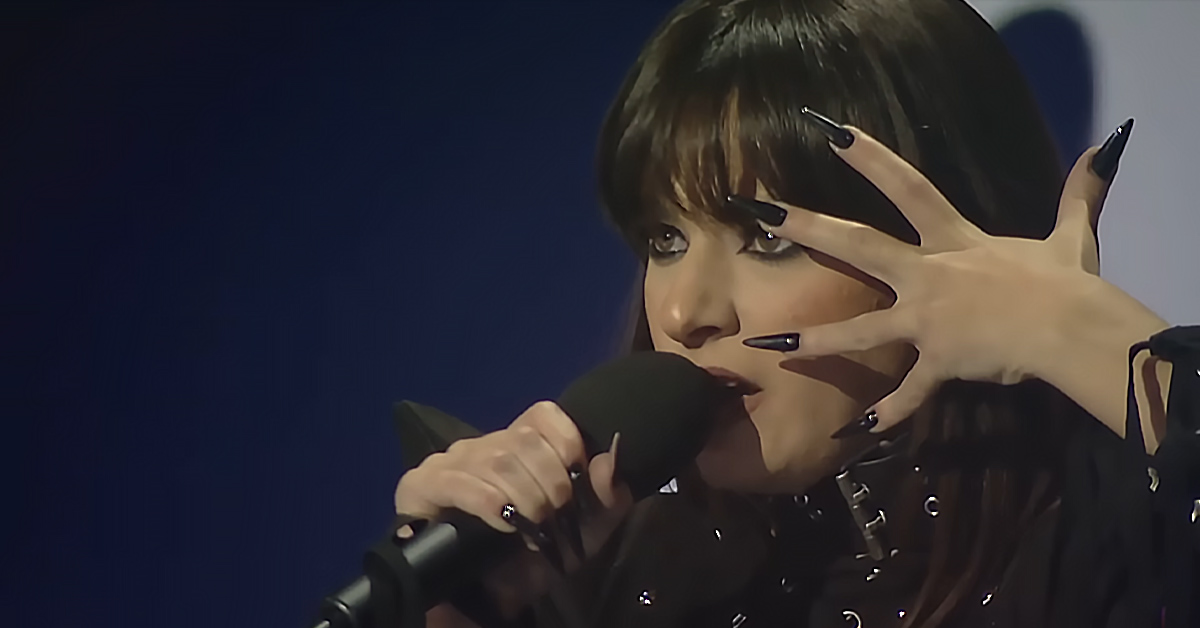
Alexandra Căpitănescu is a young singer who won the 11th season of the Romanian version of The Voice, “Vocea României.” In previous years, she also took part in the Romanian versions of The X Factor and Romania’s Got Talent.
Immediately after her victory on the show, she began releasing her debut single “Căpitanu,” and in 2024 she released her first EP, also titled “Căpitanu,” which includes the lead single along with four additional tracks. She has now been selected through Romania’s national selection “2026 Selecția Națională” to represent Romania at Eurovision 2026 in Vienna, Austria, with her song “Choke Me.”
Romania at Eurovision 2026
“Choke Me” is the title of the song that will be performed by Alexandra Căpitănescu, who will represent Romania at the first half of Semi-Final 2 at Eurovision 2026 in Vienna, Austria, on May 14. The song was written by Alexandra Căpitănescu and Elvis‑Claudiu Silitră, and composed by Căpitănescu, Silitră, Călin‑Alexandru Grăjdan and Ștefan Condrea. This is the first Eurovision entry for both the performer and the songwriting team.
The song “Choke Me” is a provocative, intense dark‑pop anthem that explores the thin lines between destructive desire, control and total surrender within a turbulent relationship. The lyrics move between a demand for submission and a longing for external control: the performer addresses a “Phantom” figure and lays down strict rules of loyalty and obedience, “Do what I say / And don’t you ever betray me.” The song describes a craving for love that is not just an emotion but a suffocating, overwhelming physical force. The recurring imagery of choking – “Choke me” – and the line “Make my lungs explode” serve as metaphors for a passion so strong it threatens the very ability to breathe, expressing a wish to be completely consumed by the other person.
Currently, Romania is ranked 17th in the betting tables ahead of Eurovision 2026.
Eurovision 2026: This will be Romania’s 25th participation in Eurovision. Romania joined the contest in 1994 and achieved its best result both in Eurovision 2005 and Eurovision 2010 when Romania finished in third place.

Email: [email protected]
Phone: +972-50-9441919
Tal Dahan – Journalist, radio broadcaster, and Eurovision content creator.
Tal Dahan is an Israeli journalist and editor specializing in the Eurovision Song Contest, working with the EuroMix editorial team for four years. Since 2022, she has provided regular on-site coverage of Eurovision from the host city, and from 2023 has also reported directly from the press room—offering the Israeli audience live updates, exclusive interviews, and in-depth commentary.
Tal is a member of the Eurovision tribute and parody band “EuroFalsh,” a radio broadcaster, and a student of political science and communications.
She is considered one of Israel’s leading young Eurovision experts. In addition to covering the main contest, Tal has reported from Eurovision pre-parties and national selection events across Europe (in Thessaloniki, Stockholm, Madrid, and more), been interviewed by major media outlets in Israel and internationally, and presented Eurovision-themed podcasts and radio shows.