
According to reports, the EBU approved televoting reforms for Eurovision 2027 at the Prague General Assembly to “curb geopolitical voting trends”.
The rules of the game are changing. The European Broadcasting Union (EBU) General Assembly, which concluded yesterday (Friday) in Prague, brought dramatic news that is poised to fundamentally alter how public voting impacts the scoreboard. According to reports by the Greek Eurovision outlet, Eurovisionfun, the union approved a comprehensive reform package for the televoting system ahead of Eurovision 2027, with the goal of reducing “political voting”.
Behind the reported discussions lies a remarkable phenomenon in the competition’s history. In recent years, exceptionally dedicated fanbases and public voting campaigns have demonstrated unprecedented strength on the scoreboard. While this overwhelming show of public support highlights the undeniable passion of the viewers, who have successfully maximized their voting power within the official rules, it has also caused some strategic headaches for several European national broadcasters and EBU officials.
Addressing Geopolitical Voting Trends
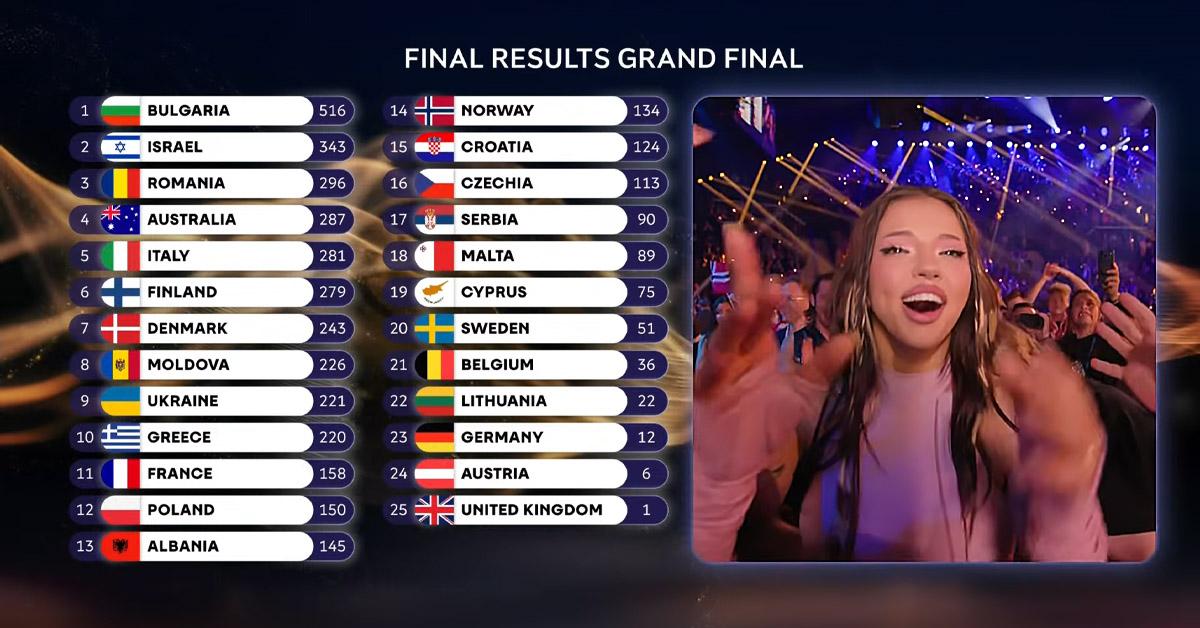 To understand how targeted these new changes are, one only needs to look at the staggering public voting data from the last three years. In Israel’s case, despite receiving less favorable backing from the professional juries or facing tense atmospheres inside the arena, the viewing public has repeatedly sent clear messages. At Eurovision 2024, Eden Golan finished in second place in the televote with the song “Hurricane”. The following year, Yuval Raphael won the public vote outright with the entry “New Day Will Rise”. Most recently, at Eurovision 2026, Noam Bettan finished third in the televote and second overall with the song “Michelle”.
This consistent public dominance demonstrated to organizers that highly mobilized fanbases and diaspora communities worldwide have mastered maximizing their voting power. Ahead of Eurovision 2026, the EBU had already attempted to restrict concentrated voting for single nations by lowering the maximum voting limit from 20 to 10 votes per viewer, reintroducing juries to the semi-finals, and banning state-sponsored promotional campaigns. Given that these strong public voting patterns continued, reports suggest that this persistent momentum may have prompted the union to consider a much deeper structural reform, leading to the changes currently being discussed.
Structural and Algorithmic Adjustments
While the full technical details of the new mechanism have not yet been officially disclosed by the EBU and are expected to be published in the coming weeks, sources from inside the General Assembly report to Eurovisionfun that the change involves an algorithmic and structural overhaul of how points are calculated. The objective is to ensure that mass mobilizations in specific countries or highly concentrated voting blocs from supportive communities – particularly affecting entries from nations like Ukraine or Israel during times of international tension – will no longer carry the same weight as they did in the past, thereby reducing their comparative advantage in the televote.
Flemish Broadcaster VRT Drops Exclusion Bid
In addition to the voting system overhauls, the drama in Prague extended into administrative discussions. In recent weeks, persistent rumors suggested that the Belgian Flemish national broadcaster, VRT, intended to utilize the assembly to demand a re-vote regarding Israel’s eligibility to participate in the contest.
Discussions at the assembly revealed that such pressure did indeed exist behind the scenes. However, according to Eurovisionfun, no official proposal for disqualification was ultimately submitted. It appears that opponents of certain delegations realized such a move would not withstand the legal scrutiny of the official contest rules, while concurrently, the EBU proceeded to advance voting regulations that will naturally tighten rules across the digital voting board.
 Despite these regulatory shifts, past precedents show that technical voting changes do not always harm the “targeted” entries. At Eurovision 2026, the Israeli entry still managed a second-place finish overall, proving that previous adjustments were not necessarily detrimental. It remains entirely possible that the upcoming Eurovision 2027 changes, which have yet to be fully detailed or officially verified by the EBU, may turn out to be less drastic in practice than they appear on paper. The history of the competition demonstrates that past attempts to alter public results often trigger an even greater mobilization from dedicated fans at home. Whether the EBU will achieve its desired balance this time, or whether motivated voting blocs will override the new regulations, remains to be seen.
Israel at Eurovision 2026
“Michelle” is the song that was performed by the singer Noam Bettan, who represented Israel at Eurovision 2026 in Vienna, Austria, and came in second place with 343 points. The song was written by the singer Yuval Raphael, Tslil Klifi, and Nadav Aharoni – three prominent figures in the Israeli music scene, with Yuval Raphael, who represented Israel in the previous Eurovision as a singer. The song “Michelle” is about choosing to break free from a toxic emotional cycle. It’s a story of growth and emotional maturity – a moment when the protagonist realizes they must let go and choose their new path on their own. The song was performed in Hebrew, English and French.

Email: [email protected]
Phone: +972-50-9441919
Tal Dahan – Journalist, radio broadcaster, and Eurovision content creator.
Tal Dahan is an Israeli journalist and editor specializing in the Eurovision Song Contest, working with the EuroMix editorial team for four years. Since 2022, she has provided regular on-site coverage of Eurovision from the host city, and from 2023 has also reported directly from the press room—offering the Israeli audience live updates, exclusive interviews, and in-depth commentary.
Tal is a member of the Eurovision tribute and parody band “EuroFalsh,” a radio broadcaster, and a student of political science and communications.
She is considered one of Israel’s leading young Eurovision experts. In addition to covering the main contest, Tal has reported from Eurovision pre-parties and national selection events across Europe (in Thessaloniki, Stockholm, Madrid, and more), been interviewed by major media outlets in Israel and internationally, and presented Eurovision-themed podcasts and radio shows.