Eurovision has always been a battleground between audience and jury – tight contests, last-minute decisions, judging errors, and unexpected twists. How did Eurovision become the stage for historic dramas?
The Eurovision Song Contest, one of the world’s largest and most-watched entertainment events, continues to deliver moments of tension, major drama, and unexpected surprises – especially around the ongoing battle of the scoreboard. For over six decades, Eurovision’s history has been marked by close decisions, technical errors, last-minute reversals, and broken records – all of which make the contest a hotbed of excitement.
Head-to-Head Battles: The Jury’s Votes Era
 The tight contest in Eurovision is no recent invention – it’s part of the contest’s DNA. In the 1960s, voting was done via rotary phones – technology that often betrayed participants, hosts, and the flow of the competition itself. Glitches, poor reception, and human errors turned each grand final into an unpredictable event, where even the leading contenders couldn’t be sure of victory until the very last second.
Already in 1963, a rare event almost changed history: a technical error in announcing Norway’s points led to a re-vote, when Norway could have awarded victory to Switzerland instead of Denmark.
Eurovision 1968 in London was especially tense, with all Europe holding its breath: Cliff Richard, representing the United Kingdom, was a promising contender for victory with the hit “Congratulations”. But at the crucial moment, Spain’s Massiel with her song “La La La” overtook him – 29 points for Spain, just 28 for the United Kingdom. A single point decided between the two countries, leaving the Brits stunned.
And what happened in Madrid the following year? This was a Eurovision that entered the history books with an unprecedented result: four countries – Spain, the United Kingdom, the Netherlands, and France – shared first place, each with 18 points. There was no single winner, no decisive verdict. Confusion, frustration, and the withdrawal of many countries the following year – all made 1969 a year no Eurovision fan will ever forget.
The Seventies: The Battles Intensify
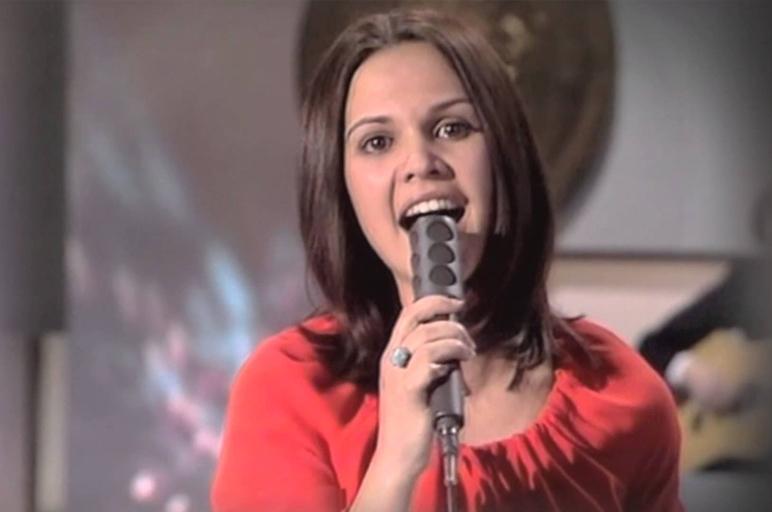 The close contests continued in the following decades. In 1973, three countries – Luxembourg, Spain, and the United Kingdom – fought for the top spot. Anne Marie David, representing Luxembourg, took home the trophy with 129 points, while Spain’s Mocedades remained close behind with 125 points, and Cliff Richard – once again – finished third with 123 points. A gap of just six points separated the top three.
It seems the sense of uncertainty and the understanding that sometimes all it takes is a small mistake, a single point, or one vote to change the history of European music is ever-present. The message is clear – in Eurovision, no one truly wins until the last point is delivered.
 In 1979, the contest was held in Jerusalem, and a heroic battle ended with the leader passing on the victory. Israel arrived with “Hallelujah” – a song that captured the hearts of Europe,and Milk & Honey, feat. Gali Atari became national symbols.
Facing them was Spain’s representative, Betty Missiego, with her own sweeping song, “Su Cancion”. Each country received many points, and France was also in the picture, with the lead changing hands again and again among the three.
Then came the decisive moment: Spain itself, in the last vote, awarded Israel 10 points – which made the final result 125 points for Israel versus 116 for Spain. The audience in the hall erupted in cheers of joy, and the drama couldn’t have been written better – Spain, which could have won, fell on its own sword and handed the victory to Israel.
The Eighties: Battles That Produced Acclaimed Singers
 In the 1983 Eurovision, held in Munich, Germany, Ofra Haza took the stage with “Hi” – an emotional song that captured Europe. Luxembourg, represented by Corinne Hermes with the song “Si La Vie Est Cadeau”, didn’t give up on the title.
The voting was close, with each country contributing to the great drama. In the end, Luxembourg won with 142 points, compared to Israel’s 136. Just six points separated Ofra Haza from victory – a moment that left the Israeli audience with a sharp sense of missed opportunity.
Dublin hosted one of the most dramatic decisions in 1988. Scott Fitzgerald, representing the United Kingdom, led for most of the evening, and the audience already saw him lifting the trophy. But the last vote changed everything for the Brits: Yugoslavia awarded Switzerland 6 points – exactly what Switzerland needed to overtake the United Kingdom by a single point: 137 against 136. Celine Dion, then a young and unknown singer, became a global superstar overnight. For the Brits, after 20 years, they were back at the same point – losing by a single point to another country.
The Nineties: A Rare Draw – And the Rule That Decides
Rome provided one of the biggest dramas in the contest’s history: Eurovision 1991 became the evening when France and Sweden ended the voting in a perfect tie – 146 points each. According to the Eurovision rules at the time, in case of a tie, the winner was the country that received more 12-point scores.
But here, too, there was a tie – both Sweden and France received 12 points four times. The next step: the country that received more 10-point scores would win. Here, Sweden prevailed over France, having received 10 points from five countries, compared to France, awarded only from two countries. And so, Sweden won. It was an evening where not only the songs, but also the rules, became the main star. And if we look even closer, had Italy awarded Israel 8 points, Israel would have won over both.
The Audience Joins the Picture – And One Country Decides the Verdict
 Does musical democracy really guarantee justice? Since the 1990s, Eurovision has undergone a revolution: for the first time, the general audience was given the right to decide the winner. The idea was simple – to give viewers at home the power, to make the contest a true reflection of popular taste. But in practice, the drama only intensified, and the battles became closer and more suspenseful than ever.
The 1998 Eurovision in Birmingham, England, featured a particularly close battle between Dana International from Israel and Chiara from Malta. Dana, with the hit “Diva”, won with 172 points, but the decision was based on 8 crucial points awarded by North Macedonia, while Malta came in third with 165 points, overtaken by a single point by the United Kingdom’s Imaani. A few points made Dana a global icon and gave Israel its third victory.
 Even in the 1999 Eurovision final in Jerusalem, the battle for the top spot was between Sweden and Iceland. Charlotte Nielsen from Sweden and Selma from Iceland fought until the last moment.
The penultimate jury, Bosnia and Herzegovina, awarded Sweden 12 points and skipped Iceland – which decided the battle even before the last jury from Estonia.
Sweden won with 163 points, Iceland behind with 146. A Nordic drama where every vote was nerve-wrecking.
Two Contests, Two Tense Decisions
 Eurovision 2002 in Tallinn, Estonia, was also accompanied by legendary drama: Ira Losco, the favorite to win, led Malta in a close battle against Marie N from Latvia.
Throughout the voting, the gaps kept changing, with the tension peaking again at the last vote – the Maltese jury awarded Latvia 7 points, and the Latvian jury returned 7 points to Malta. But in the end, Lithuania awarded Malta 3 points and Latvia the full 12 points.
Latvia fulfilled its Cinderella story and won with 176 points, compared to Malta’s 164. All predictions were shattered at the last moment.
 Eurovision 2003 in Riga, Latvia, was a thriller with three contenders: Sertab Erener from Turkey, Urban Trad from Belgium, and t.A.T.u from Russia, who fought head to head until the last moment.
The lead changed hands again and again, and the decision fell only with the last country’s vote, this time Slovenia.
At the end of the voting, Turkey took the victory with 167 points. Belgium finished second with 165 points, and Russia third with 164. A dramatic evening that proved – even in a three-way battle, every point can decide the fate.
Jury vs. Televoting – The Real Battle of the Decade
Have you ever felt that you already know who will win Eurovision? You’re not alone – even before the contest begins, betting tables already mark the leading contenders, and it seems there’s an attempt to plant in the public consciousness which countries are most worth voting for.
In recent years, Eurovision has become a new battleground – not only between the singers, but also between the professional juries and the general audience. The voting is split into two parts: half the score is determined by expert juries, and half by audience votes. Sounds fair? Maybe. But does it really reflect public taste? Or does it create gaps that shake the stage?
With the Weighted Voting System
 In Eurovision 2015, in Vienna, Austria, Mans Zelmerlow from Sweden took the stage with a precise, technical, and well-timed performance – and the juries were not indifferent. They awarded him a particularly high score and crowned him their winner.
But the audience at home? They chose Il Volo from Italy, who captured hearts with a sweeping ballad and especially polished vocals. The result: a huge gap between the jury favorites and the audience favorites, with the weighted voting system favoring the juries.
Are we really watching the same event, or are there two separate contests—one for the juries and one for the audience?
With the Votes Split into Two Separate Sets
 2018 started out as the year of Netta Barzilai, but not without difficulties. Throughout the contest, betting sites voted for her, but at the last moment, they switched and supported Eleni Foureira from Cyprus as the leading contender.
The juries awarded Netta a higher score than Eleni, but still lower than Austria and Sweden – and just before the decision, everything seemed open. At the last moment, Israel, Cyprus, and Austria were left for the trophy: Israel won, Cyprus came in second, and the predictions didn’t guess any position the final by any country.
Is this proof of the power of the split system – or an example of the confusion it creates? The audience and the juries once again didn’t speak the same language, and everyone was left with questions, even your faithful reporter expressed a firm opinion against betting agencies since then.
Removing Juries from the Semi-Finals – Does It Really Empower the Televoters?
Eurovision 2023 brought a new rule – the juries do not vote in the semi-finals, so qualification for the final depends solely on the Televoting. This contest brought a head-on collision between fans of Loreen from Sweden and Kaarija from Finland. The juries, loyal to the former representative, chose Loreen, while the audience fell in love with the wild energy of Finland. The score split, the tension rose, and at the decisive moment – Sweden took the trophy thanks to the juries. Is this a fair trophy? Does the audience, which brings the true pulse of Eurovision, deserve to be left behind? Again, the system exposed the gaps, the judges came to the final even more focused, and left the viewers with a sense of missed opportunity and fierce criticism of the contest.
A similar scenario occurred the following year – Nemo from Switzerland took the stage with a precise and technical song, and the juries fell in love. Meanwhile, Baby Lasagna from Croatia swept the audience with energy and ethnicity, and the audience showered him with love and points. But at the end of the evening, the juries once again decided: Switzerland won, while Croatia remained behind despite the huge support. These gaps continue to stir controversy – and the debate about justice, representation, and fairness in the voting system is only heating up, even in 2025 our audience is not indifferent to the victory of JJ from Austria, once again the jury favorite.
Will There Ever Be Agreement Between The Juries and The Televoters?
Eurovision has long since ceased to be just a glittering music contest; it has become a battleground of tastes, cultures, and sometimes even politics that raises its head. Will we ever see a rare moment when everyone – judges, audience, and viewers at home – agree on the winner? Or will the drama continue to simmer, surprise, and deliver unforgettable moments? One thing is certain: as long as Eurovision is here, there is no chance of boredom.