Spain’s Eurovision 2025 singer Melody breaks her silence, calling the contest political and sparking debate about RTVE’s actions and its role in the event’s controversy.
Five months have passed since the Eurovision 2025 Grand Final, and it seems Spain’s representative, Melody, is finally ready to say what she really thinks. In a new interview for the radio program “Dial Tal Cual,” the singer confirmed what many had long suspected: “Eurovision is not really a music festival.” When the host, Rafa Cano, asked, “Is it political?” Melody responded firmly: “Yes.”




הצגת פוסט זה באינסטגרם
This statement stands in stark contrast to her tone during the stormy press conference she held on May 26. Back then, Melody firmly refused to address political issues—especially those surrounding Israel’s participation. “I’m not allowed to talk about politics; it’s in my contract,” she insisted, adding only a general statement about “love and peace in the world.”
Interpretation: The Artist Caught Between Art and Politics
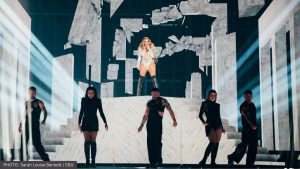
So, what has changed? It appears Melody’s frustration was never only directed at the European Broadcasting Union (EBU), but also—perhaps primarily—at RTVE, the national broadcaster that sent her to the contest. While she avoided political issues during that May press conference, she launched a fierce artistic attack on RTVE. She complained: “They didn’t let me do what I dreamed of,” revealing that her request to perform the song’s opening while suspended in the air was rejected for what she called a “ridiculous” reason—that “other countries were also planning aerial entries.”
RTVE’s Political Stance Sparks Controversy
Melody’s new criticism of Eurovision’s “politics” takes on deeper meaning in light of RTVE’s own highly politicized behavior throughout the season. The national broadcaster was not merely a passive participant—it became one of the main voices pushing for Israel’s removal from the competition, at one point declaring it would withdraw if Israel continued to participate.
RTVE actively campaigned against Israel’s participation, breaching Eurovision’s apolitical regulations. Even internal officials, such as its workers’ council, formally appealed to the EBU demanding Israel’s disqualification.
The politicization reached its height during the live broadcasts. During the second semifinal, RTVE commentators used Israel’s postcard moment to bring up the Gaza conflict, stating live on air: “The number of victims in Gaza following Israel’s attacks has surpassed 50,000, including over 15,000 children according to the UN. This is not a statement against any country, but a call for peace, justice, and respect for human rights.”
Furthermore, during the final night, just before the show began, RTVE broadcast on screen the phrase “Alto el fuego en Gaza” (“Ceasefire in Gaza”)—a unilateral political gesture. Both acts drew severe criticism and led to fines from the European Broadcasting Union.
Torn Between Art and Politics
Caught in the middle, Melody—who strove to remain “an artist, not a politician”—found herself trapped between conflicting worlds. On one side, Eurovision 2025 in Basel was rife with political tensions. On the other, her national broadcaster not only failed to support her creatively (“They didn’t let me do what I dreamed of”), but also pushed her onto the frontlines of a political narrative she never sought.
When a non-political artist is sent by a politically-driven broadcaster to compete in a politically charged contest, frustration becomes inevitable. Melody’s remarks are not just criticism of Eurovision—they are a rebuke of the system that exploited her art for its own agenda.
What’s next? Melody is in no rush to return. Asked if she would consider competing again, she replied: “Right now, I need a break.” For now, she joins the coaching team of La Voz Kids, the Spanish version of The Voice Kids, where she finally hopes to focus on what she truly loves: music.
Spain in Eurovision 2025
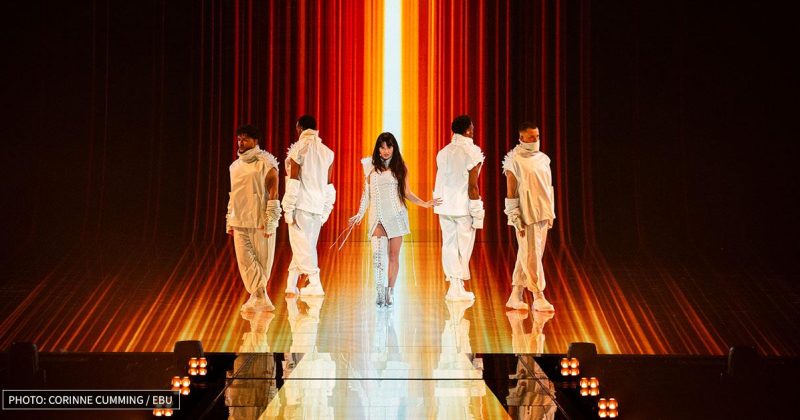
“Esa Diva” (in English: “That Diva”) is the title of the song performed by singer Melody, who represented Spain at Eurovision 2025 in Basel, Switzerland.
Spain finished 24th with 37 points – 27 points from the juries, placing 21st, and only 10 points from the televotes, placing 22nd. In the last 20 years, Spain managed to finish only 3 times in the top 10.
Eurovision 2025: This was Spain’s 65th participation in Eurovision. Spain joined the competition in 1961 and won it twice consecutively in 1968 and 1969. Spain has hosted the contest on its territory only once in 1969 and since then holds the longest waiting time since its last victory – 56 years.

Email: [email protected]
Phone: +072-50-9441919
Noy Yehoyada is an Israeli journalist and content creator at the EuroMix team since 2024, bringing a personal, feminine, and LGBTQ+ voice into the Eurovision sphere. A devoted Eurovision fan since the age of 16, she plays an active role in covering the contest—including on-site reporting at Eurovision 2025 in Basel and across European pre-party events. Alongside her writing and commentary, Noy plans the editorial schedule for the website, closely tracks national selections and song reveals, participates in live broadcasts, and creates digital content focusing on representation, musical diversity, and emotional connections.
Beyond her work at EuroMix, Noy has over six years of experience in the cosmetics and pharma industries, with a background in sales, personal consulting, and managing beauty departments. She enjoys pop, rap, contemporary art, and traveling in Europe—and especially loves songs that make her want to dance, as well as those that tell a story.