
Thorough security checks, 500 guards and upgraded infrastructure: Wiener Stadthalle is being transformed into a highly protected venue to ensure a safe and smooth Eurovision 2026 experience for all visitors.
Recently, Austrian authorities and the European Broadcasting Union (EBU) announced that they have decided to step up preparations and deploy a reinforced security operation in the area of the Wiener Stadthalle, which will host the semi‑finals and the Grand Final.
The security arrangements will far exceed the minimum requirements and are designed to address the heightened protest climate that has surrounded the contest in the past two years. The move follows the exposure of shocking attempted attacks during Eurovision 2025, held in Basel, Switzerland, and will include a significantly increased police presence in the area to ensure the full safety of everyone inside the arena.
Preparations in full swing: how Vienna is gearing up
Extensive demonstrations connected to the contest have taken place around Europe over the past two years, and this year tensions culminated in the withdrawal of five countries from the competition. The organizers are determined to guarantee that audiences in Vienna this May enjoy the safest and best possible experience. A letter of around 400 pages details the preparations: in May, the Wiener Stadthalle will be transformed into an especially secure zone for the Eurovision Song Contest and will operate under the strictest security framework the event has ever seen. Around 500 security personnel will be deployed daily in the arena’s surroundings, combining private security and police forces, working in full coordination with the organizers and the local authorities.
The enhanced security operation is part of a series of changes being implemented in Austria, including infrastructure upgrades at the host venue and the installation of an air‑conditioning system, to ensure that Eurovision events in Vienna in May proceed as smoothly as possible. Oliver Lingens, the event manager on behalf of the Austrian ORF television network, announced:
“Our top priority is to hold a safe event, and we must ensure that. The security of all delegations is very important to us.” Lingens also noted that precautionary measures have been tightened in particular around the delegations and the backstage crews.
Airport style checks: what does it mean for ticket holders?
The new plan will include stronger security inside the arena, directly affecting those planning to experience Eurovision up close, and will result in more comprehensive checks and longer waiting times than in previous years. In addition, there will be an absolute ban on bringing bags into the venue, and only transparent containers no larger than A6 size will be permitted. Guests arriving with prohibited items will be able to store them in automatic lockers that will be placed near the entrance. According to the organizers, the best way to speed up passage through security checkpoints is to arrive without any bags at all, carrying only small items that fit into a pocket.
Wiener Stadthalle: the Eurovision 2026 venue
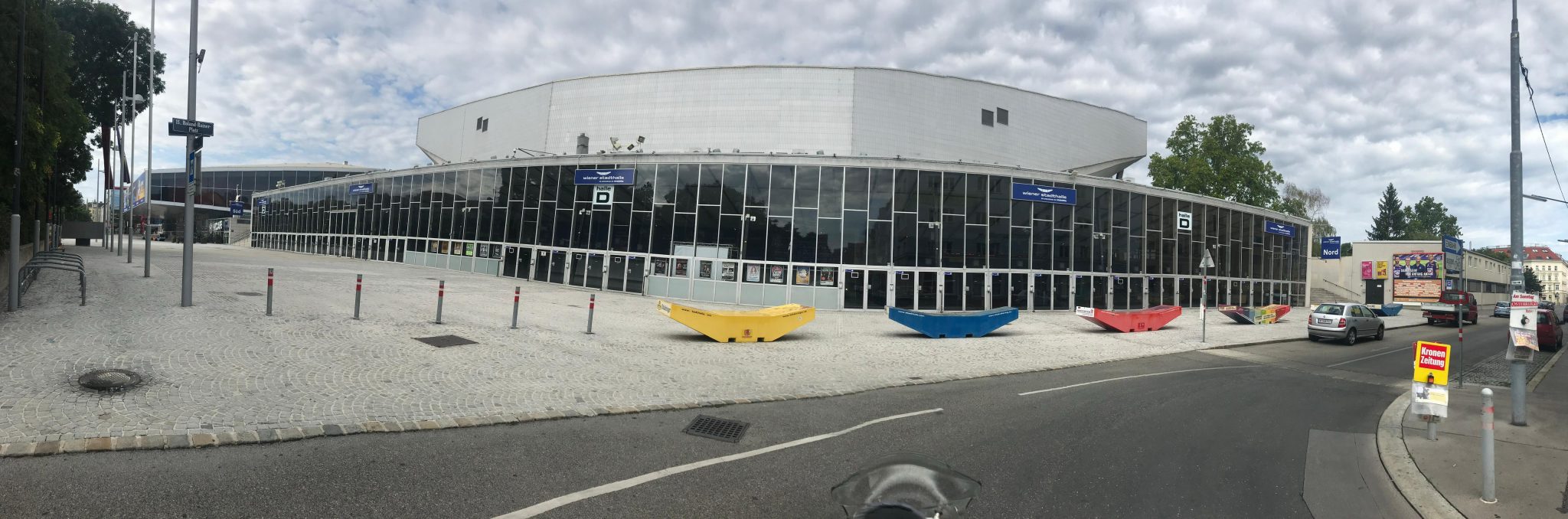
The complex, one of the largest in Europe, includes six different halls and can accommodate up to approximately 24,400 people. Around 300 events are held there every year, attracting about one million visitors. Hall D, which holds around 16,000 spectators, will host the three Eurovision shows: the first semi‑final on 12 May, the second semi‑final on 14 May and the Grand Final on 16 May.
Eurovision 2026: the 70th edition of the contest will take place in Vienna, Austria, on May 12th, 14th, and 16th, 2026. The Wiener Stadthalle arena, which will host the event, is expected to accommodate around 16,000 spectators per show. The contest returns to Austria following the nation’s third historic win with the song “Wasted Love”, performed by JJ. It will be Austria’s third time hosting Eurovision, after previous editions held in the country in 1967 and 2015.