
Bandidos do Cante, Portugal’s Eurovision representatives, refuse to join calls to boycott Israel: “We don’t want to mix art and politics”
The band Bandidos do Cante which won Portugal’s Eurovision national selection, “Festival da Canção 2026”, with the song “Rosa” (in English: “Rose”), and will represent Portugal at Eurovision 2026 in Vienna, performing in the first half of the first semi-final on May 12. However, beyond the victory itself, attention across Europe has focused on the band’s clear refused to join calls to boycott the contest due to Israel’s participation.





Refused to Sign the Boycott
The band’s victory resolved a complicated situation for Portugal’s national broadcaster RTP. In recent months, Israel’s participation in Eurovision sparked significant controversy in Portugal, with most artists competing in the national selection signing a statement calling for a boycott of the contest if Israel took part. However, Bandidos do Cante were among the only three contestants who did not sign the document. The band addressed the issue directly, emphasizing that Eurovision should remain a musical competition.
“We never wanted to mix art and politics. We have the privilege of not having to do that.”
The Musical Tradition They Come From
Despite this position, the band members acknowledge that music in Portugal, particularly in the Alentejo region they come from, has historically served as a form of social and political protest.
The group draws inspiration from the traditional Cante Alentejano singing style- a form of folk choral singing associated with agricultural workers in the region that has historically been used as a vehicle for protest during periods of social struggle.
In this context, the band explained that they are well aware of the history of earlier generations:
“We know, for example, that Zénita and Victorino, who are also from Alentejo, played a role in protest music, and we are familiar with everything our grandparents did, but I think today we can also talk about other things.”
With this statement, the group emphasized that although Portuguese music is sometimes connected to a history of social struggles, they themselves prefer to maintain a clear separation between art and politics, particularly within an international competition such as Eurovision.
Already Looking Ahead to Eurovision

The band members are now focusing on preparations for Europe’s biggest music competition. Although, only two months remain until Eurovision, they are not rushing to speculate about possible results.
“It’s true that everything is still very fresh and we still don’t exactly know what our performance there will look like, but one thing we can promise – we will do enything to do justice with Portugal.”
The band members are childhood friends who began singing together at a young age in children’s choirs. In 2022, the group adopted its name following a collaboration with the band DAMA and singer Buba Espinho.
Their major breakthrough came in 2024 with the hit “Amigos Coloridos” (in English: “Colorful Friends”), which amassed millions of views on YouTube and brought them widespread media attention for the first time.
With their victory in the Portuguese national selection and their clear stance against mixing politics with Eurovision, Bandidos do Cante appear to be heading to Vienna not only with a new song, but also with a clear message about the place of music within the European contest.
A Dramatic Victory in the Portuguese Selection
The song “Rosa” finished second in the regional jury vote with only 10 points, but received overwhelming support from viewers at home.
In the public vote, the band received the maximum score of 12 points, which ultimately secured them victory in the competition and the ticket to Vienna.
The band members – Duarte Farias, Francisco Raposo, Miguel Costa, Luís Aleixo, and Francisco Pestana described the final as an intense experience.
“Just participating was already a victory and an honor.”
Portugal at Eurovision 2026
“Rosa” (in English: “Rose”) is the song that will be performed by Bandidos do Cante, representing Portugal at Eurovision 2026. The band will perform the song in the first semi-final on May 12.
The song deals with the memory of a great love that remains engraved in the heart even after it has passed. The band uses delicate imagery of nature, night, and a rose garden to describe longing for a beloved and the memories that remain from a past relationship. The roses planted when the love was genuine and whole become the central symbol of the relationship – beautiful and delicate, yet something that now belongs to the past. Throughout the song, a sense of loss emerges as the garden that was never watered becomes a garden of longing. In the chorus, the beloved is described as “the most beautiful rose” that grew in southern Portugal – an image emphasizing the beauty and uniqueness of a love that remains alive in memory despite the passage of time.
Portugal is currently ranked 32nd in the betting odds.
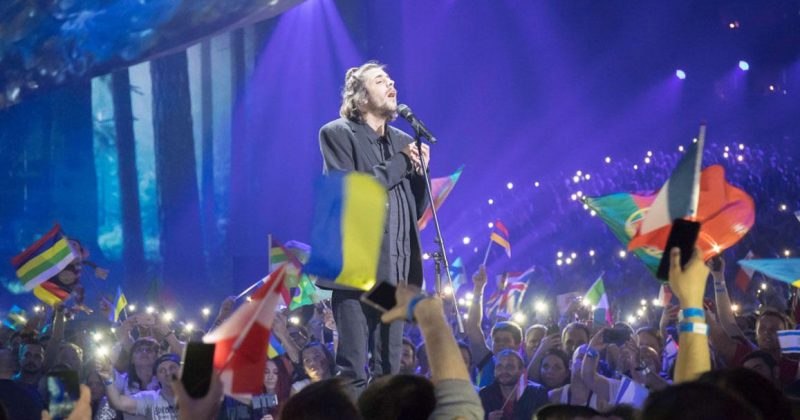
Eurovision 2026: This will be Portugal’s 57th participation in the Eurovision Song Contest. Portugal joined the competition in 1964 and achieved its best result in Eurovision 2017 when singer Salvador Sobral won first place with the song “Amar pelos dois”.

Email: [email protected]
Phone: +972-50-9441919
Neta Geffen is a respected journalist at Euromix, Israel’s leading news site for Eurovision coverage. Since 2010, Neta has been closely following the Eurovision Song Contest, bringing with him extensive experience, profound knowledge, and a broad understanding of the history, politics, and cultural influences that shape the event every year.
Neta publishes articles, analyses, and up-to-date reviews on all Eurovision developments, including musical trends, format changes, political influences, and audience reactions across Europe and Israel. Thanks to a deep connection to the contest’s history, Neta provides readers with wide-ranging context—from the impact of political events on results, to in-depth analyses of songs and languages within the competition. Neta specializes particularly in the Eurovision rock genre, Balkan ballads, and native language entries, with a special focus on Italian and Greek songs.