In recent moments, the Austrian national broadcaster ORF has revealed a series of new and intriguing details for Eurovision 2026, which will take place in Vienna, Austria, including the artists performing in the interval acts and a new official cookbook.
As part of the traditional Heads of Delegation meeting for the countries participating in Eurovision 2026, held in the host city Vienna in Austria, a press conference is currently taking place at the Wiener Stadthalle arena, which will host the upcoming contest. During the event, the Austrian national broadcaster ORF unveiled details about the interval acts planned for the semi‑finals, scheduled for May 12th and May 14th, and for the grand final, which will be held on May 16th under the motto “The Grand Show!”.



Opening and interval shows: time travel, humor and big musical moments
This year, Austria appears to be planning a broad range of surprises to mark the 70th anniversary of the beloved contest, and the opening of Eurovision 2026 is set to be lavish and cinematic. The first semi‑final will begin with a show titled “70 Years of Love”, a film‑style journey through seven decades of Eurovision history. The event is expected to open with a 70 member choir paying tribute to the Eurovision classic that represented Luxembourg at Eurovision 1967, “L’amour est bleu“.
 In the interval act of the first semi‑final, viewers will be treated to a humorous sketch built around the confusing question: “How do you tell Austria and Australia apart?” The sketch is expected to feature the show’s hosts Victoria Swarovski and Michael Ostrowski, who will join the Australian representative at Eurovision 2025, Go-Jo, turning the segment into an even sharper cultural in‑joke between the two countries.
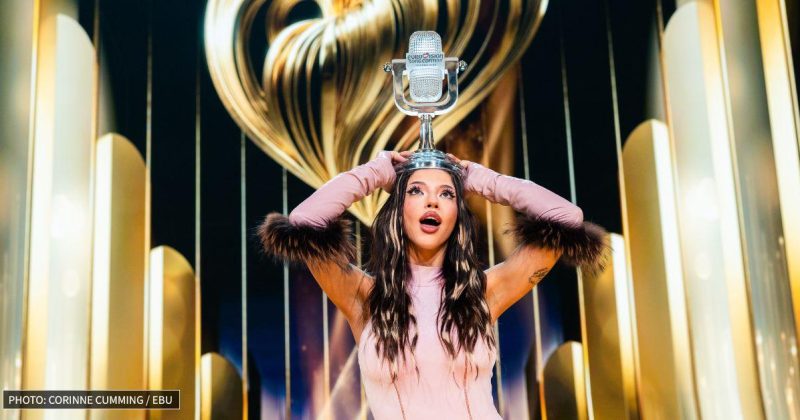
The second semi‑final will be opened by hosts Victoria Swarovski and Michael Ostrowski with another comic sketch: a playful parody of last year’s winning song “Wasted Love“ by singer JJ. In a sharp and perfectly timed transition, in classic Austrian showmanship, JJ – who brought Austria its victory last year – will return to the stage to perform a brand‑new original song.
The grand final: a spectacular show for the 70th anniversary
Despite the impressive concepts planned for the semi‑finals, the true climax of Eurovision 2026 will arrive in the grand final, held on Saturday, May 16th. The emotional evening will open with the story of a small paper boat, originally part of JJ’s winning performance last year, which finds its way from Switzerland along the Rhine and Danube rivers all the way to Vienna. In the opening act, titled “Queen of the Night”, last year’s winner will once again take the stage, blending his distinctive voice with musical elements inspired by legendary Austrian composer Wolfgang Amadeus Mozart and his own music. At the same time, the 25 finalists will make their entrance into the Wiener Stadthalle, which will host the contest.
The dazzling show will continue during the voting break, featuring three high‑profile interval performances. The first, “Celebration!”, will see Eurovision stars from across the decades perform legendary songs from seven eras of the contest in new arrangements. Among the beloved stars taking part:
-
Verka Serduchka, who represented Ukraine at Eurovision 2007 and finished second with the hit “Dancing Lasha Tumbai“.
-
Erika Vikman, who represented Finland at Eurovision 2025 with the song “Ich Komme“.
-
Lordi, the Finnish monster rock band that won Eurovision 2006 with “Hard Rock Haleluja“.
-
Il Volo, the trio that captivated audiences at Eurovision 2015 with the song “Grande Amore“.
After that, electro‑swing icon Parov Stelar will turn the arena into a dance floor with his unmistakable sound, before Cesár Sampson – who secured a prestigious third place for Austria at Eurovision 2018 with “Nobody But You” – takes over the musical hand off into the end of voting. He will perform a soul rendition of “Vienna” by Billy Joel. And the evening will not end there: during the grand final, hosts Victoria Swarovski and Michael Ostrowski will stage a playful bet between them to see “who can sneak the greatest number of past winning Eurovision song titles into their lines of commentary”.
In addition, all three live shows will feature recurring entertainment elements. A character called “Professor Eurovision” will answer unusual and quirky questions about the contest, while host Michael Ostrowski will challenge participants’ knowledge in a “Eurovision Quiz”, featuring surprising clips drawn from 69 years of Eurovision history. The Vienna Radio Symphony Orchestra will also play a special role, having recorded numerous musical contributions for the various segments.
הצגת פוסט זה באינסטגרם
More surprises for the 70th anniversary: what is Austria planning?
The ambitious interval acts are only one part of Austria’s preparations for the 70th anniversary celebrations of the Eurovision Song Contest. This week’s Heads of Delegation gathering in Vienna – bringing together representatives from all participating countries – has already revealed several additional surprises for the May shows.
Two days ago, the contest’s official mascot was presented: Auri. The mascot randomly drew the running order position and placed the host country in slot number 25, securing the prestigious closing position in the May 16th grand final. The character is designed to symbolize unity and creativity.
Alongside the live broadcasts, a children’s book is being released to bring younger fans closer to the Eurovision world in a playful and accessible way. Auri will embark on a reading tour across Austria together with author Yvonne Lacina Blaha, appearing at additional public events such as the Vienna City Marathon and in children’s programming produced by the Austrian national broadcaster ORF.
Collectors will be offered a range of limited‑edition merchandise featuring the mascot, including a Viennese snow globe, keyrings and fridge magnets. In addition, to mark the 70th anniversary, an official Eurovision cookbook will be published, presenting dishes from all 35 participating countries and showcasing the culinary diversity of the contest’s international community.
With a blend of nostalgia for the past seven decades, typically Austrian self‑deprecating humor and a forward‑looking musical concept, Eurovision 2026 in Vienna is shaping up to be far more than just another song contest. The organizers have crafted a package that celebrates the contest’s heritage while looking boldly to the future – leaving fans around Europe eager to experience the show live on air this coming May.
Eurovision 2026: the 70th edition of the contest will take place in Vienna, Austria, on May 12th, 14th, and 16th, 2026. The Wiener Stadthalle arena, which will host the event, is expected to accommodate around 16,000 spectators per show. The contest returns to Austria following the nation’s third historic win with the song “Wasted Love”, performed by JJ. It will be Austria’s third time hosting Eurovision, after previous editions held in the country in 1967 and 2015.