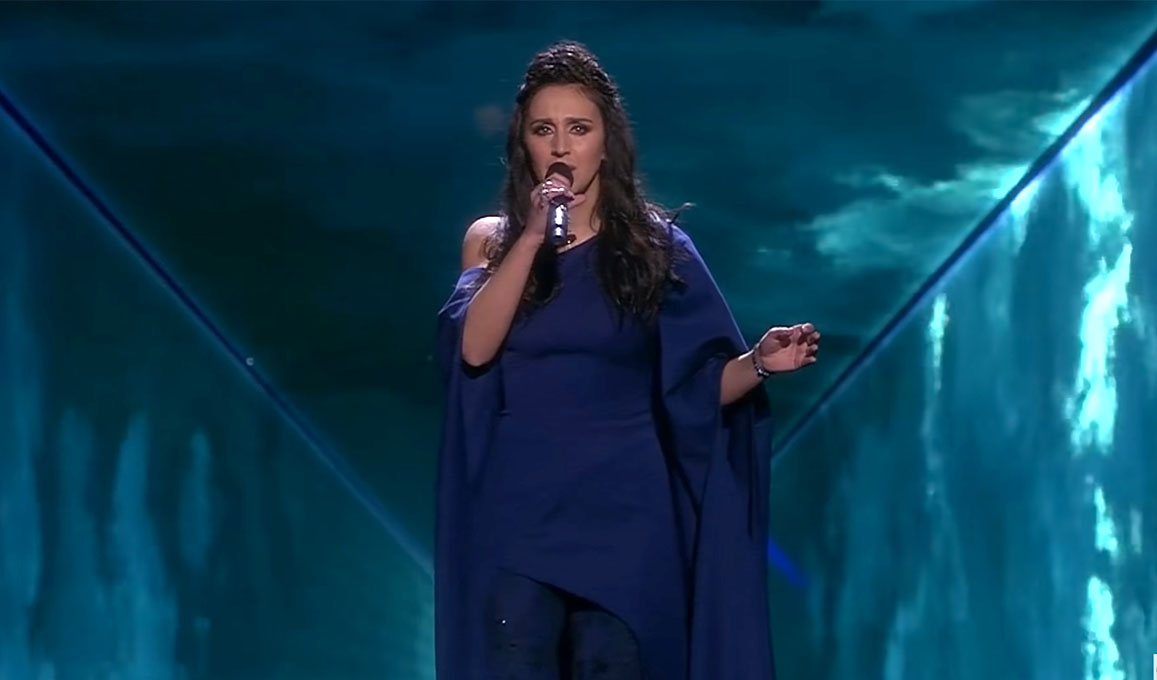
Suspline, Ukraine’s national broadcaster, brings Jamala as music producer for Vidbir 2026, aiming for another Eurovision win. Details and registration info coming soon
Jamala, the winner of Eurovision 2016, will serve as the music producer for Ukraine’s national Eurovision selection (Vidbir) in 2026, according to a statement from the Ukrainian national broadcaster Suspline. “Since winning Eurovision, I’ve learned an important lesson: there are no accidental winners”, said Jamala. “Victory always comes down to readiness, resilience, and professionalism. That’s exactly what I want to see in future contestants”.
Permanent Judge and Esteemed Musician
Since her victory in Eurovision 2016 with her song “1944” Jamala has judged seven national selections. She is also a recipient of the Shevchenko Prize, Ukraine’s highest cultural award for 2024, and served as a member of the Grammy Awards jury. This marks her debut as music producer for the national selection.
A New Challenge and Great Honor
“For me, the role of music producer for the National Selection is both a new challenge and a great honor”, responded Jamala when asked about her appointment. “Being on the jury is one thing: you choose among the artists presented to you. But as a producer, I need to listen to every submission and, together with the team, select the participants who will go on to perform before the public on air.
“Since winning Eurovision, I’ve learned an important lesson: there are no accidental winners. Victory always comes down to readiness, resilience, and professionalism. That’s exactly what I want to see in future contestants. This competition is an intense physical and emotional trial. It means dozens of rehearsals, constant performances, and the constant awareness that you’re representing your country every single moment”.
Submission Window Opening Soon
Registration for Ukraine’s national selection will open at a later date, with more details on participation requirements and the selection process to be announced soon.
“From the upcoming season, I expect sincerity and strength”, Jamala added. “I want to see artists who are ready to step on stage right now and fight for victory. The submission window will open very soon – so I urge everyone to prepare thoroughly and send in your songs”.
Jamala at Eurovision
Jamala represented Ukraine at Eurovision 2016 with the song “1944”, centered on the deportation of the Crimean Tatars by the Soviet Union. She drew particular inspiration from her great-grandmother’s story, who, in her mid-20s, was deported with her five children to Central Asia; tragically, one of the daughters did not survive.
At the Eurovision Song Contest in Stockholm, the song placed second in the semi-final. In the grand final, it went on to win first place with 534 points – despite finishing second both in jury votes, with 211 points, and in televoting, with 323 points. This marked Ukraine’s second Eurovision victory.
Ukraine at Eurovision 2025
“Bird of Pray” is the name of the song that was performed by Ziferblat, representing Ukraine in Eurovision 2025. Ukraine qualified for the final from the first semi-final of the contest and finished 9th overall with 218 points. Ukraine finished 6th in tele-votes and 14th in jury votes.
The Ukrainian result is their worst one since 2018.
Eurovision 2026: This will be Ukraine’s 21st participation in the Eurovision Song Contest. Ukraine joined the competition in 2003 and has won it three times. Ukraine’s last victory was in Eurovision 2022 with the song “Stefania” performed by Kalush Orchestra.

Email: [email protected]
Phone: +972-50-9441919
Maor Heumann has been writing about the Eurovision Song Contest and following it for over three decades. He has attended five contests and has found something to appreciate in almost every possible musical genre — from the sugary pop entries that finish last in the semi-finals to the quirky avant-garde pieces that even the competition’s juries struggled to connect with. He usually prefers original languages and songs with depth over Swedish-produced English clones — though he doesn’t promise to stick to that rule.
He grew up on the kibbutz of Sara’le Sharon, who instilled in him a love for music and created his first connection to the contest back in 1993 — before most of the current editorial team was even born.