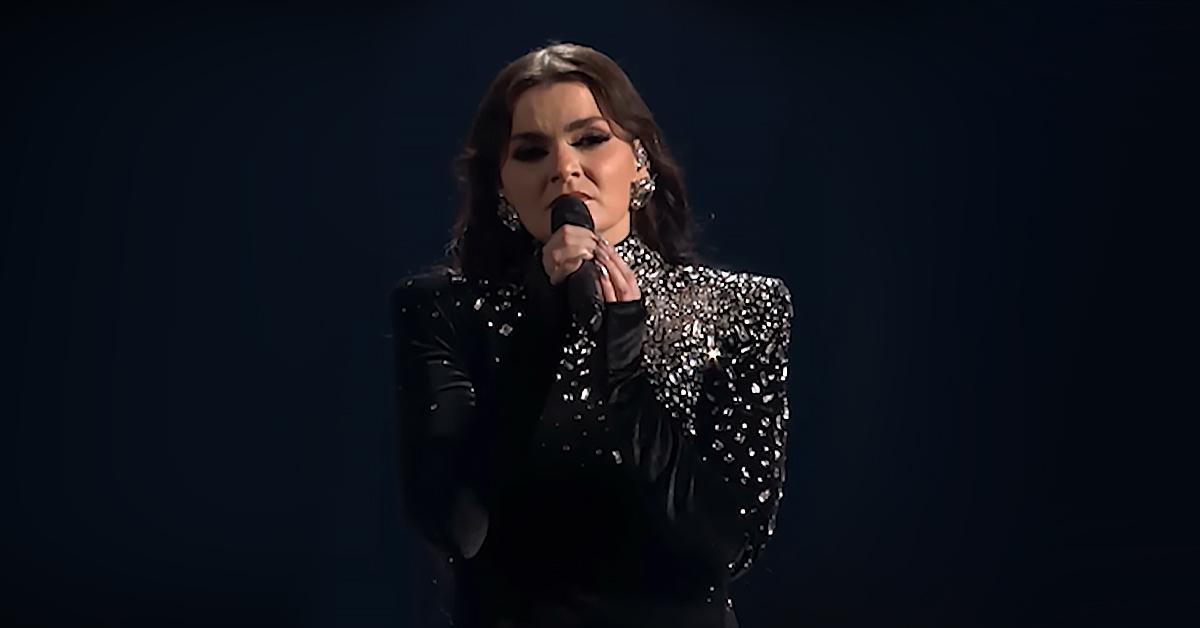
Atvara wins Latvia’s Supernova 2026 with the emotional ballad “Ēnā”. She will represent the nation at the Eurovision Song Contest in Vienna.
Atvara is the grand winner of the Latvian pre-selection “Supernova 2026” with her song “Ēnā“. She triumphed in the super-final over Emilija and Kautkaili. The song was co-written with Jānis Jačmenkins.
Her performance is minimalist yet striking. She wears a black dress adorned with sparkling stones on the upper section, illuminated by a single spotlight from above, while a silhouette of a dancing girl appears on a white screen behind her. Before the second chorus, a drinking glass is seen shattering, its fragments filling the space and surrounding her. Singing in a high register, she manages to halt the movement of the glass shards toward the end of the song, followed by several seconds of darkness on stage.
The song “Ēnā” deals with the painful gap between an external image and the crumbling internal reality of a person, likely struggling with addiction (clearly hinted at through the line “one drop” that changes their world to black and white). The narrator describes a character who gives warmth and energy to strangers (“cold people”) but returns to their loved ones drained and exhausted. The deterioration is described as slow and silent—the person becomes increasingly “mute”, postponing confrontation until “later”, and meanwhile fades into the shadows (“paliec ēnā”), losing their colors and vitality in favor of darkness and silence.
On a familial level, the song reveals a domestic tragedy of concealment and neglect. The plea to the “daughter” to remain silent and not “wash dirty laundry outside” testifies to the attempt to maintain a façade of normality, even when the father is absent from home at night. The track describes a destructive cycle of pretense: in the morning, glasses are clinked with a smile as if nothing happened, yet beneath the surface, the entire family is “drowning in a whirlpool of doubt”. This is a song about the heavy price of escaping reality and the small lies that eventually make the person and their genuine connections disappear.
Atvara – Who Are You?
Atvara is a rising singer-songwriter from Latvia who gained recognition after going viral on TikTok. Her single, “Pie manis tveries”, amassed over 2 million views and was even featured in the television series Nelūgtie viesi. Following this success, her momentum continues to grow; her debut album is being released, and she has sold out 22 concerts across Latvia.
Lyrics – Ēnā
Tik daudz silta aukstiem ļaudīm dots
Bet pie tuviem atnāc iztukšots
Citu acīm skaisti izgleznots
Bet viens piliens pārvērš Tevi toņos melnbaltos
Un tā lēnām, lēnām kļūsti mēmāks
Lēni lēnām, lēnām paliec ēnā
Tu domā vēlāk, vēlāk nedaudz vēlāk
Un tā lēnām, lēnām paliec ēnā
Meitiņ klusē, veļu necilā
Šonakt tētis mājās nepārnāks
Rīt ar smaidu glāzi skandinās
Slīksim kopā šaubu atvarā
Un tā lēnām, lēnām kļūsti mēmākѕ
Lēni lēnām, lēnām paliec ēnā
Tu domā vēlāk, vēlāk nedaudz vēlāk
Un tā lēnām, lēnām paliec ēnā
Lēnām, lēnām pаliec ēnā
Latvia at Eurovision 2025
“Bur Man Laimi” (in English: “Song for Happiness”) is the name of the song performed by Tautumeitas, representing Latvia at Eurovision 2025 in Basel, Switzerland. The song is performed in Latvian – the first song in Latvian sent since 2004!
It placed second in the second semi-final with 130 points, reached the grand final, and finished thirteenth with 158 points – Latvia’s second consecutive qualification and highest achievement since Eurovision 2015.
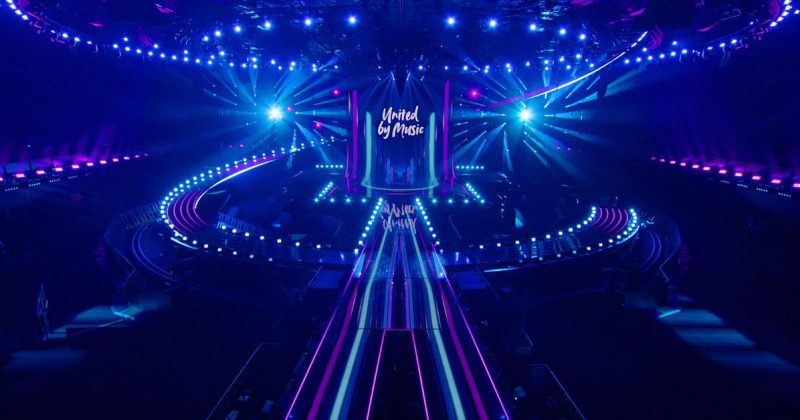
Eurovision 2026: This will be Latvia’s 26th participation. Latvia debuted the contest in 2000 and achieved its best result in 2002, when Marie N won with the song “I Wanna”.







Email: [email protected]
Phone: +972-50-9441919
Maor Heumann has been writing about the Eurovision Song Contest and following it for over three decades. He has attended five contests and has found something to appreciate in almost every possible musical genre — from the sugary pop entries that finish last in the semi-finals to the quirky avant-garde pieces that even the competition’s juries struggled to connect with. He usually prefers original languages and songs with depth over Swedish-produced English clones — though he doesn’t promise to stick to that rule.
He grew up on the kibbutz of Sara’le Sharon, who instilled in him a love for music and created his first connection to the contest back in 1993 — before most of the current editorial team was even born.