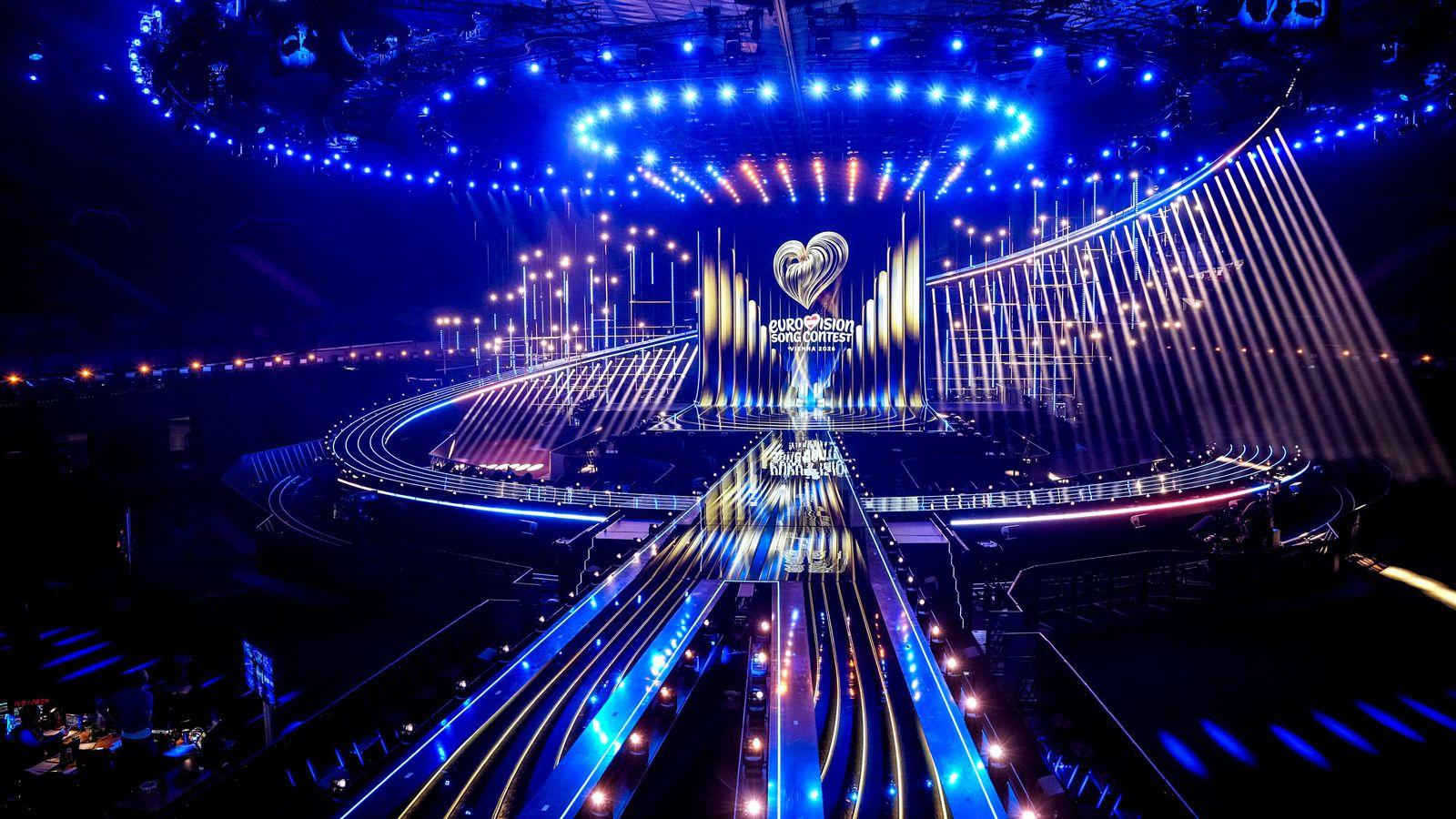
Get the full coverage from the Second dress rehearsal of the second semi-final, currently taking place on the Eurovision 2026 stage in Vienna. One by one, Bulgaria, Azerbaijan, Romania, Luxembourg, Czechia, Armenia, Switzerland, Cyprus, Latvia, Denmark, Australia, Ukraine, Albania, Malta and Norway will take the stage. We will be providing updates throughout the rehearsal with all the details received by our editorial team.
Photo: EBU
Today at 21:00 CET, the second dress rehearsal began ahead of the second semi-final broadcast, which will take place tomorrow at 21:00 CET (Thursday, May 14). Just before another dress rehearsal takes place tomorrow at 15:00 CET, we’re here to report everything happening on stage in real time from Vienna.
As a reminder, this year the countries that automatically qualify for the Grand Final will also perform during the semi-finals, but their songs will not be eligible for voting at this stage. In the second semi-final, France, the host Austria and United Kingdom will take the stage.
Make sure to click the refresh button so you can continue following along during the rehearsals!

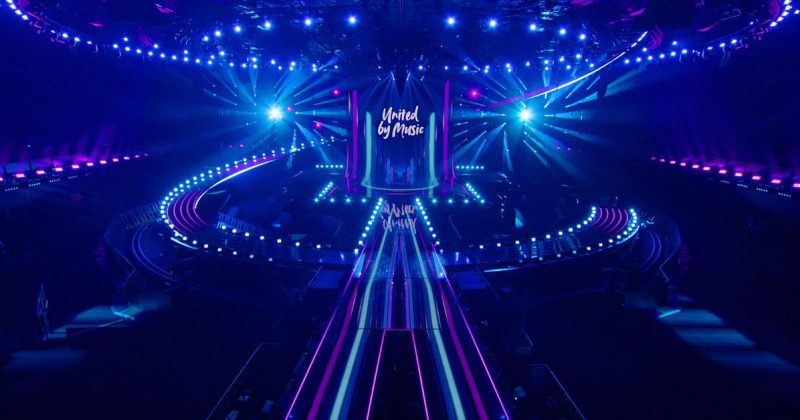





First Semi-Final – Initial Overview:
At the opening of the show, a video is projected on the screen featuring hosts Victoria Swarovski and Michael Ostrowski. They perform a version of last year’s winning song, “Wasted Love,” filled with numerous vocal slips and technical mishaps.
The staging is almost identical to the original performance by JJ, though punctuated by comedic errors: the host falls off the stage, water splashes on them, and the entire stage eventually goes up in flames. After the video segment concludes, the hosts emerge from the physical scenery on stage to officially open the contest.
1. Bulgaria – Dara, “Bangaranga”:
Dara takes the Eurovision stage wearing a pink tank top and burgundy fur shorts with fur accents, accompanied by four dancers. They begin the performance on a set designed to look like a waiting room. The dancers are positioned upside down on red chairs, and the entire act starts with Dara’s face appearing upside down on the screen while the dancers’ legs are visible in the frame. This time, the dancers are wearing see through masks with clown makeup. The camera angles are very intriguing, and the entire television production looks amazing.
The room begins to rotate around Dara, and as the singer and dancers move wildly on the chair, it creates the illusion that they are the ones spinning rather than the set itself. The set then opens up, and the dancers move the chairs out of the frame. The stage goes completely dark, illuminated only by lighting and video art on the floor. The finale is more dramatic than the original version, with them dancing without the set. The vocal performance was excellent, though the singer seemed to tire slightly toward the end of the song. There was a massive round of applause in the press room at the conclusion of the act – an excellent performance to open the semi-final!
2. Azerbaijan – JIVA, “Just Go”:
Jiva takes the stage with the floor completely blanketed in smoke. Her makeup is striking, featuring red blood-like droplets falling from her eyes, while her hands are tied together with black ropes that resemble heavy bracelets. She begins the song in English, emerging from behind white curtains that dominate the stage.
A mysterious male figure remains positioned behind the curtain. The LED screens display waving white fabric alongside video art depicting the highs and lows of a relationship – tender moments when she sings about love, contrasting with the more turbulent scenes during the lyrics “Just Go.” When the dancer approaches her, she repels him, managing to escape toward the catwalk even as he attempts to pull her back with the ropes.
The final video art shows the male figure exiting through a door, leaving Jiva to finish the performance alone at the center of the catwalk, having finally freed her hands from the ropes. Notably, she performs the penultimate chorus in Azeri. While the vocal performance was stable, the act as a whole doesn’t feel impactful enough to secure a spot in the Grand Final.
3. Romania – Alexandra Căpitănescu, “Choke Me”:
Alexandra Căpitănescu begins the performance at the center of the catwalk, her back turned to the audience. Two of her band members hold her using ropes/cables illuminated in white, while the camera angles start with a deliberate blur. At this early stage, the vocal performance feels a bit shaky and inaccurate. Interestingly, the singer doesn’t perform the third “Choke Me” in the chorus herself; instead, it’s delivered by a recorded backing track while a mysterious, white-cloaked figure with a covered face appears on screen.
The rest of the band is already positioned on the main stage, and Alexandra slowly advances toward them, maintaining her back to the crowd. The staging strongly resembles an exorcism ritual directed at the figure in white, with numerous electric cables crisscrossing the set to add to the tension. Just before the big high note, there’s a sharp, one-and-a-half-second pause – a risky move that pays off as she nails the note perfectly.
For the finale, the stage is bathed in deep red lighting as flames erupt from the floor. It is an incredibly immersive and sweeping performance that looks stunning for the television broadcast, and despite the early jitters, the vocals ended up being perfectly fine.
4. Luxembourg – Eva Marija, “Mother Nature”:
Eva Marija stands at the center of the catwalk, playing her violin like a small guitar during a very long close-up shot of her face. The microphone stand is styled to look like a tree, while interesting graphics of the moon and vegetation appear on the screens. At this stage, the vocal performance is not accurate at all, and she even falls out of rhythm in certain parts.
As she advances toward the center stage, a world of nature, stars, and butterflies is revealed on the LED screens. Eva Marija reaches down to touch the floor and appears to hold a light source that was resting there. Once she reaches the main stage, points of light are used to shine toward the camera like fireflies. Crew members run around her as she spins to hand her the violin. She plays it (not live, of course), and the flowers on the microphone stand physically open up. While many vocal slips were heard right through to the end of the act, the visual staging remains beautiful.
5. Czechia – Daniel Zizka, “Crossroads”:
Daniel Žižka begins his performance seated on the floor, surrounded by circular mirrors placed both behind him and at the front of the stage, creating the illusion of him being multiplied several times. A single light from above illuminates him, giving the entire sequence the polished feel of a music video while the rest of the arena remains in total darkness. He eventually stands and approaches one of the front mirrors; with the two mirrors facing each other, the multiplication effect is intensified.
The camera work is remarkably clean, with the crew visible in only two very brief moments throughout the act. The visual highlight occurs when all the mirrors close in on Daniel in a circular formation, creating a stunning effect before they open back up to reveal a wave of vibrant color washing over the stage. Vocally, Daniel delivers an incredible performance, nailing the number from start to finish. It is a mesmerizing piece of television, though, much like Switzerland’s entry last year, it seems designed more for the screen than for the live audience in the hall. The overall atmosphere feels very similar to that of Austria’s JJ from last year, but with a significantly stronger vocal delivery.
Following a quick break after the Czech entry, the host Michael takes the stage in a rather flamboyant outfit of fur and feathers. He’s here to introduce France’s Monroe, reminding everyone that as an automatic qualifier, she won’t be up for the vote tonight – but she’s certainly here to make an impression.
*France – Monroe, “Regarde!”:
Monroe begins her performance on a small, white circular stage, immediately surrounded by a haze of floor smoke and rhythmic, flashing lights. The camera circles her closely, and the moment she turns her back to the audience, five dancers join her on stage. The production is making heavy use of the ceiling lighting rig to create a high-contrast, dramatic atmosphere.
As the group marches down the catwalk, a vibrant turquoise stripe follows her path through an increasingly thick cloud of smoke. Monroe is frequently enveloped in the haze, joining in on the choreography with her dancers as the camera work hits a frantic pace with constant angle shifts. At the song’s climax, the screens erupt with digital fireworks.
For the grand finale, Monroe ascends a secondary raised platform right on the catwalk as the entire arena is swallowed by smoke. The vocal delivery was nothing short of stunning, and the television edit looks incredibly polished. The press room here is already buzzing, with shouts of “Winner!” and “Jury winner!” echoing through the hall. It’s an impressive, excellently paced performance that delivers a massive “wow” effect. France has definitely arrived.
Next up, “Professor Eurovision” strikes again. A video segment was shown featuring host Victoria Swarovski teaching a class about the history of the LGBT community at Eurovision. Dana International makes a fleeting appearance – on screen for only a single second. It felt like she was unfairly overlooked, missing a proper mention of the history she made as the contest’s first transgender winner.
6. Armenia – Simón, “Paloma Rumba”:
Simón kicks off his performance inside a closed structure designed to look like an elevator, wearing a suit covered in sticky notes. Throughout the act, the elevator doors open and close repeatedly, revealing Simón and his dancers in a new pose or action every time the doors slide back. Eventually, the elevator splits in two, with the LED screens displaying stacks of office boxes and close-ups of Simón’s face. Yellow “Paloma Rumba” subtitles flash across the screen as the energy builds.
Simón and his dancers stand in a single file, each positioned over a glowing white square on the floor. He sheds his jacket as the choreography turns wild; at one point, the dancers hoist him up for a backflip. They send a pile of office filing boxes crashing to the floor as they sprint toward the center of the catwalk. The performance ends with Simón striking a pose while balanced on the knees of two of his dancers. It was a solid vocal effort – certainly an improvement over the afternoon rehearsal – and the whole thing looks very sharp for the cameras.
7. Switzerland – Veronica Fusaro, “Alice”:
Veronica Fusaro begins her performance with an exceptionally long white thick rope attached to her microphone, following a stark white path laid out across the stage. The arena is almost entirely dark as she starts her walk, creating a tense, focused atmosphere. One of the dancers eventually uses the cable to pull her back, adding a sense of physical struggle to the narrative. During the chorus, the stage erupts with bright, white “electrical” lighting designed to look like a pulsing musical frequency.
The four dancers perform with their backs to the audience as a massive prop filled with red threads is brought onto the stage. All the performers enter the structure, and Veronica is seen attempting to break free from the entanglement. She then has a moment where she “plays” an instrument (pre-recorded), before the threads are tied to her as she sprints toward the catwalk. The performance concludes with her on the floor in a dramatic, pleading gesture.
A notable highlight is the presence of a live backing singer – a rare sight in recent years – which contributes to a vocal performance that was nothing short of stunning. The camera angle issues from the afternoon rehearsal have been resolved, though the cameraman was briefly visible in one shot. In the final moments, Veronica uses the red rope on her microphone to write out the name “Alice.” It is a high-concept, polished performance that is likely to resonate strongly with the juries.
There is a brief pause following the Swiss entry while the crew prepares the stage for Cyprus.
8. Cyprus – Antigoni, “JALLA”:
Antigoni begins her performance on a raised platform designed to look like a table set with dishes. Behind her, the LED screens display classical Roman columns. She starts the act by shedding a white head covering, and is soon joined by four dancers wielding long white fabrics.
Vocally, the performance was quite poor; Antigoni struggled significantly with the rhythm, even missing several lyrics throughout the song. During the set, she drags a white crown-shaped chair and dances on the table while the dancers alternate between the platform and the main stage. The lighting is a vibrant orange.
In a dramatic sequence, Antigoni lies back on the table before walking with a style that strongly reminiscent of Eleni Foureira. The stage is filled with fire as the singer and dancers advance toward the catwalk, where two strips of flames erupt to finish the performance. While it looks amazing on camera, the vocal delivery will need major improvements.
Following the Cypriot entry, there is another break where host Michael explains the situation regarding the Austrian song – reminding the audience that it is an automatic finalist and not competing in this semi-final.
*Austria – Cosmó, “Tanzschein”:
Even after the postcard, the stage was still not ready, necessitating several more shots of the audience while the crew finished the setup.
Cosmo begins the performance lying on the stage floor with a star painted over one eye. He is surrounded by dancers wearing silver animal masks who move rhythmically on the ground. The floor projection displays the text: “Dance away you inner animal.”
Once they stand up, Cosmo and the dancers form a single line to perform a synchronized, iconic dance routine. The dancers incorporate various acrobatic moves, eventually climbing two wide grated walls that are brought onto the stage, continuing their choreography even while on the ladders.
The LED screens feature illustrations of animals as Cosmo runs toward the center of the catwalk to join his electric guitarist. The performance concludes with fireworks erupting from the stage floor as the full team gathers together. While the vocal performance was good overall, the staging felt somewhat uninspired and lacked a certain visual spark.
9. Latvia – Atvara, “Ēnā”:
Atvara is alone on stage with a sloped platform behind her. Her shadow is projected onto the stage floor as lighting is directed toward her, though her movements aren’t always perfectly synchronized with the shadow effect. The staging is very similar to the national final. The LED screens show a close-up of an evaporating glass of whiskey. A shadow of a childlike figure appears on the sloped platform, while video art of shattered glass surrounds the singer like a whirlpool. Atvara concludes the performance as the lights cut out on her. The vocal performance was excellent, though her physical effort was noticeable during the set. She successfully hit the high notes.
10. Denmark – Søren Torpegaard Lund, “Før vi går hjem”:
Søren Torpegaard Lund begins the performance in front of a transparent room prop with the dancers inside. He touches the wall and sways his hips from side to side, then holds onto a ladder on the side of the room while the dancers perform within. He eventually climbs onto the roof of the structure, maintaining constant interaction with the dancers, while smoke fills the room throughout. Søren then enters the room to dance closely with the dancers, who strip off his light blue shirt to reveal a sparkling mesh tank top.
Everyone exits the room as the dancers push the prop toward center stage. The vocal performance was good; he split the high note by taking a breath in the middle but successfully reached the note. The LED screens display fire, and orange lighting accompanies the finale. There was a single firework from the floor, but no other pyrotechnics. This felt like a Top 5 performance in the final.
Following the Danish act, there is a break. The hosts take the stage to introduce a video segment showing the contestants’ first reactions to seeing the Eurovision stage in person.
11. Australia – Delta Goodrem, “Eclipse”:
Delta Goodrem takes the stage with a setup featuring a harp, a shimmering piano at the center of the catwalk, and a full lunar eclipse prop on the main stage. The performance begins with a harpist, while Delta sings from the center of the moon prop. The floor is shrouded in smoke, and the LED screens are filled with stars as she gazes toward the horizon. The camera uses a sweeping half-turn motion, rotating back and forth around her.
She then advances toward the catwalk, wearing a particularly sparkling dress, and moves to the grand piano. One specific shot is heavily engulfed in smoke while she plays. The LED visuals transition between solar and lunar eclipses. For the climax, Delta climbs onto the piano and is gradually elevated by a secondary platform. A waterfall of fireworks erupts behind her – reminiscent of Yuval Rafael’s performance last year. The vocal delivery was nearly perfect, earning a massive round of applause in the press room during the peak moment. Another performance competing for the win.
12. Ukraine – LELÉKA, “Ridnym”:
Leleka starts the performance on one side of the stage, walking toward a musician playing a traditional string instrument. She is wearing unique half-gloves that cover only her fingers, while a wide white stripe marks the stage floor. Two long, thin white fabrics hang from the ceiling, and up to this point, the vocal performance is perfect.
Smoke billows from the sides of the stage as the lighting shifts to a red and blue color scheme. The palette then transitions back to white and light blue as four additional long white fabrics descend from the ceiling. Leleka tackles the high note with significant effort; however, she ran out of breath midway through, leading to a slight vocal slip at the very end of the note. Overall, it was an excellent vocal performance.
* UK – Look Mum No Computer, “Eins Zwei Drei”:
Look Mum No Computer takes the stage, which features 12 tables and dancers wearing vintage computer monitors over their faces. The singer begins at the back corner table. The dancers approach him, each bringing office equipment that is swept off the table (eventually including one of the dancers herself). The dancers create a cage effect around him using white foam boards. He flips one of the tables, which turns into his electronic musical instrument, and uses a cable to “operate” the dancers.
Now, the dancers wear fuzzy, light-green vintage monitors on their heads. They carry him while he lies on the table, flipping other tables that also reveal electronic control panels underneath. The dancers nod in different directions, and the singer leads the call: “When I say Eins, you say Zwei.” The dancers engage the crowd to clap, with many shots of the audience shown.
The singer and dancers head toward the catwalk, where one dancer performs a flip and a firework erupts from the stage floor. The vocal performance was good—the staging is chaotic and messy, but highly creatively appreciated.
13. Albania – Alis, “Nân”:
Alis begins the performance on his knees with the stage floor covered in smoke. A mother figure gazes at him from the LED screens, with English subtitles accompanying the act. Alis wears a massive shimmering cloak and sunglasses. A beam of light passes over him as he stands. White lighting from the stage floor pulses to the rhythm of the song. Before the chorus, many mothers are seen on the LED screens, appearing as if they are right next to him in reality.
Afterward, male figures sing toward him. The backing vocals are also performed live. There is an overhead camera shot showing an analog clock on the LED floor. The cameraman circles him as Alis’s mother walks toward him holding a watch. The vocal performance wasn’t 100% accurate, but it definitely works. There are visuals of wings in the background when he isn’t perfectly centered; Alis’s mother removes his glasses, strokes his face, gives him the watch, and walks away. The EuroMix team finished the performance in tears, hoping this is a certain qualifier for the final.
14. Malta – Aidan, “Bella”:
The Maltese stage was not ready on time; shots of the crowd were shown.
Aidan begins the performance with an overhead camera shot. He is surrounded by illuminated arches (resembling a garden gazebo), which is undoubtedly the largest prop this year. The camera moves outside the arch, which shimmers around him. A female figure in a dress is projected onto the arches, appearing multiplied and spinning around him. He exits the prop, moves playfully around it, and then steps back inside. The stage itself rotates while Aidan stands on it, with wind blowing through his hair. The stage colors shift to red as Aidan mimes crying during the song. The vocal performance is excellent, though most of us preferred the staging from the national selection.
15. Norway – Jonas Lovv, “Ya Ya Ya”:
Jonas Lovv begins the performance with his back to the audience, while his musicians are positioned on a red raised platform. He joins them as the camera circles around him. The word “AY” appears on the LED screens, multiplied many times and rotating. During the chorus, the words “Ya Ya Ya” move across the LED screens in rhythm with the song. So far, the vocal performance is not as good as it was in the national selection. The stage colors are red and white, and Jonas performs several provocative moves. Jonas approaches his musicians, exits the raised platform onto the main stage, and then runs toward the catwalk. A firework erupts from the stage floor, and the high notes are better than in the afternoon rehearsal. Jonas runs in an arc surrounding the stage and slips (whether intentionally or not). Fireworks erupt from the stage floor at the end of the song.
Interval Act and Voting
After all performances conclude, the hosts take the stage, open the voting, and present a recap of all the songs.
The hosts then perform “I’m So Excited” by The Pointer Sisters along with dancers, dressed in period-accurate clothing as disco balls emerge from the stage floor. A second recap of all the competing songs in the second semi-final was shown afterward.
The two hosts dance a slow dance together to the sounds of “Merci, Chérie” by Udo Jürgens, the 1966 Austrian winner, while the delegations in the Green Room join in. Following this, the voting is closed.
Did you miss the commentators’ Eurovision quiz? It returns for the second semi-final! This time, it features commentators from other countries – Norway and Denmark – competing against the UK commentators.
The hosts take the stage after the quiz and present the Eurovision CD, DVD, and vinyl. Afterward, last year’s winner, JJ from Austria, performs his new song, “Unknown.” He is accompanied by many dancers standing on white cubes on the stage, while he stands on a larger black cube in the center. Aerial acrobats suspended from the ceiling also accompany him. The vocal performance was excellent. JJ will also perform during the Grand Final on Saturday.
A recap of the ten countries that have already qualified from the first semi-final is shown. Following this, an additional host (who had not been introduced before) speaks with delegations in the Green Room before passing the broadcast back to the main hosts to reveal the results.
The fake qualifiers from the second semi-final (in random order):
-
Australia
-
Switzerland
-
Czechia
-
Luxembourg
-
Ukraine
-
Denmark
-
Armenia (the host mistakenly said Albania, then corrected herself afterward)
-
Norway
-
Malta
-
Albania
The EuroMix team members who watched the rehearsal predict the following qualifiers for the final (in alphabetical order):
Avi: Albania, Australia, Bulgaria, Czechia, Denmark, Latvia, Malta, Norway, Romania, Ukraine.
Tal: Albania, Australia, Bulgaria, Czechia, Denmark, Malta, Norway, Romania, Switzerland, Ukraine.
Noy: Albania, Armenia, Australia, Bulgaria, Cyprus, Czechia, Denmark, Romania, Switzerland, Ukraine.
Chacha: Albania, Australia, Bulgaria, Cyprus, Czechia, Denmark, Malta, Norway, Romania, Ukraine.
Thank you for staying with us!
Join us at 21:00 CET for the second dress rehearsal!
Eurovision 2026: the 70th edition of the contest will take place in Vienna, Austria, on May 12th, 14th, and 16th, 2026. The Wiener Stadthalle arena, which will host the event, is expected to accommodate around 16,000 spectators per show. The contest returns to Austria following the nation’s third historic win with the song “Wasted Love”, performed by JJ. It will be Austria’s third time hosting Eurovision, after previous editions held in the country in 1967 and 2015.