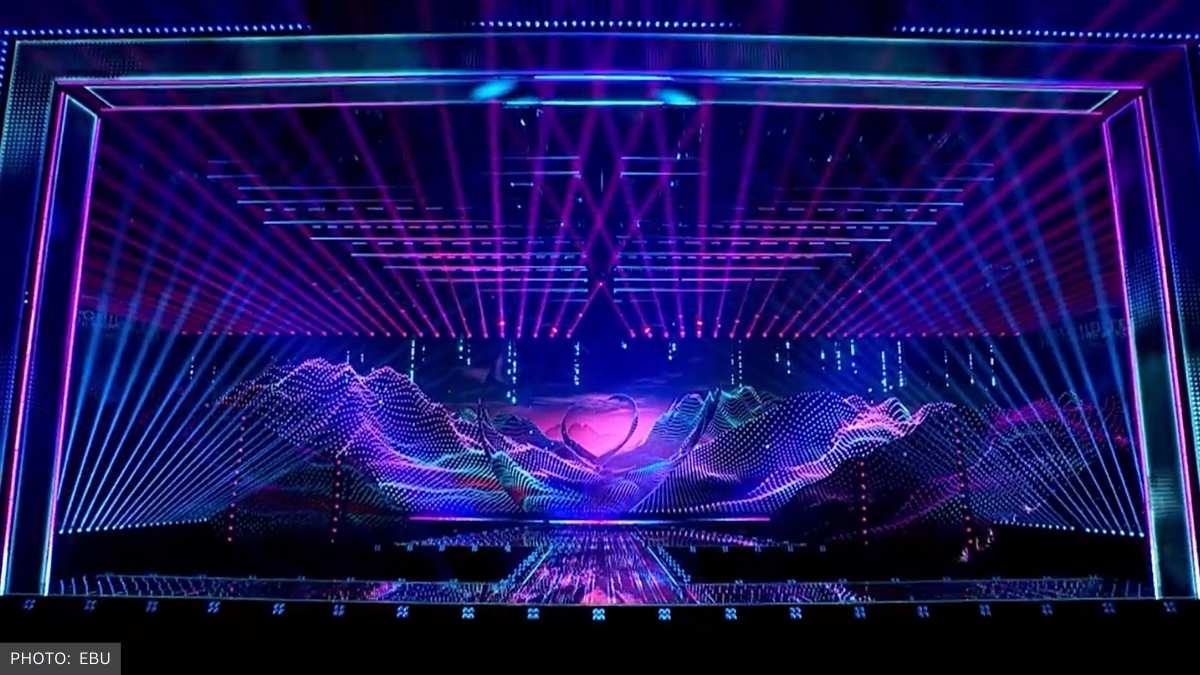
Get the full coverage from the family rehearsal of the second semi-final, currently taking place on the Eurovision 2025 stage in Basel. One by one, Australia, Montenegro, Ireland, Latvia, Armenia, Austria, Greece, Lithuania, Malta, Georgia, Denmark, Czechia, Luxembourg, Israel, Serbia and Finland will take the stage. We will be providing updates throughout the rehearsal with all the details received by our editorial team.
Today at 15:30 CET, the first dress rehearsal began ahead of the second semi-final broadcast, which will take place tomorrow at 21:00 CET (Thursday, May 15). Just before another dress rehearsal takes place tonight at 21:00 CET, we’re here to report everything happening on stage in real time from Basel.
As a reminder, this year the countries that automatically qualify for the Grand Final will also perform during the semi-finals, but their songs will not be eligible for voting at this stage. In the second semi-final, Germany, the United Kingdom, and France will take the stage.
Make sure to click the refresh button so you can continue following along during the rehearsals!
The event opened with a series of short videos showcasing Eurovision fans waiting outside the venue.
Afterwards, a stagehand entered carrying the Eurovision heart along with the Swiss flag, connecting it to the Eurovision logo displayed on the stage floor. At that moment, the stage lit up with special effects and the sound of fireworks echoed in the background.
The two hosts of the evening, Sandra Studer and Hazel Brugger, then took the stage and welcomed the viewers, who had come from all over the world – from 83 different countries.
Second Semi-Final – Initial Overview:
1. Australia
Go-Jo takes the stage in a white suit, accompanied by a dancer holding a blender. Shortly after, a giant blender appears on stage. Go-Jo sounds vocally stronger than in his previous rehearsal, and the audience reacts with excitement, shouting along with him, “Yum Yum!” During the first chorus, he steps into the giant blender and emerges wearing a blue jumpsuit. In the second verse, another dancer joins him, portraying a grandmother figure, who also undergoes a transformation: she enters the blender and comes out young and energetic just in time for the second chorus.
The lights dim, the two dancers approach him, and the bridge kicks in. The crowd roars the lyrics and responds with loud applause! At the climax, the dancers remove the singer’s shirt as a flurry of lights illuminates the stage. It seems the audience is absolutely devouring this performance, and it is very likely that Go-Jo will qualify for the Grand Final.
2. Montenegro
Nina Žižić steps onto the stage wearing a blindfold, which she removes at the start of the first verse. She is dressed in a large gown surrounded by a kind of glowing halo, with soft blue and white lighting. Her vocals are overall solid, with no noticeable off-pitch moments during the performance.
At the end of the second chorus, giant scales appear on stage and dramatically fall, transforming into streams of white light behind Nina. She then sheds the large halo from her dress, and the final part of the song is extremely powerful, with excellent vocal delivery.
At the end of the performance, she shouts “Thank you, Europe!” with a huge smile. It’s a very impressive and powerful performance — but unfortunately, likely not strong enough to secure a spot in the Grand Final.
3. Ireland
EMMY appears on stage alongside her brother, wearing a silver dress and standing on a platform that resembles a spaceship. Behind her are visuals of planets and stars, with pink lighting enhancing the galactic atmosphere. Dancers join her and her brother—who stands at the front like a spaceship captain.
At the beginning of the song, her vocal performance is quite weak—EMMY sounds very nervous, with a slight tremble in her voice. During the chorus, she performs her signature dance, while slides of marching astronauts appear behind her. The performance overall feels like it’s missing something—there’s a noticeable lack of charisma, and the audience doesn’t seem to respond in any special way.
At the end of the song, fireworks erupt from EMMY’s platform and from both sides of the stage. Will it be enough to qualify for the final? It’s hard to say whether enough viewers will be moved to vote for it. Her vocals did improve by the end, but it may not be sufficient.
After Ireland’s performance, there’s a short break. The hosts interview members of the audience, asking what they’re looking forward to in tonight’s show and where they came from. One woman in the crowd remarked, “Unfortunately, I’m from the United Kingdom.” The audience burst into loud laughter!
4. Latvia
The girl group Tautumeitas begins their performance against a backdrop of deep blue, with glowing crowns adorning their heads and their faces initially obscured by dim lighting. As the first verse begins, the lighting suddenly shifts to warm tones, revealing their expressions for the first time. Vocally, the group delivers an excellent performance.
By the time the second chorus arrives, the background returns to stormy blue hues, evoking a dramatic tempest. During the following verse, the lights once again shift to warm shades, highlighting the group’s flowing, harmonious movements. The members move together in perfect synchronization, forming shapes on stage that emphasize the connection between movement and song.
During a solo section, the stage goes completely dark except for one member, who remains lit in the center—creating a focused, intimate moment. As the final chorus approaches, the lighting again bathes the stage in deep blue, and it appears as though flowing tails have been added to their dresses, fluttering with their movement.
They dance in flawless unison, and as the final chorus reaches its peak, the stage fills with swirling and stormy effects. The performance concludes with a perfectly symmetrical and striking pose, leaving a powerful final impression of a hypnotic visual experience.
The audience reacts with great enthusiasm—there’s clear chemistry between the performers, and the performance is mesmerizing. There’s a strong likelihood that Tautumeitas will qualify for the Grand Final.
A short pause follows Latvia’s performance, during which the running order of tonight’s songs is displayed for just over a minute.
5. Armenia
Parg takes the stage shirtless, with intense white lights flashing behind him and translucent duplicates of himself projected in the background. He performs on a treadmill incorporated into his choreography—reminiscent of Robin Bengtsson’s staging from 2017. As the performance progresses, he begins to run with force and intensity.
Vocally, his performance is decent to good, though there are moments where he sounds out of breath or as if he’s struggling to catch it. During the second chorus, flames shoot up on stage, adding to the dramatic effect.
The bridge is sung in Armenian, during which the lighting suddenly shifts to an orange hue, creating a fiery ambiance. The final chorus explodes with white light and jets of fire once again, but Parg visibly struggles with the vocals, giving the impression that he is gasping or choking slightly while singing. Still, he manages to deliver the final note with precision.
6. Austria
JJ opens his performance in a monochromatic black-and-white outfit, chasing a small paper boat that repeatedly slips away from him. During the first chorus, he climbs a platform resembling a ship’s deck. Despite the visual effort, it’s evident that he lacks charisma in the first part of the song. He performs the operatic segment well, but much of the rest feels imprecise and uneven.
In the second verse, he unfurls a sail as part of constructing a ship on stage, and in the following chorus, he attempts to depict a storm at sea. Once again, the vocal performance is off the mark—at times it seems like he forgets to breathe properly. His operatic climax is delivered strongly, showcasing his vocal range.
Toward the end, JJ lies down on the floor and begins moving in fragmented motions, seemingly trying to convey internal turmoil. However, the moment falls flat and doesn’t quite land as dramatic. The final part of the song is sung only partially, and he fails to fully convey the pain and emotion that were so present in the official music video. There’s a noticeable lack of emotion, charisma, and impact in the final moments of the performance.
After Austria’s performance, there’s a short break. Host Hazel Brugger stage-dives into the crowd with the help of production staff, humorously asking them questions mid-air and making them laugh. Then a charming segment is shown, where Hazel dances with senior citizens—emphasizing the message that Eurovision belongs to all ages.
United Kingdom
Remember Monday take the stage dressed in sparkling, sequin-covered dresses in varying shades, with a brightly lit vanity table in the background—evoking a glamorous backstage vibe. Already during the first chorus, fireworks erupt, and the stage becomes awash with dynamic lighting effects. Their harmonies are excellent, and the vocal delivery is technically precise—but the overall tone feels overly loud and forced, as if they’re trying too hard to impress.
In the second verse, a large, broken chandelier descends from above, dimming the stage lighting to create a more dramatic mood. They perform around it throughout the next chorus, adding a touch of theatrical flair. Toward the end of the second chorus, they stand at the center of an illuminated circle projected onto the floor—creating a visually compelling composition. Still, the performance feels somewhat chaotic and lacking in charisma.
For the final segment, they return to the vanity table, creating a visual full-circle moment that brings the staging back to its thematic core. This closing scene is arguably the most effective part of the performance.
Despite the strong vocals and polished look, the act comes across as clichéd and overly loud. It seems likely Remember Monday may struggle to win over enough voters—and could end up finishing near the bottom of the scoreboard.
7. Greece
Klavdia takes the stage dressed in a black gown, illuminated by a single narrow beam of light. Her vocal delivery is outstanding from the very first note. As the performance progresses, the lighting gradually expands. With the entrance of the chorus, a striking visual illusion is created: two black walls appear to close in around her, crafting a dramatic and powerful scene that conveys a sense of entrapment.
The walls eventually disappear, making way for a towering pillar of fire that bursts upward, perfectly synchronized with the music. Slowly, she climbs a structure resembling a mountain, where a dancer joins her. She reaches out a hand toward the dancer but is unable to make contact—a moment rich in metaphor, expressing longing or emotional distance, in line with the song’s message. Eventually, she manages to touch the dancer, only for the dancer to turn her back on her—a tragic and powerful gesture.
During the second verse, the lighting shifts to deep blues, and birds—symbolic doves—appear in the background. Later, the scene changes to a dramatic red, and above her, dozens of shimmering stars appear, directly referencing lyrics from the song.
In the final moments, Klavdia reappears, now dressed in a white gown. The crowd erupts in thunderous applause. Her vocal performance remains flawless throughout—utterly breathtaking. This is a guaranteed qualifier for the Grand Final—goosebumps all around!
8. Lithuania
Katarsis take the stage dressed in shades of blue, with a somber yet expansive backdrop of vast open fields. From the first note, the lead singer delivers a breathtaking vocal performance—emotional to the point of tears.
As the chorus begins, bolts of lightning strike across the stage, followed by a visual of cracks forming behind the singer—powerfully symbolizing emotional fracture. He completely commands the stage, exuding raw intensity that sends chills down the spine.
During the song’s repetitive hook (“Tavo Tavo”), a dim blue light envelops the stage, creating a deeply intimate mood. In the final chorus, asteroids appear in the background, intensifying the apocalyptic atmosphere. A recurring wind effect blows across the band, adding movement and drama to the performance.
The vocals remain stunningly precise—absolutely flawless. This is without a doubt one of the most captivating performances of this semi-final. The song clearly resonates with the audience and stands a strong chance of advancing to the Grand Final.
9. Malta
Miriana Conte opens her performance standing beside a golden disco ball, set within a stage structure inspired by an abstract feminine form. Flanked by dancers, she wears a striking yellow dress and demonstrates full vocal control with a steady and precise delivery.
While visually bold, the performance feels loud and overwhelming. Notably, during the part where the audience is expected to shout “Kant,” their voices aren’t heard—creating a sense of detachment, as though the crowd is disconnected, even though it’s clear they are participating, just sonically muted.
At one point, Miriana briefly falters vocally but quickly regains her footing. Overall, the presentation is very loud and intense—at times even visually and aurally overwhelming.
She finishes with pinpoint accuracy on the standout high note and, as is signature for this act, steps onto large pink spheres symbolizing the climax of the song—a colorful, extravagant, and powerful ending.
Despite its brashness, it’s a visually impactful performance that’s likely to stand out and resonate enough to earn Miriana Conte a spot in the Grand Final.
10. Georgia
Mariam Shengelia opens her performance standing atop a platform, as traditional Georgian dancers in folkloric costumes take the stage before her, performing a powerful and captivating choreography. A few moments later, Mariam joins them, dressed in a white gown with a leather-like texture and commanding stage presence.
During the performance, booing is heard from parts of the live audience—but notably, these sounds were not transmitted through the broadcast, only audible to those in the arena.
As the chorus begins, the stage lighting shifts dramatically to red, and the dancers wave large flags, creating a striking visual. Mid-chorus, the lighting turns white again, adding contrast to the intense staging.
In the second verse, Mariam removes her dress to reveal a white bodysuit with red stripes. She steps down from the platform while the dancers continue to perform with high energy. In the background, glowing halos fill the screen, enhancing the grandeur of the moment.
Her vocals are accurate and controlled throughout, and at the end of the song, she remains alone on stage, bathed in blue light, delivering the final high note with power and precision. The performance concludes to strong applause from the audience.
Following the Georgian performance, there is a break. The hosts visit the commentary booths of various countries, while stagehands cover the stage with a giant black cloth and spread sand in a large circular formation at the center of the stage.
France
Louane takes the stage, and the first thing that captures the eye is a massive mound of sand. Holding an hourglass, she flips it over, and sand begins to fall on her from above throughout the first verse.
As the chorus begins, Louane rises to her feet, and lights gradually illuminate the arena. The sand continues to pour over her as she interacts with it—letting it run through her hands in a symbolic, almost meditative gesture.
The staging is rich in visual storytelling, with intricate camera work and lighting effects that surround her—evoking a similar aesthetic to the one used around Nemo last year. During the bridge, a sandstorm swirls dramatically behind her, and in the final chorus, a torrent of sand cascades down upon her. The performance closes with a burst of white light behind her—an ethereal, poignant ending.
This is the kind of act that could win the entire contest. It’s deeply emotional, visually striking, and undeniably touching.
Following her performance, the hosts are shown vacuuming the sand off the stage—an amusing moment, though it’s evident this process is taking longer than it would during the live show. This rehearsal was also marred by a few technical hiccups.
Still, Louane looks set to rank very high in the competition—and quite possibly take the Eurovision 2025 trophy.
11. Denmark
Sissal begins her performance standing within a slightly elevated circular platform, concealed behind flowing curtains that initially obscure her from view. As the music progresses, four dancers join her on stage and gently remove a large white garment she wears, revealing a sleek blue bodysuit underneath—matching the dancers’ coordinated outfits.
Throughout the performance, she remains positioned on the circular platform, while the dancers gracefully move around her in fluid choreography that complements the song’s atmosphere. Her vocal performance is excellent—clear, expressive, and emotionally resonant. The lighting and camera work are precise and well-crafted, enhancing the mood and drawing attention to her stage presence.
Toward the end, Sissal steps forward to the front of the stage to deliver the climactic high note, which, while slightly less accurate than the rest of the song, still lands effectively. Meanwhile, the dancers bring out small vertical poles, cleverly used to create an illusion of instability—as if they’re about to collapse—adding dramatic tension to the finale.
In my opinion, this is a polished and emotionally engaging performance with a unique visual identity. It’s very likely Sissal will qualify for the Grand Final.
12. Czechia
ADONXS opens his performance in complete stillness, standing motionless as he begins to sing. A stark white light ignites behind him, gradually illuminating the stage in a way that subtly recalls the lighting design used in Greece’s performance during their first chorus in a previous year. He holds a wilted flower in one hand—an evocative symbol that adds emotional depth from the very first moment.
Soon after, four dancers dressed entirely in white join him on stage. They surround him and gently remove his black-and-white outfit, revealing an identical white ensemble like theirs. The transformation is visually striking and reinforces a bold, unapologetic queer aesthetic that feels both authentic and beautifully staged.
Vocally, ADONXS is not flawless—his delivery is not precise and not deeply moving.
Then comes the dance break—dynamic, surprising, and not brilliantly executed. As the performance nears its end, the lighting grid descends from above, creating a dramatic frame around him. ADONXS moves toward the center of the stage, where the dancers rejoin him for a perfectly synchronized closing formation.
It deserves a spot in the Grand Final—but most likley won’t get there.
13. Luxembourg
Laura Thorn opens her performance lying on the stage floor, as an image of France Gall, the 1965 Eurovision winner, appears projected within a vintage-style frame beside her. That projection—contained within a small “screen within the LED screen”—remains visible for most of the performance, serving as a touching homage and visual anchor.
As the music unfolds, five dancers join Laura on stage, gently lifting her from the floor and launching into a choreography that closely mirrors the staging seen in the national selection. During the dance, they remove her soft pink dress to reveal a sparkling silver gown underneath—an effective transformation moment that adds theatrical flair.
Her vocals are spot-on throughout the performance, including a crystal-clear delivery of the powerful high note—executed with strength and control.
This is a performance with a clear story, visual elegance, and emotional presence. In my personal view, it’s a very impressive act with a distinct audience appeal. It stands out and is almost certainly heading to the Grand Final.
14. Israel
Yuval Raphael’s performance opens in a particularly dramatic and striking fashion. Out of complete darkness that envelops the arena, Yuval slowly rises from the front of the stage, illuminated by a single spotlight. The audience can be faintly seen in the dim background, creating an atmosphere of anticipation as the moment builds. She moves slowly and deliberately toward the center of the stage, her steps carefully synchronized with the music.
In the second chorus, sung entirely in French, the stage setup changes: Yuval moves around a massive chandelier positioned at center stage and ascends an impressive staircase. An overhead camera captures the moment from above, adding a sense of scale, height, and theatricality that significantly amplifies the dramatic intensity of the staging.
As the song approaches its climax, a stunning wall of fireworks erupts behind Yuval, cascading downward like a waterfall of light. At the finale, the entire stage is flooded with blinding white light, intensifying the emotional impact of the closing scene. However, it must be noted that once again a noticeable off-key note was heard on the word “Pain”—a central part of the song that came across as jarring. This marks the third consecutive rehearsal where Yuval has struggled to deliver that specific moment accurately, raising concerns about her ability to deliver a consistent performance in the final. Unless she manages to overcome this difficulty, her momentum as a frontrunner could be compromised. If she succeeds, however, a top 5 result remains well within reach.
During the performance, whistling and boos were heard from the audience, and some spectators waved Palestinian flags—moments that did not go unnoticed by the cameras and were clearly felt in the arena.
Germany
Abor & Tynna take the stage in a visually ambitious setup. The performance begins with Abor playing a white-lit cello, creating a soft and dramatic opening tone, while Tynna stands tall atop a massive speaker positioned at center stage. As the song progresses, the two switch places—Tynna descends from the speaker while Abor climbs up, maintaining a sense of dynamic movement throughout the staging.
Toward the end, in a climactic moment, Abor smashes the cello onto the floor just as fireworks explode around them. At that point, two dancers join Tynna, injecting more motion and energy as the performance builds to its conclusion.
Despite the visual ambition and choreography, the performance fell short vocally and emotionally. It lacked cohesion, and the delivery did not land as intended. Overall, this was a weak performance that failed to leave a strong impression.
15. Serbia
Princ opens his performance standing confidently at the center of the main stage, surrounded by four dancers who perform an intense and captivating choreography around him. A layer of smoke flows across the stage floor, adding to the dramatic mood and giving the scene a cinematic edge.
As the song nears its conclusion, Princ lies down on the floor, and a powerful visual moment is created as his reflection is clearly visible beneath him—an image that lingers. The dancers then drag him slowly toward the front of the stage, and at the final climax, they lift him onto their shoulders in a triumphant and symbolic gesture.
Vocally, Princ delivers an impressive and emotionally charged performance. His singing is both accurate and expressive, and he commands the stage with powerful presence.
This is the kind of entry that could take Serbia by surprise straight into the Grand Final. Compared to Montenegro’s similarly styled ballad, this performance feels far more impactful and emotionally resonant.
16. Finland
Erika Vikman takes the Eurovision stage with a dramatic lighting effect that begins at her waist and slowly rises to the ceiling, creating a sense of build-up and anticipation. Early in the performance, there’s a brief moment where a camera shot completely obscures her for several seconds—an unusual but intentional choice.
She then stands atop a slightly elevated platform, framed by overhead lighting that forms the shape of a glowing tent. As the performance progresses, Erika moves forward toward the front of the stage, bringing her microphone stand along with her. At one point, she lies down on the floor, only to return shortly after to center stage.
In the show’s climax, she stands on a giant microphone that lifts into the air, while fireworks erupt from it in a dazzling finale.
Vocally, the performance is solid—well-executed but not vocally extraordinary. However, the strong staging and bold visual choices clearly resonated with the audience.
There was a loud and enthusiastic response in the arena, echoed by warm reactions in the press center. With the public holding the sole power in this semi-final, Finland appears well-positioned to qualify for the Grand Final.
Thank you for staying with us!
Join us at 21:00 CET for the second dress rehearsal!
Eurovision 2025: This will be Switzerland’s 65th participation in the Eurovision Song Contest. Switzerland joined the competition in 1956, being one of the seven founding countries, and has won three times over the years. Its most recent victory was at the last Eurovision in 2025, with Nemo’s song “The Code.” This win follows Switzerland’s previous victory in 1988 with the song “Ne partez pas sans moi,” performed by international singer Céline Dion.